
Can Massage Therapy Stimulate the Vagus Nerve?
Share with a friend

Can massage therapy stimulate the vagus nerve? Learn how gentle, evidence-informed massage may support parasympathetic relaxation and stress relief at AureliaRMT.
When your body has been carrying stress for a long time, resting does not always feel restful. Your shoulders may stay lifted, your jaw may remain tight, and your mind may continue moving even when the day is over.
This has led many people to ask: can massage therapy stimulate the vagus nerve?
The most honest answer is that massage may support the part of your nervous system associated with rest and recovery. Some small studies have found changes consistent with increased parasympathetic activity. However, massage has not been shown to directly stimulate the vagus nerve in the same controlled way as medical vagus nerve stimulation.
That distinction matters. Massage may help create the conditions for your body to settle, but it should not be described as a treatment that “resets” or repairs the vagus nerve.
What Is the Vagus Nerve?
The vagus nerve is one of the body’s major communication pathways. It travels from the brainstem through the neck and chest, connecting with areas involved in heart rate, breathing, digestion, swallowing, and other automatic functions.
It is also an important part of the parasympathetic nervous system, sometimes described as the body’s “rest and digest” system.
When this side of the nervous system becomes more active, you may notice your breathing growing quieter, your muscles feeling less guarded, or a gentle sense of heaviness settling through your body.
The vagus nerve is not an on-and-off switch, though. Your nervous system is always responding to your surroundings, physical sensations, emotions, breathing, posture, and sense of safety.
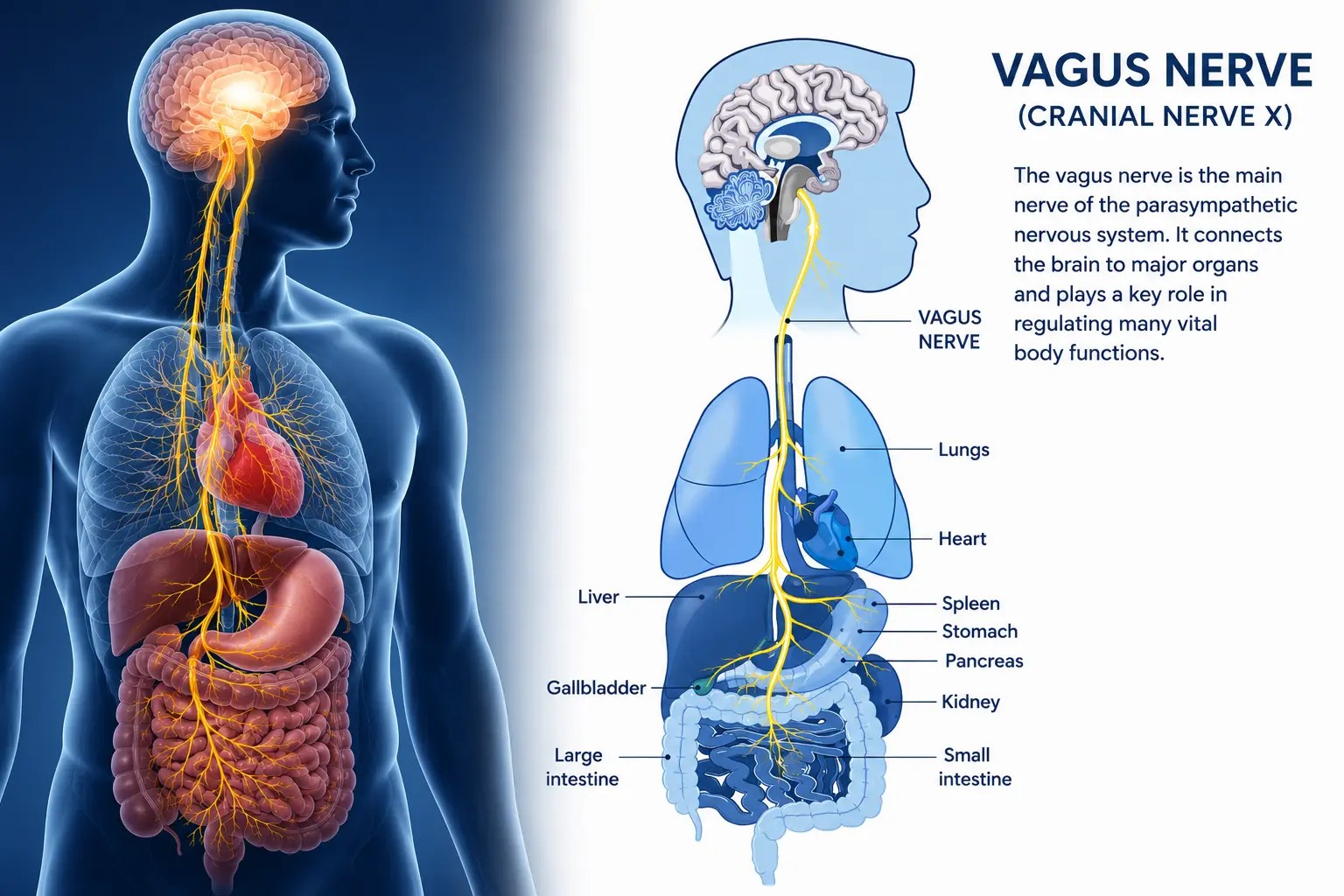
Does Massage Directly Stimulate the Vagus Nerve?
The word “stimulate” can create some confusion.
In medicine, vagus nerve stimulation usually involves a specialized device that sends electrical impulses to the nerve. It may be prescribed as part of treatment for certain neurological or medical conditions.
Massage therapy is very different. An RMT works with the skin, muscles, connective tissues, and joints. Massage does not reproduce the electrical signals delivered by a medical vagus nerve stimulation device.
A more accurate way to describe the relationship is this:
Massage may influence the wider nervous system and encourage a temporary shift toward parasympathetic relaxation. That shift may involve vagal pathways, but researchers cannot yet say that ordinary massage directly activates the vagus nerve itself.
The vagus nerve is also not a muscle that can be released, stretched, or physically “reset.”
What Does the Research Suggest?
The research is encouraging, but it is still limited.
A small study of 20 healthy adults found that moderate-pressure massage produced heart rate variability changes consistent with a parasympathetic response. Heart rate variability, often shortened to HRV, measures subtle differences in the time between heartbeats. Certain HRV patterns can provide researchers with an indirect window into cardiac vagal activity.
Another randomized study compared a targeted head and neck massage, a soft shoulder massage, and quiet rest in 60 healthy women. Both forms of massage produced greater changes in high-frequency HRV than rest alone. Interestingly, the targeted massage was not more effective than the soft shoulder massage.
This suggests that relaxation may not depend on pressing directly over the expected path of the vagus nerve. Comfortable touch, stillness, warmth, slower breathing, and the experience of being cared for may all contribute.
A separate pilot study involving night-shift workers found an increase in a parasympathetic HRV measure after massage. However, the difference between massage and quiet reading was not statistically significant.
These studies offer useful clues, but they do not prove that massage directly stimulates the vagus nerve. They also involve small groups and measure short-term responses. Larger and more consistent studies are still needed.
How Massage May Support Nervous System Relaxation
Your body does not need to be pushed into calm. Often, relaxation begins when you feel comfortable enough to soften.
During massage, several gentle elements may work together:
- Predictable, reassuring touch may help reduce physical guarding.
- Comfortable pressure may ease areas that have been holding tension.
- A quiet environment may reduce the amount of sensory information your body is processing.
- As you settle, your breathing may naturally become slower and easier.
- Relief from discomfort may make it easier to rest.
You might notice a spontaneous sigh, warmth in your hands or feet, a softer jaw, gentle stomach sounds, heavier limbs, or sleepiness. These can accompany relaxation, but they are not proof that the vagus nerve has been directly stimulated.
Not everyone responds in the same way. Some people feel peaceful during the session. Others notice the shift later that evening or after a good night’s sleep. Your experience does not need to look a particular way for the session to feel supportive.
Does a “Vagus Nerve Massage” Require Deep Neck Pressure?
No. Strong or uncomfortable pressure around the neck is not necessary to encourage relaxation.
A nervous-system-focused massage can include the back, shoulders, scalp, arms, hands, legs, or feet. The pressure should be adapted to your comfort, health history, and preferences.
You should never feel that you need to tolerate painful neck work to receive a supposed vagus nerve benefit. If a technique makes you feel tense, dizzy, nauseated, or uneasy, tell your RMT immediately.
The goal is not to force your body into a response. It is to offer calm, respectful input and allow your nervous system to respond in its own time.
Massage Is Supportive Care, Not Medical Vagus Nerve Treatment
Massage therapy may be helpful when stress leaves you feeling tense, restless, or disconnected from your body. It may support relaxation and make it easier to move from a state of constant alertness toward one that feels quieter.
Massage should not be used to diagnose or treat vagus nerve damage, seizures, fainting, heart rhythm concerns, depression, digestive disease, or an autonomic nervous system disorder.
If you have an implanted vagus nerve stimulation device or are concerned about symptoms you believe may involve the vagus nerve, speak with your healthcare provider and let your RMT know before treatment.
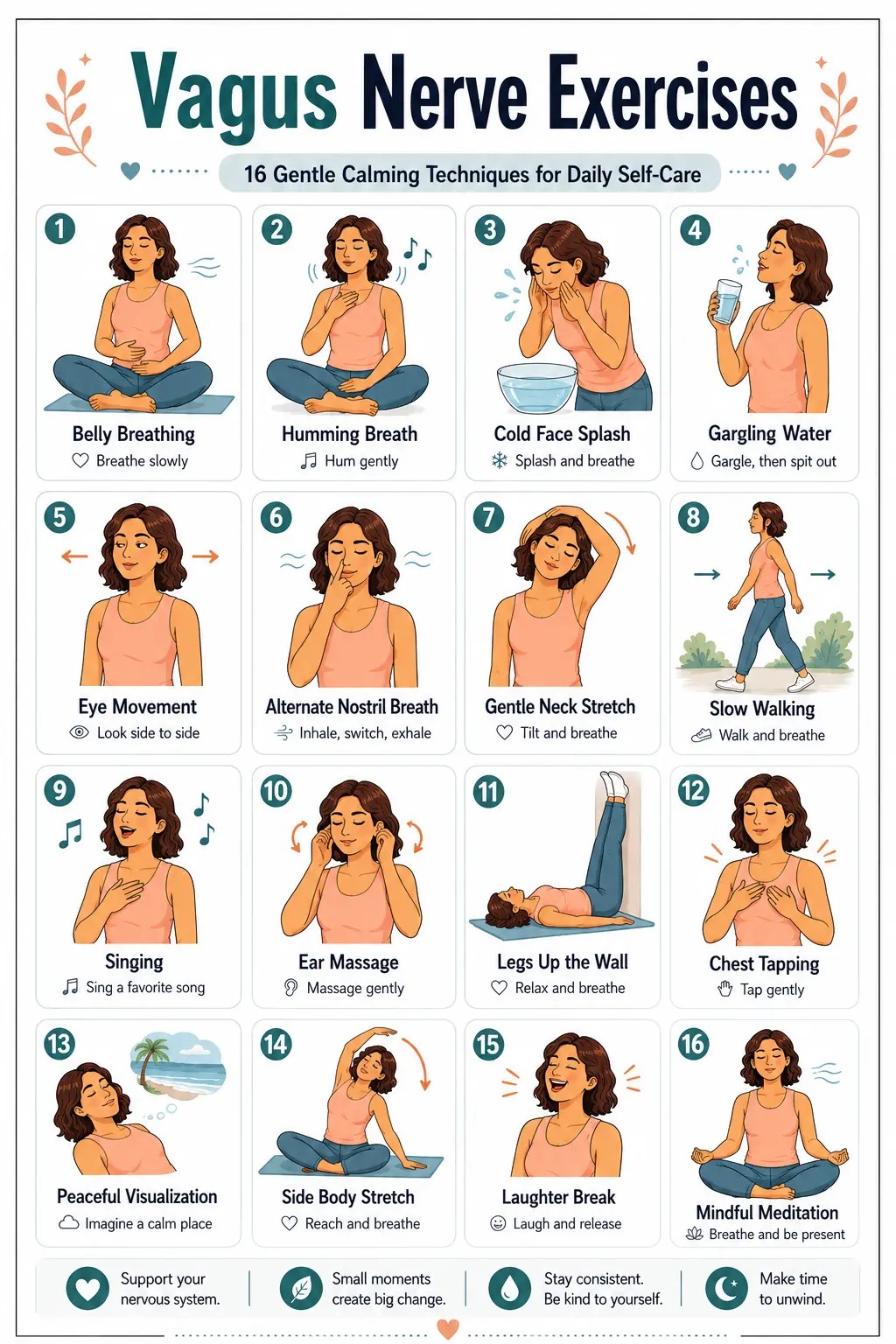
A Gentle Invitation to Rest
At AureliaRMT in Toronto, your session can be shaped around what helps you feel most supported. That may mean gentle pressure, slower pacing, focused work around the shoulders and scalp, or simply having quiet space to breathe and settle.
We cannot promise to “activate” or reset your vagus nerve. What we can offer is thoughtful, individualized massage therapy that gives your body an opportunity to feel supported, less guarded, and more at ease.
When you are ready, you are warmly invited to book a massage therapy session with AureliaRMT.
Key Takeaways
- ✓Massage therapy does not directly stimulate, reset, or repair the vagus nerve the way medical vagus nerve stimulation devices do.
- ✓Research suggests massage can support a temporary shift toward parasympathetic (rest-and-digest) activity, often measured indirectly through heart rate variability (HRV).
- ✓Relaxation effects from massage likely arise from a combination of predictable touch, comfortable pressure, a quieter environment, slower breathing, and feeling cared for—not from deep pressure on the vagus nerve itself.
- ✓Strong or uncomfortable neck pressure is not required for nervous-system-focused massage and should never be tolerated if it feels painful, dizzying, or unsafe.
- ✓Massage at AureliaRMT is offered as supportive care to help you feel more at ease, not as a medical treatment for vagus nerve problems or related health conditions.
References & Citations
Explore Our Complete Toronto RMT Guide
Looking for more information about massage therapy in Toronto? Our comprehensive guide covers everything from common conditions to treatment options.
View the Complete Guide