
Massage Therapy and Ankylosing Spondylitis: When Treatment May Need to Be Modified
Share with a friend

Massage therapy for ankylosing spondylitis may ease tension, but pressure, positioning and timing should be modified for flares, fusion, fractures and bone health.
Living with ankylosing spondylitis can mean that your body feels different from one day to the next. On a steadier day, gentle pressure around your back or hips may sound comforting. During a flare, even light touch or lying on a massage table may feel like too much.
Massage therapy and ankylosing spondylitis can sometimes fit together, but treatment needs to be personal. Your current symptoms, spinal mobility, bone health, comfort with positioning and any history of fusion or fracture all matter.
The goal is never to push through stiffness or force your spine into a position it no longer wants to take. It is to meet your body where it is that day.
Why Ankylosing Spondylitis Changes the Treatment Plan
Ankylosing spondylitis is part of a group of inflammatory conditions called axial spondyloarthritis. It most often affects the spine and the joints connecting the spine to the pelvis. It can also affect the hips, shoulders, ribs and the areas where tendons or ligaments attach to bone.
Inflammation may cause pain, stiffness and fatigue. The muscles surrounding uncomfortable areas may also tighten as a protective response.
Over time, some people develop changes in their posture or areas of spinal fusion. Others may have reduced bone density. The course is different for every person, and not everyone develops these changes.
This matters during massage because not every feeling of tightness comes from a tight muscle. Massage may soothe surrounding muscle tension, but it cannot remove inflammation, reverse fusion or change the underlying condition.
What Massage May and May Not Do
Some patients find that massage helps them feel less guarded, more relaxed or temporarily more comfortable. Gentle soft-tissue work may be helpful when muscles around the back, hips, shoulders or rib cage have been working hard to protect sensitive areas.
Research specifically examining massage for ankylosing spondylitis is limited. One small pilot study compared deep-tissue massage with therapeutic massage in 27 men. Some improvements were reported, but both groups received massage, the study was short and there was no group receiving usual care without massage.
Current rheumatology guidance conditionally supports massage therapy for adults with axial spondyloarthritis, although the evidence remains limited. The same guidance places supervised exercise and physiotherapy ahead of passive treatments such as massage.
I see massage as supportive care. It may help with comfort, muscle tension and relaxation, but it does not replace care from your rheumatologist, prescribed medication, physiotherapy or an individualized movement program.
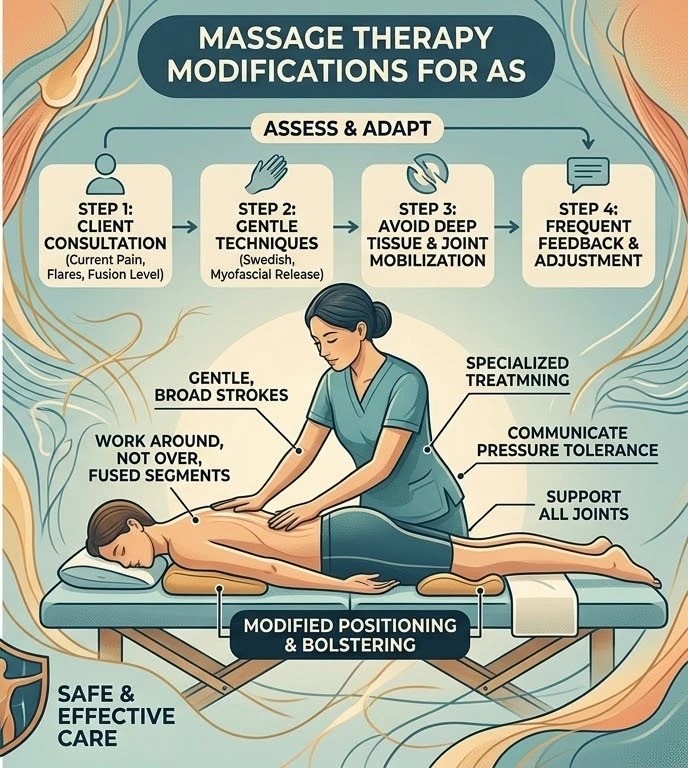
How a Massage Session May Need to Be Modified
There is no single massage approach that is appropriate for everyone with ankylosing spondylitis. Treatment may change from one appointment to another.
During a flare or sensitive day
A flare does not automatically mean that massage is unsafe. Some people tolerate gentle touch well, while others find that any pressure increases their discomfort.
A session may use lighter pressure, a slower pace, fewer treatment areas or a shorter treatment time. Areas that feel unusually hot, swollen or sharply tender may be avoided. If touch or positioning makes your symptoms worse, postponing treatment may be the kinder choice.
When lying flat is uncomfortable
Changes in the neck, ribs or upper back can make lying face down or completely flat uncomfortable. Side-lying or semi-reclined positioning may feel more natural. Pillows and bolsters can support your head, chest, hips and knees.
Your body should not be pressed flat against the table or forced into a straighter position. The table and supports should adapt to you.
With spinal fusion, osteoporosis or a previous fracture
Ankylosing spondylitis can be associated with reduced bone density, and a fused spine may be more vulnerable to fracture.
This does not automatically make gentle massage unsafe. It does mean that positioning, transfers, pressure and movement should be handled carefully. Tell your RMT if you have been diagnosed with osteopenia or osteoporosis, have areas of fusion, or have experienced a previous spinal fracture.
When choosing pressure and movement
Deeper pressure is not always better. Some people with stable symptoms may comfortably tolerate firmer soft-tissue work, but pressure should always be guided by your response.
Massage should not include spinal manipulation, traction, forceful stretching or rapid movements at the end of your available range. Treatment should never attempt to straighten, realign or force movement through a fused or rigid area.
When Massage Should Be Postponed
Certain symptoms need medical attention before massage therapy is considered.
Pause and seek prompt medical assessment if you experience:
- New or severe neck or back pain after a fall, collision, sudden jolt or other injury, even if the incident seemed minor
- New weakness, numbness, tingling, difficulty walking or changes in coordination
- Numbness around the groin or new difficulty controlling your bladder or bowels, which requires emergency care
- A painful or red eye, sensitivity to light or blurred vision, which may be a sign of uveitis and requires urgent eye care
- Fever, chills, signs of infection or a new and unexplained pattern of rapidly worsening pain
These symptoms do not always mean that a serious complication is present. They do mean that massage should not be used to test or work through the problem.
Creating a Thoughtful and Comfortable Session
Before treatment, I would want to know:
- Whether this feels like a usual day or a flare
- Whether you have spinal fusion, osteoporosis, previous fractures or spinal surgery
- Whether you have recently fallen or developed a different pattern of pain
- Which resting positions feel most comfortable
- Whether certain areas are especially sensitive or should be avoided
- Whether you have noticed skin reactions, easy bruising or recent injection sites
Your comfort should continue to guide the session. Treatment may be shorter, gentler or focused away from the spine. Sometimes the safest decision is to postpone treatment and speak with another member of your healthcare team.
A modified session is not a lesser session. It is care that respects what your body needs today.
If you are living with ankylosing spondylitis and considering massage therapy in Toronto, you are welcome to book a session with me. Please share your diagnosis and current symptoms when booking so we can plan a comfortable, thoughtful approach together.
Key Takeaways
- ✓Massage may support relaxation, comfort and temporary relief of muscle tension, but it cannot reduce underlying inflammation, reverse spinal fusion or replace rheumatology care, medication, physiotherapy or exercise.
- ✓Treatment should be individualized and may require lighter pressure, shorter sessions, fewer treatment areas, or side-lying or semi-reclined positioning with supportive pillows and bolsters.
- ✓Spinal fusion, osteoporosis and previous fractures require extra care with positioning, transfers, pressure and movement; forceful stretching, traction, spinal manipulation and attempts to straighten rigid areas should be avoided.
- ✓Massage should be postponed pending medical assessment after an injury or when symptoms include new severe pain, weakness, numbness, walking difficulties, bladder or bowel changes, eye pain or redness, fever, infection signs or rapidly worsening pain.
- ✓Clear communication about flares, current symptoms, bone health, surgeries, injuries, sensitive areas and comfortable positions helps create a safer, more thoughtful session.
Frequently Asked Questions
Is massage therapy safe for ankylosing spondylitis?
Massage may be appropriate when it is adapted to your symptoms, spinal mobility, bone health and comfort. Gentle treatment does not automatically become unsafe because of ankylosing spondylitis, but extra care is needed if you have spinal fusion, osteoporosis or a previous fracture.
Can massage help treat ankylosing spondylitis?
Massage may temporarily ease surrounding muscle tension, guarding and discomfort while promoting relaxation. It cannot reduce the underlying inflammation, reverse spinal fusion or replace medication, rheumatology care, physiotherapy or an individualized exercise program.
Can I receive a massage during a flare?
It depends on how you feel that day. A session may be shortened and use lighter pressure, slower techniques, fewer treatment areas or supportive positioning. If touch or positioning worsens your symptoms, postponing the appointment may be best.
How can a massage session be modified if I cannot lie flat?
Treatment can often be provided in a side-lying or semi-reclined position. Pillows and bolsters may support your head, chest, hips and knees so your body is not forced into an uncomfortable or straighter position.
When should I postpone massage and seek medical care?
Seek medical assessment for new or severe pain after an injury; new weakness, numbness, tingling, walking difficulty or coordination changes; fever or rapidly worsening pain; or a painful red eye with light sensitivity or blurred vision. Groin numbness or new loss of bladder or bowel control requires emergency care.
Explore Our Complete Toronto RMT Guide
Looking for more information about massage therapy in Toronto? Our comprehensive guide covers everything from common conditions to treatment options.
View the Complete Guide