
Is Massage Safe If You Take Blood Thinners?
Share with a friend

Is massage safe on blood thinners? Learn why gentle pressure, medication disclosure and medical guidance help reduce bruising and bleeding risks during massage care.
Starting a blood thinner can make familiar parts of your routine feel a little less certain. You may notice that you bruise more easily, or wonder whether the massage you usually enjoy is still appropriate.
Massage while taking blood thinners may be suitable for some people, with lighter pressure and an individual assessment. Deep tissue massage is generally best avoided, and your underlying health condition may mean treatment needs to wait. British Heart Foundation
In my Toronto practice, this conversation begins before any hands-on treatment. I want to understand what you are taking, how you have been feeling, and what would help you feel comfortable.
Why blood thinners change the approach to massage
Blood thinners help prevent harmful blood clots. Anticoagulants, such as warfarin and apixaban, reduce your blood’s ability to clot. Aspirin and clopidogrel work differently, by making platelets less likely to stick together, but can also increase bleeding and bruising. MedlinePlus
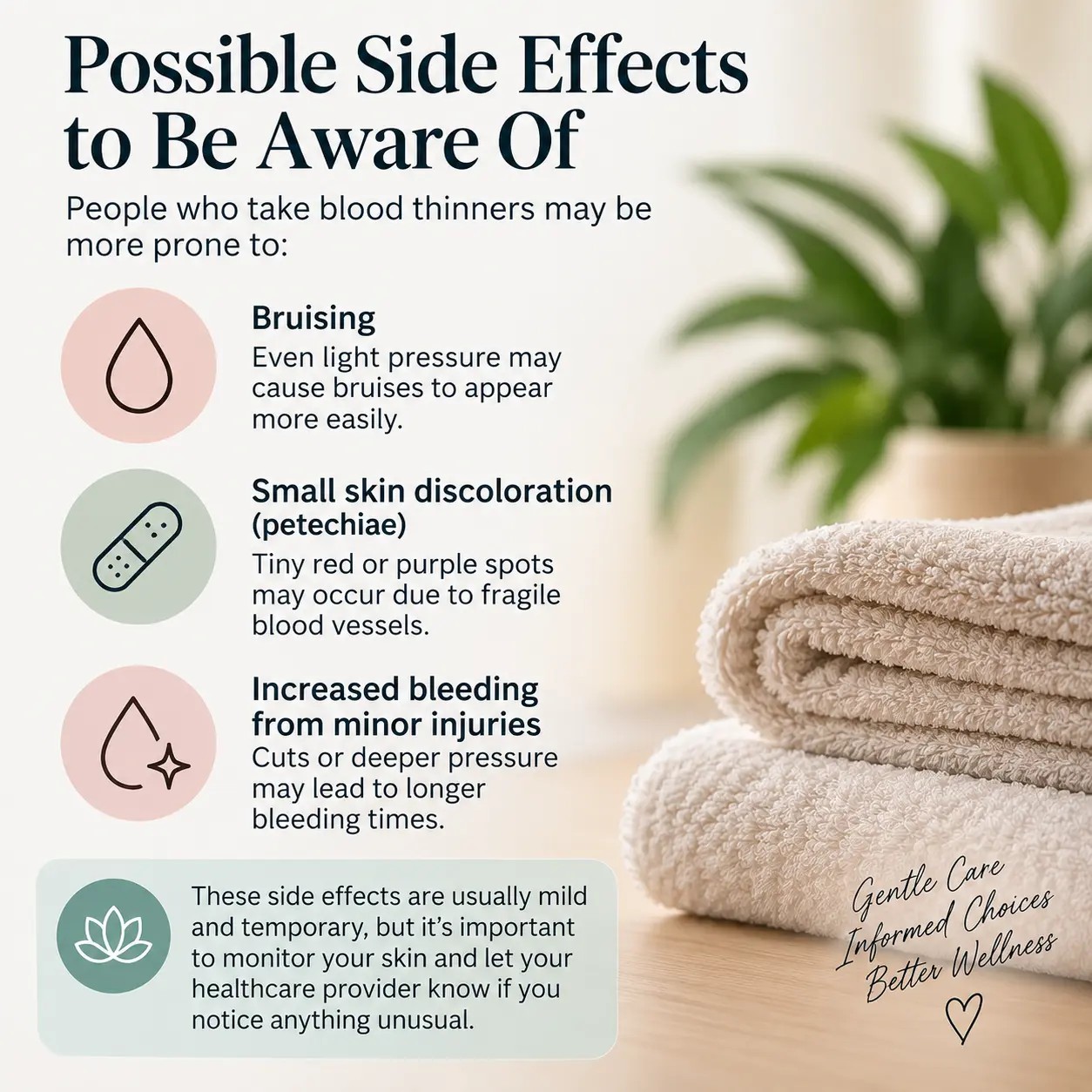
During firm massage, pressure can injure small blood vessels beneath the skin. When clotting is reduced, that injury may cause more bruising or bleeding into the surrounding tissues.
This is why medication matters even when you feel well and have enjoyed strong pressure in the past. A familiar massage may need a gentler approach now. AMTA
What a gentler session may look like
If massage is appropriate for you, I would plan treatment around comfort and avoiding unnecessary pressure on vulnerable tissues. Depending on your needs, that may include:
- Light, slow strokes instead of deep kneading or sustained pressure into a tender spot.
- Avoiding existing bruises, recent injection sites, wounds, and areas of unexplained swelling.
- Using pillows and adjusting your position so you can rest comfortably.
- Checking in throughout the session and changing or stopping treatment if you feel discomfort.
A treatment should never aim to leave you bruised. Tell me if anything feels painful, but remember that comfortable pressure alone cannot guarantee that bruising will not occur.
Published case reports have described serious bleeding after massage. They cannot tell us how often this happens or establish a safe pressure for someone taking blood thinners. That uncertainty supports a cautious, individualized approach. Sharma et al., 2018
What to share before your appointment
Please tell your RMT about your medication when booking and update your health history whenever something changes. It helps to share:
- The name of your blood thinner, why you take it, and any recent medication or dose changes.
- Other medicines and supplements, including aspirin or anti-inflammatory pain medicines such as ibuprofen.
- Unusual bruising, recent bleeding, surgery, injuries, or a current or recent blood clot.
- Any restrictions or concerns raised by your prescribing clinician.
If you take warfarin, let me know if your care team has said your INR, the blood test used to monitor its effect, is outside your prescribed range. Your prescribing clinician should interpret that result and advise on any medication changes. NHS anticoagulant guidance
When your bleeding risk or medical condition is uncertain, I may recommend checking with your prescribing clinician before treatment. You do not need to decide on your own whether massage is appropriate.
When massage should wait
Postpone massage and seek medical advice if you have new, unexplained bruising, unusual bleeding, or a painful swelling. A large or expanding bruise deserves prompt assessment, particularly if it is becoming more painful.
If you are being treated for a current or recent blood clot, ask the clinician managing it when massage can resume and which areas must be avoided. Taking a blood thinner does not mean a clot has disappeared. Do not massage an area with a known or suspected clot.
New swelling, pain, or a change in skin colour in one leg needs urgent medical assessment before massage. These symptoms can be signs of a deep vein thrombosis, or DVT. NHS DVT guidance
Call 911 for sudden shortness of breath, chest pain, stroke symptoms such as facial drooping or difficulty speaking, or severe bleeding that will not stop. Seek immediate medical care after a significant head injury or for blood in your urine, black or bloody stools, or rapidly increasing painful swelling. NHS bleeding precautions
These are reasons to get medical help, even if they happen after an otherwise comfortable massage.
Keep taking your medication as prescribed
Do not skip, delay, or reduce a blood thinner to make a massage appointment possible. Any change must come from the clinician responsible for prescribing it. NHS medication precautions
Your medication is there to protect you. If massage needs to be modified or postponed, we can adjust the appointment around your medical care.
A thoughtful place to begin
It is understandable to want reassurance before returning to something that usually helps you unwind. There is room to ask questions, explain your concerns, and take your time.
If you would like to book a massage with Aurelia RMT in Toronto, please mention your blood thinner when arranging your session. We can review your health history, discuss whether guidance from your prescribing clinician is needed, and plan care around your comfort and safety.
References & Citations
Explore Our Complete Toronto RMT Guide
Looking for more information about massage therapy in Toronto? Our comprehensive guide covers everything from common conditions to treatment options.
View the Complete Guide