
Sinus Headache vs Migraine: Understanding Similar Symptoms
Share with a friend

Sinus headache vs migraine symptoms can overlap. Learn key differences, warning signs, when to seek care, and how massage may ease related muscle tension safely.
You wake up with pressure across your forehead. Your nose feels blocked, your cheeks ache, and getting through the day already feels tiring. It is understandable to wonder whether your sinuses are the reason.
Understanding sinus headache vs migraine begins with looking beyond where you feel the pain. Similar sensations can have different causes, and finding the right support starts with noticing the whole picture.
You do not need to work out the answer on your own. A few gentle observations can help you describe what you are experiencing and have a more useful conversation with your healthcare provider.
Why Sinus Headaches and Migraine Can Feel Alike
The phrase “sinus headache” is often used to describe pressure around the forehead, cheeks, or eyes. However, the location of that pressure does not tell us what is causing it.
Migraine can cause facial pressure, nasal congestion, and a clear, runny nose. Even pain that increases when you bend forward can happen with either migraine or sinusitis. This overlap helps explain why migraine may be mistaken for a sinus problem. Mayo Clinic.
Migraine is a condition involving the nervous system. Sinusitis means inflammation of the lining of the sinuses, often following a respiratory infection. Recognizing which process is involved helps guide appropriate care.
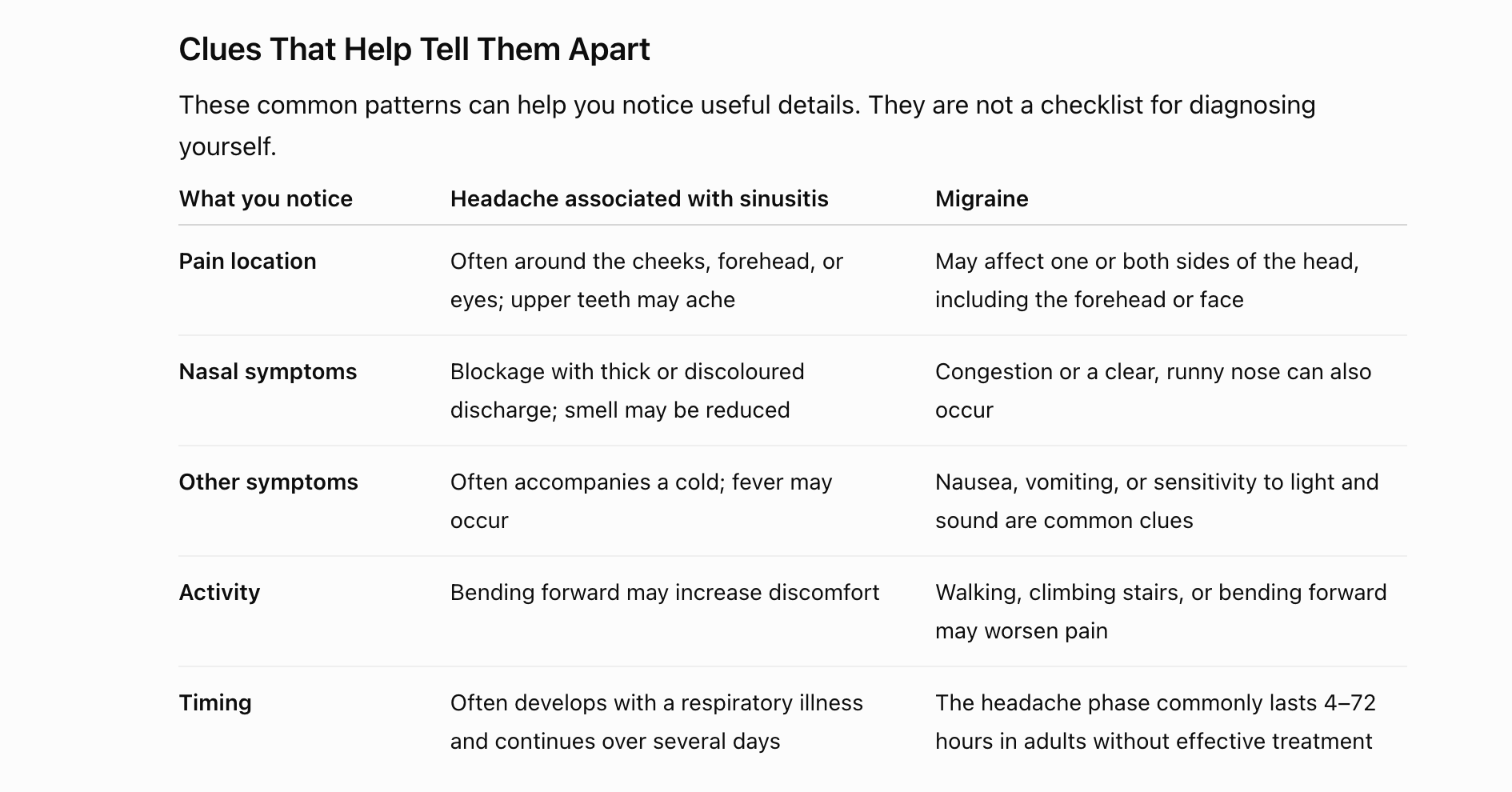
The distinction depends on the combination of symptoms and a medical assessment. These patterns are described in sinusitis guidance and the International Headache Society’s migraine criteria.
You do not need to see flashing lights or have an aura to experience migraine. Migraine without aura is a recognized form of the condition. Pain also does not have to be one-sided or throbbing in every attack.
When to Speak With a Healthcare Professional
If headaches keep returning, change from your usual pattern, or interfere with work, sleep, or daily life, speak with your family doctor or nurse practitioner. Describing them as “sinus headaches” should be the beginning of the conversation, rather than the end of the assessment.
Sinus symptoms that last more than 10 days without improvement, or worsen after initially improving, also deserve medical review. Many cases of acute sinusitis are viral, so antibiotics are not automatically needed. Your provider can help determine the cause and suitable treatment. ENT Health.
Seek emergency care for a sudden, extremely severe headache, or a headache with new weakness, difficulty speaking, confusion, or fever with a stiff neck. Severe pain in a red eye or new loss of vision also needs immediate medical attention. These symptoms should not be managed as an ordinary sinus headache or migraine at home. MedlinePlus.
Small Observations Can Help You Find Answers
A simple headache diary can make appointments easier. Note when the pain starts, how long it lasts, any nasal symptoms, sensitivity to light or sound, and what you took or did for relief.
You do not need a detailed spreadsheet. A few lines in your phone can help you and your healthcare provider recognize patterns.
During a familiar migraine episode, resting in a quiet, dim room and using a comfortable cool cloth may help you feel more settled. Follow any treatment plan your healthcare provider has given you. MedlinePlus.
Where Massage Therapy May Fit
If you also experience neck or shoulder discomfort, massage therapy may offer some short-term relief. However, research on massage for migraine remains limited, and results across headache studies are mixed. It is best considered a possible addition to your care, with realistic expectations. National Center for Complementary and Integrative Health.
Massage does not treat a sinus infection or replace medical assessment of recurring or unexplained headaches.
As an RMT, I would want to understand how you are feeling before deciding whether treatment is appropriate. We can discuss lighter pressure, comfortable positioning, and avoiding areas that feel sensitive. If light, sound, or scent bothers you, please share that too.
You never need to tolerate uncomfortable pressure. If touch feels unpleasant, we can adjust or stop. If you have a fever or feel acutely unwell, postpone your appointment and seek appropriate advice. NHS sinusitis guidance.
Care That Starts With Listening
Living with recurring head or facial pain can be exhausting, especially when you are unsure what to call it. Your symptoms deserve attention, and you deserve space to explain them without feeling rushed.
Once your headaches have been assessed, you are welcome to book a massage therapy session at AureliaRMT in Toronto for support with associated muscle discomfort. Together, we can discuss your needs and whether massage is a comfortable fit within your care plan.
Key Takeaways
- ✓Migraine and sinusitis can both cause facial pressure, congestion, a runny nose, and pain that worsens when bending forward, so pain location alone cannot identify the cause.
- ✓Thick or discoloured nasal discharge, reduced smell, fever, and symptoms linked to a respiratory illness suggest sinusitis; nausea and sensitivity to light or sound are stronger clues for migraine.
- ✓Recurring, changing, or disruptive headaches—and sinus symptoms lasting more than 10 days or worsening after initial improvement—should be assessed by a healthcare professional.
- ✓Seek emergency care for a sudden extremely severe headache, new weakness, speech difficulty, confusion, fever with a stiff neck, severe pain in a red eye, or new vision loss.
- ✓A simple headache diary can help identify patterns. Massage may provide short-term relief for associated neck or shoulder discomfort, but it does not treat sinus infections or replace medical assessment.
Frequently Asked Questions
How can I tell whether my headache is caused by sinusitis or migraine?
Sinusitis often occurs with a respiratory illness, thick or discoloured nasal discharge, reduced smell, and sometimes fever. Migraine may include nausea, vomiting, or sensitivity to light and sound, although congestion and a clear, runny nose can also occur. Because symptoms overlap, a healthcare professional should assess recurring or unexplained headaches.
Can migraine cause facial pressure and nasal congestion?
Yes. Migraine can cause pressure around the forehead, cheeks, or eyes, as well as nasal congestion or a clear, runny nose. Pain that worsens when bending forward can also occur with migraine, so these symptoms do not necessarily indicate sinusitis.
When should I seek medical care for a headache?
Speak with a healthcare professional if headaches recur, change from your usual pattern, disrupt daily life, or accompany sinus symptoms lasting more than 10 days without improvement. Seek emergency care for a sudden extremely severe headache, new weakness, difficulty speaking, confusion, fever with a stiff neck, severe pain in a red eye, or new vision loss.
What should I record in a headache diary?
Note when the pain begins, how long it lasts, where it occurs, any nasal symptoms, sensitivity to light or sound, nausea, possible triggers, and what you did or took for relief. Even brief notes on your phone can help your healthcare provider identify patterns.
Can massage therapy help with sinus headaches or migraine?
Massage may provide short-term relief for associated neck or shoulder discomfort, but evidence for migraine relief is limited and mixed. It does not treat a sinus infection or replace medical assessment. Treatment pressure and positioning can be adjusted for comfort, and appointments should be postponed if you have a fever or feel acutely unwell.
References & Citations
Explore Our Complete Toronto RMT Guide
Looking for more information about massage therapy in Toronto? Our comprehensive guide covers everything from common conditions to treatment options.
View the Complete Guide