
Why Movement Becomes Painful and Where Massage May Help
Share with a friend

Learn why movement becomes painful, how massage may ease muscle and joint discomfort, and when assessment, pacing, exercise, or urgent medical care is needed.
You reach for a mug, turn your head to check traffic, or stand up after working at your desk. A movement you usually make without thinking suddenly hurts. When it keeps happening, you may start wondering whether you should stretch, rest, book a massage, or stop doing the movement altogether.
The right next step depends on what is contributing to the pain. Massage therapy may offer relief for some muscle and joint complaints, but its role is best understood alongside assessment and a plan for everyday activity. www.nccih.nih.gov
Why a familiar movement can start to hurt
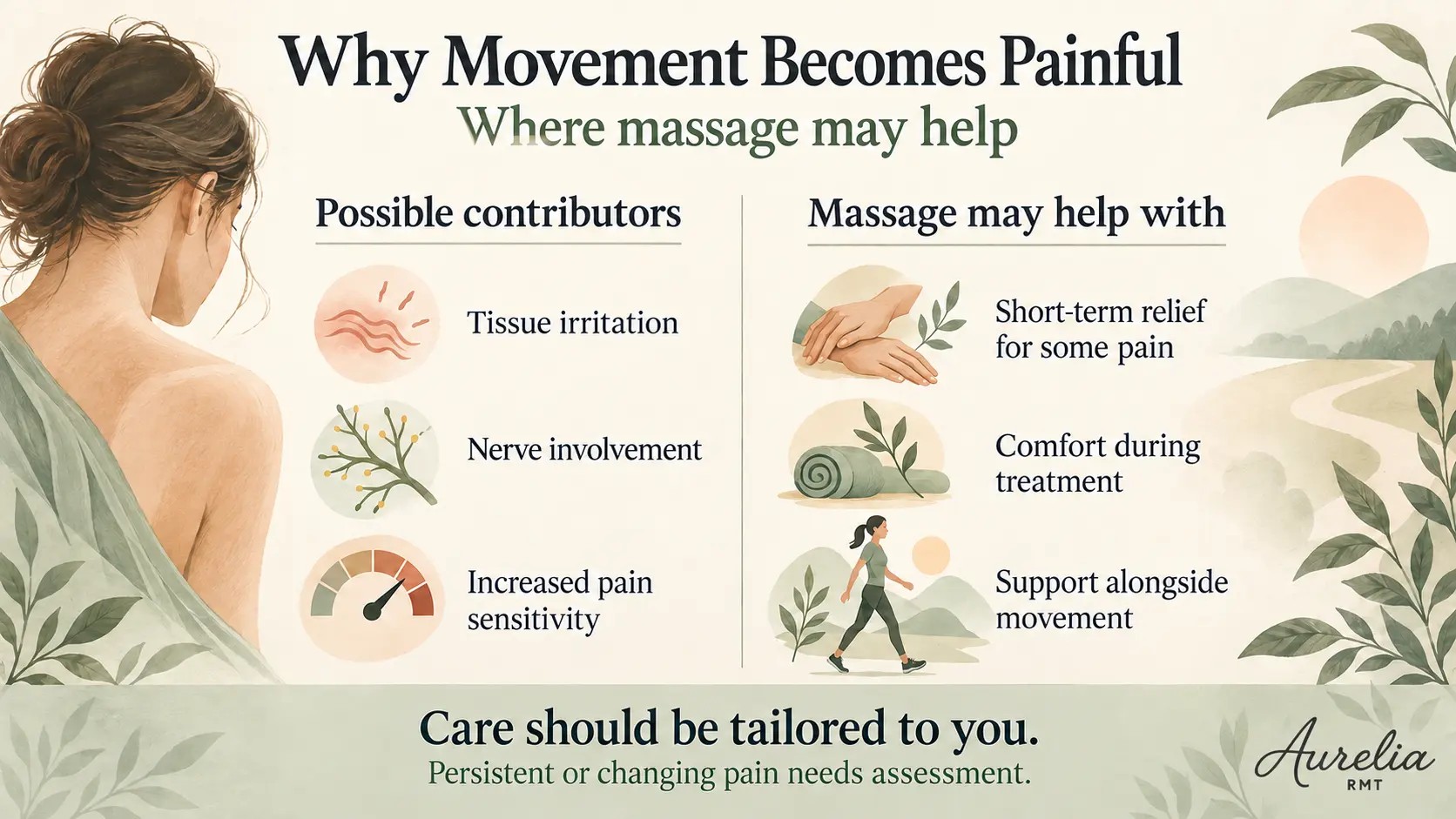
Movement involves muscles, tendons, joints, and nerves working together. Pain can develop when tissues are injured or inflamed, when nerves are affected, or when the way the nervous system processes pain changes. Several contributors can be present at once. health.nih.gov
Sometimes, the change follows a jump in physical demand. Returning to running after a break, for example, can aggravate the Achilles tendon. Reducing the amount of activity temporarily and rebuilding tolerance through appropriate exercise may be part of recovery. This illustrates why both the activity and the amount you do matter. www.newcastle-hospitals.nhs.uk
Other pain needs a different explanation. Burning or shooting sensations, particularly with numbness or weakness, can suggest nerve involvement and deserve assessment. The way a symptom feels can provide clues, but it cannot establish a diagnosis on its own. health.nih.gov
Why pain can persist
Pain sometimes continues after an initial injury improves. The nervous system can become more sensitive, and movements or touch that were previously comfortable may start to hurt. Pain intensity therefore does not always tell us how much tissue damage is present. health.nih.gov
Pain is also influenced by our experiences and circumstances. The International Association for the Study of Pain recognises physical, psychological, and social influences on pain. Your symptoms are real and deserve to be taken seriously, even when there is no simple explanation for them. www.iasp-pain.org
Sleep and stress can influence pain sensitivity too. Considering these factors helps build a fuller picture of what you are experiencing. It does not establish that stress is the cause of your pain. health.nih.gov
Where massage may help
Research suggests that massage may provide short-term pain relief for some people with neck, shoulder, or lower back pain. Results vary, and evidence for lasting benefit is limited. Even where research suggests an improvement, the quality of the evidence is often low. www.nccih.nih.gov
If massage makes a sore area feel more comfortable, it may be easier to practise an agreed movement or participate in daily activities. This is a practical way to use symptom relief; it is not a guarantee that massage will restore movement or resolve the underlying condition.
NICE clinical guidelines recommend considering massage for low back pain as part of care that includes exercise. The World Health Organization also lists massage as an option for chronic primary low back pain, meaning pain lasting more than three months without a specific underlying disease. Its recommendation is conditional because the evidence is very uncertain. Both approaches support individualised care using several treatments together. www.nice.org.uk
A useful treatment goal is specific to your life: turning your head more comfortably while driving, getting dressed with less difficulty, or returning to a manageable walk. Review whether treatment helps those activities and how long any improvement lasts. If benefits are brief or absent, discuss whether the plan needs to change.
Comfort matters during treatment
Treatment pressure should be discussed and adjusted to your comfort. You can ask for lighter pressure, a different position, a pause, or an end to the session. Ontario patients have the right to decide which areas are treated and to change or withdraw consent at any time. www.cmto.com
Let your therapist know if pressure causes sharp or radiating pain, or makes you brace and hold your breath. Stronger pressure has not been established as universally more effective, and vigorous massage can carry additional risks for some people. Share relevant health conditions, recent injuries, and medications before treatment so your therapist can assess whether modifications or a referral are needed. www.nccih.nih.gov
Building movement back into your day
When pain persists, it is easy to alternate between doing very little and trying to catch up on a better day. Both prolonged inactivity and repeated overactivity can make everyday tasks harder. Pacing offers a steadier approach: choose a manageable amount of activity, plan breaks, and build gradually. tapmipain.ca
Depending on your condition, this might mean dividing household tasks into shorter sessions, alternating demanding tasks with lighter ones, or starting with a shorter walk. Keep track of what you did and how you felt afterwards so your healthcare provider can help adjust the plan. tapmipain.ca
These strategies need to suit your diagnosis and stage of recovery. Follow any restrictions after an injury or surgery. If a movement significantly worsens symptoms, reduce or pause it and seek advice. Your plan should give you a clear starting point and guidance on which symptoms mean you should stop. www.newcastle-hospitals.nhs.uk
When medical assessment comes first
Arrange an assessment when pain persists, repeatedly returns, or interferes with daily activities. New or worsening numbness or weakness also needs prompt medical attention. Massage should not delay evaluation of an unexplained or changing problem. health.nih.gov
Seek urgent medical care for severe pain that starts suddenly or worsens quickly, especially with fever or feeling unwell. Back pain with new loss of bladder or bowel control, difficulty urinating, numbness around the groin or buttocks, or symptoms in both legs requires emergency assessment. Back pain after a serious accident also needs emergency care. www.nhs.uk
Massage therapy for painful movement in Toronto
AureliaRMT offers massage therapy adapted to your goals, comfort, and preferred pressure. If movement has become uncomfortable, an appointment is an opportunity to discuss what has changed and whether massage may fit into your care. aureliarmt.com
Bring a clear example of what you would like to do more comfortably. That gives your therapist something meaningful to assess and revisit with you.
Learn more about treatment options or book an appointment at aureliarmt.com.
Key Takeaways
- ✓Painful movement can result from tissue irritation, nerve involvement, changes in pain processing, or several factors at once; persistent, recurring, or changing symptoms should be assessed.
- ✓Massage may provide short-term relief for some neck, shoulder, and lower-back complaints, but evidence for lasting benefit is limited and it works best alongside appropriate exercise and activity planning.
- ✓Treatment should be tailored to meaningful goals, such as driving, dressing, or walking more comfortably, with progress judged by improvements in those activities and how long relief lasts.
- ✓Pressure should remain comfortable, and patients can request adjustments or stop treatment at any time; sharp or radiating pain, relevant medical conditions, injuries, and medications should be discussed with the therapist.
- ✓Rebuild activity gradually through pacing, but seek urgent care for sudden severe or rapidly worsening pain, fever, serious-accident injuries, or back pain accompanied by bladder or bowel changes, groin numbness, or symptoms in both legs.
Explore Our Complete Toronto RMT Guide
Looking for more information about massage therapy in Toronto? Our comprehensive guide covers everything from common conditions to treatment options.
View the Complete Guide