
Greater Trochanteric Pain Syndrome: Why the Outside of Your Hip Hurts
Share with a friend

Learn why greater trochanteric pain syndrome causes outer hip pain, common symptoms, helpful treatments, sleep tips, exercises, massage, and when to seek care.
You turn onto your side in bed and feel a familiar ache on the outside of your hip. A walk that usually feels easy has become uncomfortable, and you find yourself thinking twice before taking the stairs.
Greater trochanteric pain syndrome, often shortened to GTPS, is one possible explanation for this pattern. It commonly involves the tendons around the outer hip, sometimes along with nearby cushioning tissues.
When you come to me with hip discomfort, I want to understand how it is affecting your day. Knowing what irritates the area can help us make thoughtful choices about treatment and whether you need further assessment.
What greater trochanteric pain syndrome means
The greater trochanter is the bony prominence on the outside of your upper thigh. Tendons from two of your buttock muscles, the gluteus medius and gluteus minimus, attach here and help steady your pelvis as you walk.
GTPS describes a group of painful conditions around this area. It often involves gluteal tendinopathy, which means the tendons have become painful and less able to tolerate everyday demands. Nearby bursae, small fluid-filled sacs that reduce friction, may also become irritated.
You may have heard this called “hip bursitis.” Bursitis can be part of the picture, but tendon involvement is common. That distinction matters because recovery often includes gradually rebuilding the hip’s tolerance for activity. PMC
How outer hip pain may feel
You might notice:
- Tenderness over the bony area on the outside of your hip.
- An ache when lying on the affected side.
- Pain during walking, climbing stairs, or standing on one leg.
- Discomfort that spreads into the buttock or down the outer thigh, sometimes toward the knee.
- Difficulty finding a comfortable sleeping position.
These symptoms can suggest GTPS, but they cannot confirm the cause on their own. Pain from the hip joint or lower back can overlap with this pattern. healthdirect
Why the outside of your hip becomes irritated
Symptoms sometimes begin after a change in activity, such as longer walks, more hills, or returning to exercise after a quieter period. The tendons may be asked to do more than they can comfortably manage at that time.
Pressure can also play a role. Lying directly on the sore hip, crossing your legs, or standing with your weight resting heavily on one hip can compress sensitive tissues. Even lying on the other side may be uncomfortable if the upper leg drops across your body.
GTPS is more common in women in midlife, although anyone can develop it. Sometimes there is no clear starting point. You do not need to identify one particular mistake before seeking help. elht.nhs.uk
Gentle changes that may help
Start by noticing which positions and activities leave your hip more uncomfortable. A few small adjustments may reduce irritation while you work toward a suitable rehabilitation plan.
For sleep, try lying on your back or on the less painful side with a pillow supporting the upper leg between your knees. Adjust the support so the sore hip feels comfortable and your top leg does not drop inward.
During the day, try uncrossing your legs and changing position regularly. If standing on one leg is uncomfortable while getting dressed, sitting down may make the task easier.
Keep activity manageable. Shorter walks on level ground may be easier than a long walk with hills. If symptoms remain noticeably worse the next day, reduce the amount and discuss it with your treating professional. elht.nhs.uk
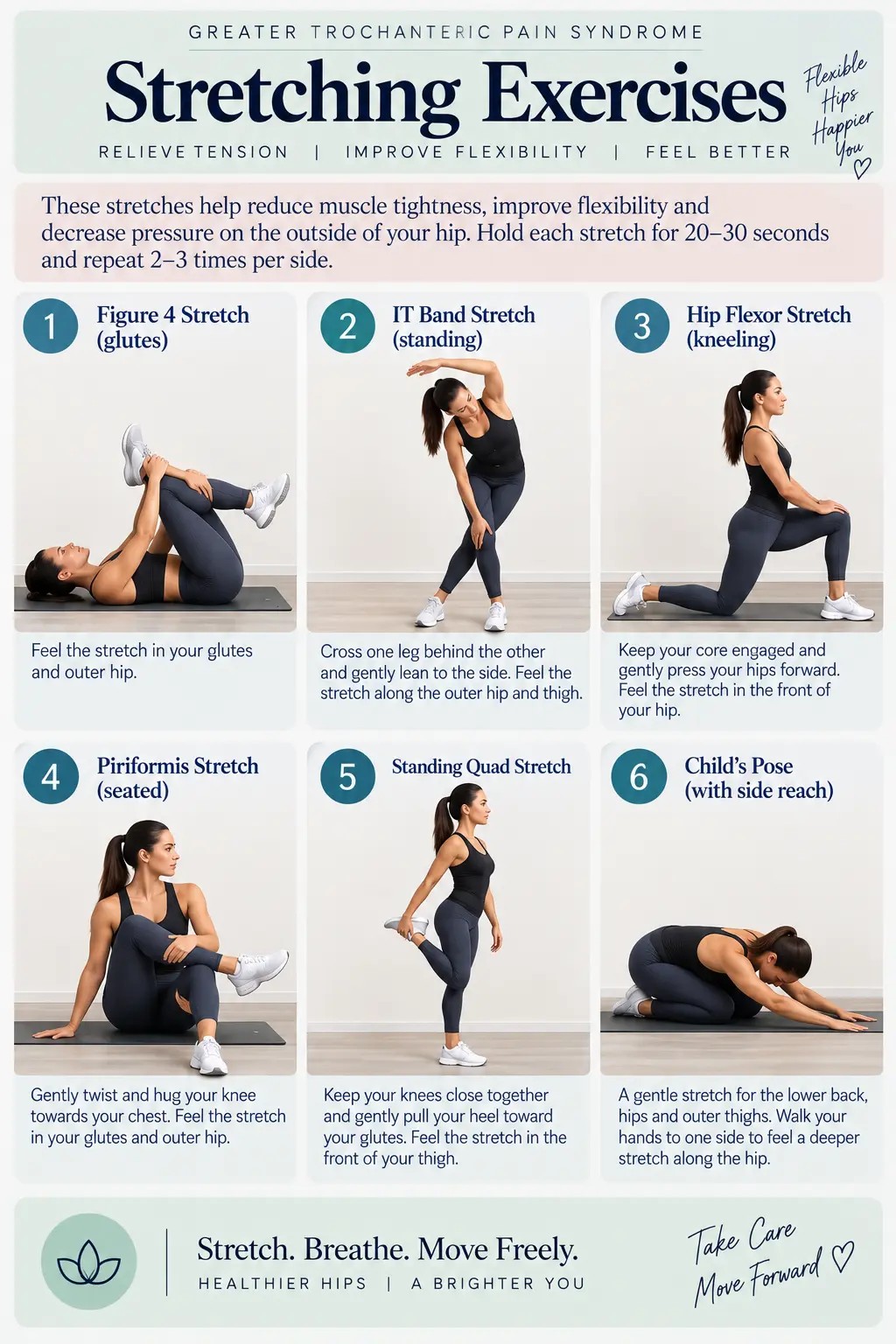
Be cautious with strong outer hip stretches, particularly those that pull your leg across your body. They can increase compression around the tendons. Avoid digging into the tender bony area with a foam roller or massage ball. PMC
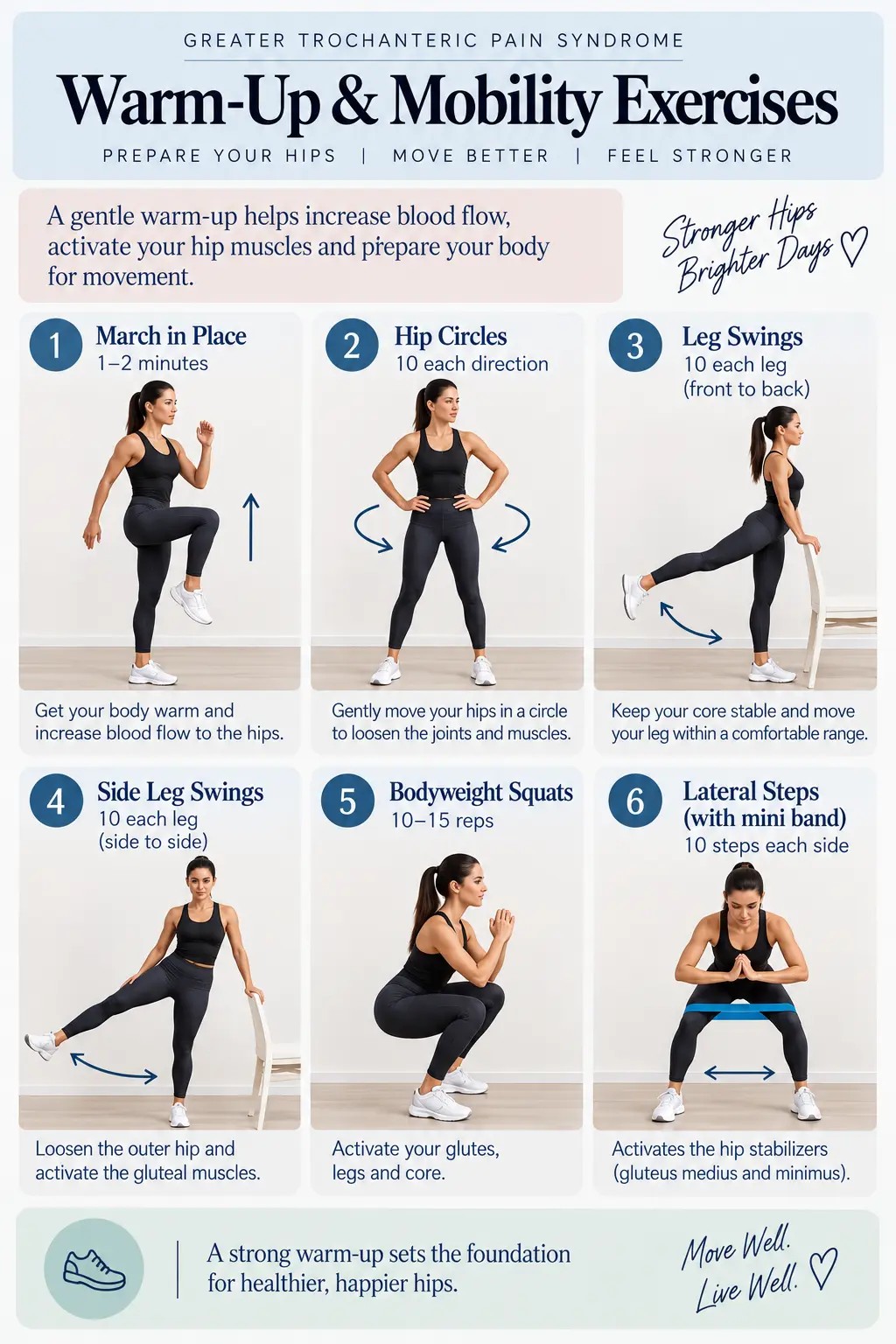
Gradual strengthening is an important part of care when gluteal tendinopathy is involved. In a clinical trial, education about managing tendon demands combined with targeted exercise improved pain and overall recovery more than a wait-and-see approach at eight weeks. PMC
A physiotherapist can help choose a starting level and adjust the exercises as your tolerance changes. The aim is to build capacity steadily, with a plan that fits your symptoms and daily life.
How massage therapy may fit into your care
Massage may be considered for comfort in the surrounding muscles, but evidence that massage alone treats GTPS is limited. It is best approached as a possible addition to education and an appropriate exercise plan.
Direct pressure over the irritated tendons or bursae can aggravate symptoms. I would avoid deep pressure into the sore bony area and choose any work around the hip according to your assessment and comfort. academic.oup.com
Positioning matters, too. We can use pillows and adjust how you lie so the hip is supported during your session. Any treatment around the hip or buttock would be discussed with you first, with your consent and appropriate draping.
You can ask for lighter pressure, a different position, or a pause at any time. If treatment increases your symptoms, that is a reason to adjust the approach. You do not need to endure painful pressure to make the session worthwhile.
When to have your hip assessed
Arrange an assessment if pain keeps returning, changes the way you walk, or regularly interrupts your sleep. A doctor or physiotherapist can help distinguish GTPS from joint problems, pain referred from the back, and other causes. Scans are sometimes helpful, but they are not always needed.
Seek urgent medical care if you develop sudden severe hip pain, cannot walk or put weight through your leg, or have a hot, swollen hip with fever or feel unwell. Severe pain after a fall or injury also needs urgent assessment. PMC
Pain when lying on the sore side can occur with GTPS. Persistent or worsening pain that does not ease when you change position deserves medical review, especially if you also feel unwell. elht.nhs.uk
If you are looking for massage therapy in Toronto as part of your care, you are welcome to book a session with me at AureliaRMT. We can discuss what you are experiencing, find a comfortable treatment position, and consider how massage may fit alongside any medical care or rehabilitation you need.
Frequently Asked Questions
What is greater trochanteric pain syndrome (GTPS)?
GTPS describes painful conditions affecting the outside of the hip. It commonly involves the gluteus medius and gluteus minimus tendons and may also include irritation of nearby bursae.
What are the common symptoms of GTPS?
Common symptoms include tenderness over the outer hip, pain when lying on the affected side, discomfort during walking or climbing stairs, pain when standing on one leg, and aching that may spread into the buttock or outer thigh.
What can I do at home to reduce outer hip pain?
Avoid positions that compress the sore area, such as crossing your legs or resting your weight on one hip. Try sleeping on your back or on the less painful side with a pillow between your knees, and temporarily choose shorter, level walks if longer or hillier routes aggravate symptoms.
Can massage therapy help with GTPS?
Massage may provide comfort for surrounding muscles, but evidence that it treats GTPS on its own is limited. It is generally best used alongside education and an appropriate strengthening program, while avoiding deep pressure directly over the painful bony area.
When should I seek medical care for outer hip pain?
Arrange an assessment if the pain repeatedly returns, disrupts sleep, or changes how you walk. Seek urgent care for sudden severe pain, inability to bear weight, severe pain after an injury, or a hot and swollen hip accompanied by fever or feeling unwell.
References & Citations
Explore Our Complete Toronto RMT Guide
Looking for more information about massage therapy in Toronto? Our comprehensive guide covers everything from common conditions to treatment options.
View the Complete Guide