
Hypothyroidism and Muscle Pain: Why Your Body May Feel Sore and Stiff
Share with a friend

Learn how hypothyroidism causes muscle pain, stiffness and weakness, when to seek thyroid testing, and how massage may support comfort alongside medical care safely.
Muscle pain can have an unexpected connection to thyroid health. Hypothyroidism, or an underactive thyroid, can cause aching, stiffness and weakness alongside symptoms such as fatigue and feeling unusually cold. If your body feels sore without a clear explanation, thyroid function may be one part of the picture worth discussing with your healthcare provider.
Understanding that connection can help you make sense of your symptoms and choose appropriate care. Medical treatment addresses the thyroid hormone deficiency. Massage may have a supporting role in comfort, depending on your symptoms, health history and response to treatment.
Why an underactive thyroid can affect your muscles
Your thyroid is a small gland at the front of your neck. It produces hormones that help regulate how your body uses energy. These hormones also help your muscles work normally, so low levels can affect how your muscles feel and function.
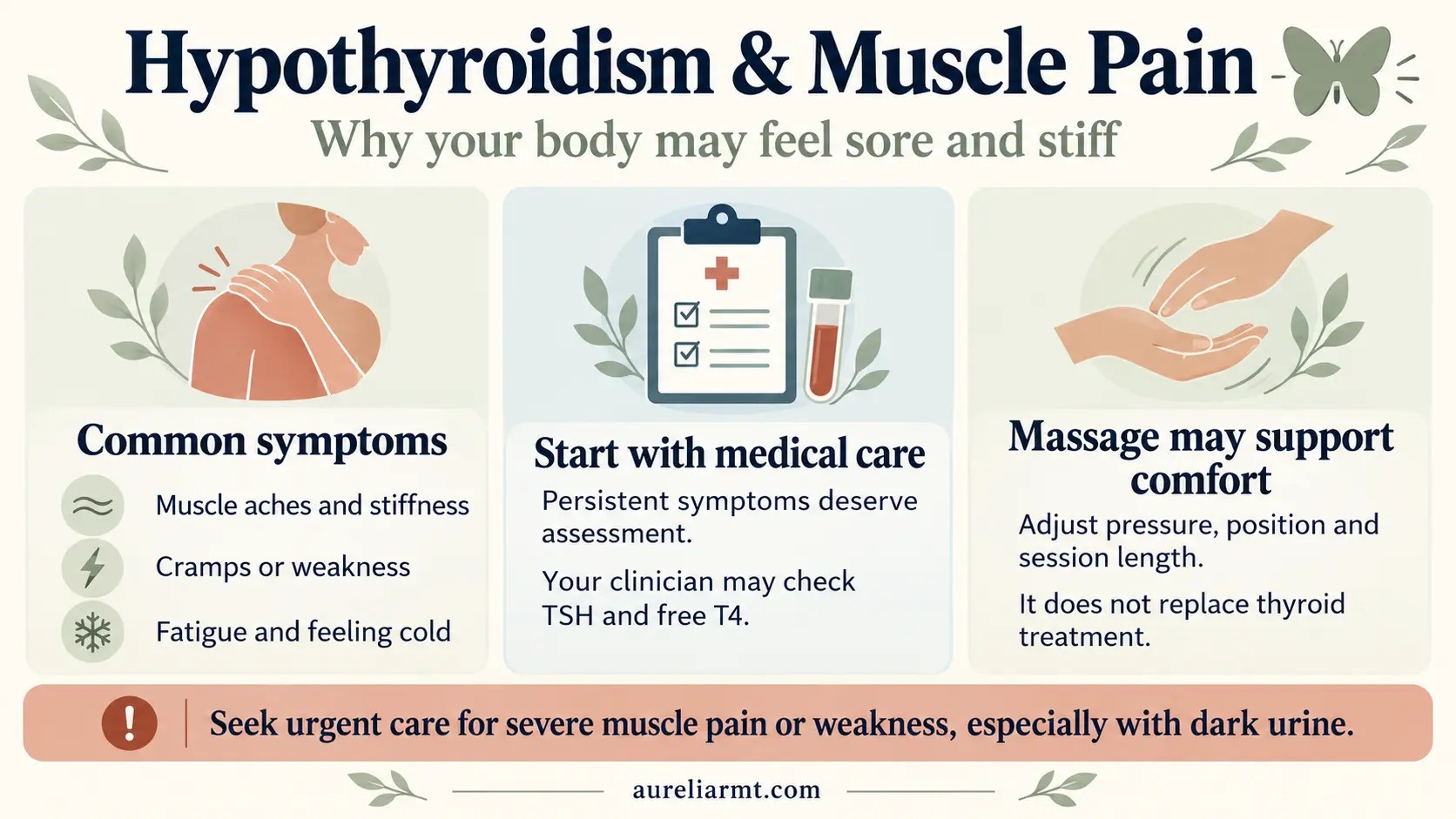
When hypothyroidism affects muscle function, clinicians may describe it as hypothyroid myopathy. Myopathy means a disorder of muscle. Symptoms can include:
- Muscle stiffness and painful cramps.
- Weakness around the hips and sometimes the shoulders.
- Difficulty with movements that use those muscles, such as climbing stairs or raising your arms.
Aching and tenderness can occur too. Some people also develop joint pain or stiffness, which can make it difficult to tell whether discomfort is coming from a muscle, a joint, or both.
The distinction between soreness and weakness matters. A muscle that feels uncomfortable when you move is different from a muscle that cannot produce its usual strength. Tell your healthcare provider if everyday tasks are becoming harder, especially if that change is progressing.
When muscle soreness deserves a thyroid check
Persistent muscle discomfort is worth discussing with a doctor or nurse practitioner, particularly when it occurs alongside other unexplained changes. These may include ongoing tiredness, sensitivity to cold, dry skin, constipation, weight gain or changes in menstrual periods. Symptoms often develop gradually, making them easy to overlook.
These symptoms can have several causes. A healthcare provider will consider your history and examination and decide whether thyroid testing is appropriate. Testing usually includes thyroid-stimulating hormone, known as TSH, and may include free T4, a measure of thyroid hormone in the blood.
Before your appointment, note when the soreness began, whether it is widespread or limited to one area, and whether you have noticed cramps or loss of strength. Bring a list of medications and supplements. Those details help your provider decide what to investigate.
Treating the thyroid condition is central to recovery
For hypothyroidism, treatment commonly involves levothyroxine, a medicine that replaces the thyroid hormone your body needs. Your prescriber adjusts treatment using blood tests and your clinical situation. Bloodwork is often repeated about six to eight weeks after starting treatment or changing the dose.
Muscle symptoms caused by low thyroid hormone often improve when the hormone deficiency is corrected. Recovery varies, so discuss persistent weakness or pain with your provider rather than assuming that every symptom will resolve on the same schedule.
If your thyroid levels are appropriately treated and you still have pain, further assessment may be needed. Mayo Clinic notes that other conditions, including rheumatoid arthritis, can coexist with hypothyroidism. Ongoing joint swelling or stiffness deserves attention even when thyroid blood tests are in range.
Where massage may help
Massage may be an option for managing accompanying muscle discomfort when your health and symptoms make treatment appropriate. Research suggests that massage can offer short-term relief for some types of neck or shoulder pain. However, those findings do not establish that massage treats hypothyroid myopathy.
For someone living with hypothyroidism, a reasonable goal is to explore whether massage improves comfort or eases a particular area of tension. The response should guide the plan. Massage does not replace thyroid hormone treatment, correct a hormone deficiency or establish the cause of unexplained pain.
Your RMT can assess soft tissues and joints, discuss what you hope to achieve, and recommend medical assessment when your symptoms need investigation beyond massage therapy. Treatment should stay within the therapist’s scope and be adapted to your individual needs.
Making massage comfortable when you feel sore or fatigued
Before treatment, tell your RMT about your thyroid diagnosis, medications, recent changes in symptoms, and any medical advice you have received. Mention unusual weakness, swelling, numbness or significant fatigue. Ontario’s massage therapy regulator emphasizes that health information helps an RMT tailor treatment appropriately.
Depending on the assessment and your preferences, practical adjustments to discuss may include:
- Lighter pressure over tender areas.
- A shorter session or time for breaks when fatigue limits your tolerance.
- Pillows or a different position to make lying on the table more comfortable.
- Focusing on fewer areas and checking how you feel before increasing treatment intensity.
These are comfort options to consider, not a specific treatment protocol for hypothyroidism. Your RMT should monitor your response and modify care accordingly.
You can ask for less pressure, a change in position, or a pause at any point. You can also stop treatment. Let your therapist know if the session leaves you substantially more sore or exhausted so the plan can be reassessed.
Supporting movement between appointments
If weakness or stiffness is limiting your activity, ask your healthcare provider whether physiotherapy would be helpful. Rehabilitation can support strength and function while the underlying hormonal condition is treated.
Discuss a manageable starting point, such as short walks or gentle movements, rather than setting a demanding exercise target. Keep track of how you feel during activity and afterward. Worsening weakness, significant pain or difficulty with everyday tasks should prompt a review of your plan.
It can also help to record which activities bring on symptoms and what makes them easier. A brief symptom diary gives your healthcare provider and RMT useful information without requiring you to monitor every sensation.
When to seek medical attention
Arrange a medical assessment for persistent, unexplained muscle pain, gradually increasing weakness, or symptoms that continue despite thyroid treatment. If your muscles are becoming less capable of everyday tasks, do not rely on repeated massage appointments to investigate the cause.
Seek urgent medical care for severe or rapidly worsening muscle pain or weakness, especially with dark urine that looks like tea or cola. These can be signs of rhabdomyolysis, a serious condition involving muscle breakdown. You do not need to have every symptom for urgent assessment to be appropriate.
Massage therapy tailored to your needs in Toronto
If you are managing hypothyroidism and would like help with muscle discomfort, share your symptoms and treatment goals before booking. Aurelia RMT offers registered massage therapy in Toronto, with sessions adapted to your comfort and the pressure you prefer.
Visit aureliarmt.com to learn about treatment options and discuss whether massage may fit alongside your existing care.
Explore Our Complete Toronto RMT Guide
Looking for more information about massage therapy in Toronto? Our comprehensive guide covers everything from common conditions to treatment options.
View the Complete Guide