
How Stress and Anxiety Affect Breathing, Posture, and Muscle Guarding
Share with a friend

Discover how stress and anxiety affect breathing, posture, and muscle guarding, and how gentle massage therapy in Toronto can help your body feel safe and soften.
Stress and anxiety can show up quietly in the body.
You may notice your shoulders creeping up toward your ears. Your breath may feel smaller. Your jaw may stay lightly clenched. Your chest, neck, back, or hips may feel like they are holding on, even when you are trying to relax.
At AureliaRMT in Toronto, I often see patients who come in for muscle tension, but underneath the tightness there is also a nervous system that has been working very hard. Stress and anxiety affect breathing, posture, and muscle guarding in ways that can feel subtle at first, then tiring over time.
This does not mean something is wrong with you. It means your body is trying to protect you.
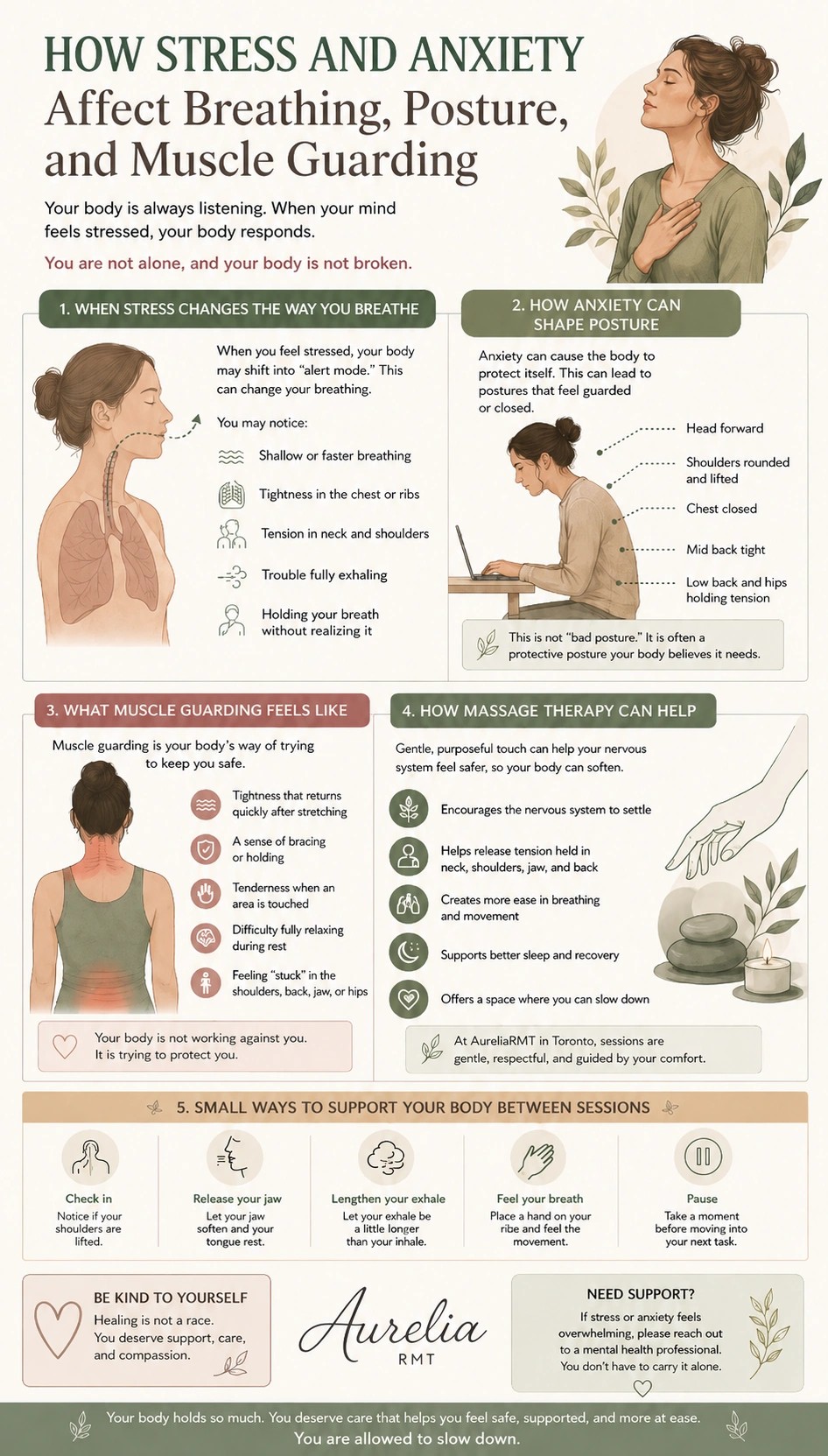
When Stress Changes the Way You Breathe
When you feel stressed, your body may shift into a more alert state. Your breathing can become faster, shallower, or more held in the upper chest.
You may notice:
- A tight feeling around the chest or ribs
- Breath that feels short or incomplete
- More tension in the neck and shoulders
- A sense that you cannot fully exhale
- Holding your breath without realizing it
This can happen because the body is preparing for action. Even when there is no physical danger, your nervous system may still respond as if it needs to stay ready.
Over time, shallow breathing can make the muscles around the neck, chest, ribs, and upper back feel overworked. These areas may begin to feel tight, tender, or tired.
How Anxiety Can Shape Posture
Posture is not only about sitting up straight.
Posture is also emotional. It can reflect how safe, guarded, tired, or overwhelmed your body feels.
When anxiety is present, the body may naturally curl inward or protect the front of the body. The shoulders may round forward. The head may drift slightly forward. The chest may feel closed. The belly may stay braced.
This is not “bad posture.” It is often a protective posture.
Your body may be saying, “I need to make myself smaller,” or “I need to be ready.” The trouble is that when this position becomes familiar, certain muscles can stay tense for longer than they need to.
Common areas affected include:
- Neck and upper shoulders
- Jaw and temples
- Chest and front of the shoulders
- Mid back
- Low back and hips
Massage therapy can help bring awareness back to these areas gently, without forcing the body into a position it is not ready for.
What Muscle Guarding Feels Like
Muscle guarding is when your muscles hold tension as a protective response.
Sometimes this happens after an injury. Sometimes it happens with pain. Sometimes it happens when the nervous system feels stressed or unsafe.
Muscle guarding may feel like:
- Tightness that returns quickly after stretching
- A sense of bracing in the body
- Tenderness when an area is touched
- Difficulty fully relaxing during rest
- Feeling “stuck” in the shoulders, back, jaw, or hips
The body may hold this tension because it believes it is helping. Guarding can feel frustrating, but it is not your body failing you. It is your body trying to create safety.
The goal is not to fight the guarding. The goal is to give the body enough calm input that it can begin to soften.
Why Massage Therapy Can Feel Supportive
Massage therapy may help by offering slow, steady, reassuring contact.
For many patients, a gentle treatment can create a sense of safety in the body. As the muscles receive calm pressure and the pace slows down, the nervous system may begin to settle.
A stress-informed massage session may focus on:
- Slow, gentle pressure
- Neck, shoulder, jaw, and back tension
- Breathing space around the ribs and chest
- Comfort, consent, and clear communication
- Avoiding anything that feels too intense or overwhelming
You do not have to “push through” a massage for it to be effective. In fact, when stress and anxiety are involved, softer work is often more helpful than forcing the body to release.
Small Ways to Notice Your Body Between Sessions
You do not need a complicated routine.
A few gentle moments of awareness can help you notice when your body is holding tension.
You might try:
- Noticing if your shoulders are lifted
- Softening your jaw slightly
- Letting your exhale be a little slower
- Placing one hand on your ribs and feeling your breath move
- Taking a pause before rushing into the next task
These are not meant to “fix” anxiety. They are small invitations for the body to feel less alone.
If breathing exercises ever make you feel dizzy, panicked, or uncomfortable, stop and return to normal breathing. For some people, breathwork needs to be approached very gently.
When to Seek Extra Support
Massage therapy can be a supportive part of care, but it is not a replacement for mental health support.
If anxiety feels intense, persistent, or is affecting your daily life, it may help to speak with a doctor, therapist, or qualified mental health professional.
Massage can support the body side of stress. Mental health care can support the emotional and psychological side. You deserve care for both.
Book a Gentle Massage Therapy Session in Toronto
If stress or anxiety has been sitting in your shoulders, breath, jaw, or back, a gentle massage therapy session may help your body feel more settled.
At AureliaRMT, treatment is slow, respectful, and guided by your comfort. You are always allowed to ask for lighter pressure, a pause, or a different approach.
Your body does not need to be forced into calm. Sometimes it just needs to feel safe enough to soften.
Key Takeaways
- ✓Stress and anxiety often show up physically as subtle changes in breathing, posture, and muscle tension, even when you are trying to relax.
- ✓These patterns are protective responses from the nervous system—not signs that something is wrong with you—but over time they can leave muscles feeling tight, tired, and overworked.
- ✓Shallow, upper-chest breathing and protective postures (rounded shoulders, braced belly, clenched jaw) can contribute to ongoing muscle guarding in the neck, shoulders, jaw, back, and hips.
- ✓Gentle, stress-informed massage therapy can help the nervous system feel safer, reduce muscle guarding, and bring awareness to tense areas without forcing the body to change.
- ✓Simple daily check-ins—like softening your jaw, noticing your shoulders, and lengthening your exhale—can support your body between sessions, while mental health professionals can help with the emotional side of anxiety.
References & Citations
Explore Our Complete Toronto RMT Guide
Looking for more information about massage therapy in Toronto? Our comprehensive guide covers everything from common conditions to treatment options.
View the Complete Guide