
Diabetes, Neuropathy, and Massage Therapy: A Cautious Approach
Share with a friend

Learn how gentle, cautious massage therapy can safely support people with diabetes and neuropathy, with a modified RMT approach focused on foot care.
A gentle note before we begin
When you live with diabetes, your body may ask for care in quieter ways. You may feel tired, heavy, sore, sensitive, or disconnected from certain areas, especially the feet and lower legs.
If neuropathy is present, massage therapy needs to be approached with extra care.
Diabetes, neuropathy, and massage therapy can work together in a supportive way, but the treatment should never feel rushed, forceful, or careless. As an RMT in Toronto, my approach is gentle, cautious, and always guided by how your body is responding that day.
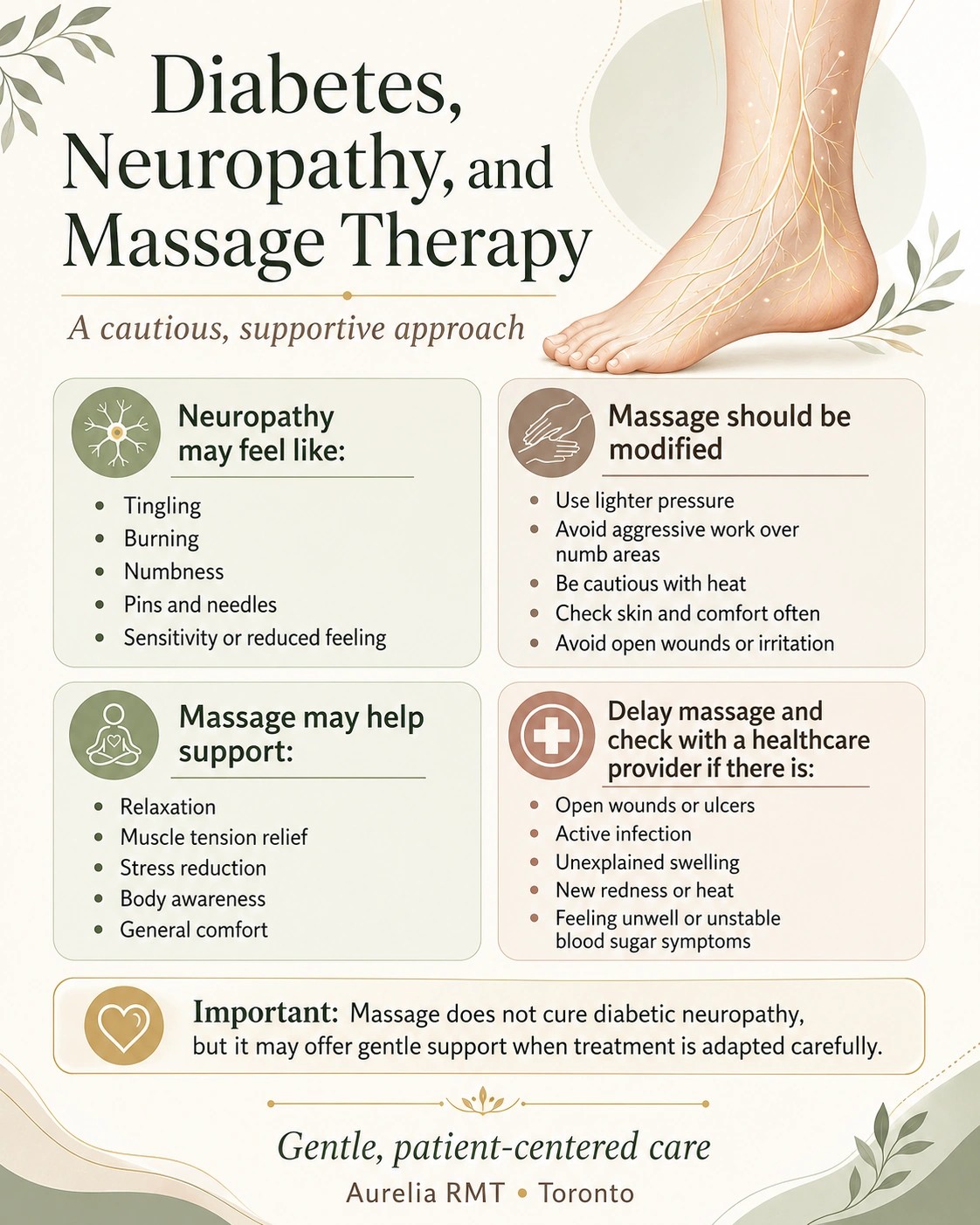
What Is Diabetic Neuropathy?
Diabetic neuropathy is nerve irritation or nerve damage that can happen when diabetes affects the nerves over time. It often shows up in the feet, legs, hands, or arms.
You may notice:
- Tingling
- Burning
- Numbness
- Pins and needles
- Sharp or electric-like pain
- Less feeling in the feet
- Balance changes
- Sensitivity to touch
Sometimes, neuropathy can be quiet. A person may not feel pain from a small cut, blister, or area of pressure. This is why caution matters so much.
Massage is not just about easing tension here. It is also about protecting the skin, the nerves, and the patient’s sense of safety.
Why Massage Needs to Be Modified
When sensation is reduced, the body may not give clear warning signs.
A pressure that feels normal to one person may be too much for someone with neuropathy. A warm towel may feel soothing in one area but too intense in another. A small skin irritation may go unnoticed until later.
For this reason, massage therapy for diabetic neuropathy should be slower, lighter, and more observant.
An RMT may modify treatment by:
- Using lighter pressure
- Avoiding deep work over numb areas
- Checking comfort often
- Avoiding aggressive friction
- Being careful with heat
- Avoiding work over open skin, sores, ulcers, or irritation
- Paying attention to circulation changes, swelling, or skin colour
The goal is not to “push through.” The goal is to support the body without overwhelming it.
Foot Care Comes First
For patients with diabetes and neuropathy, the feet need special attention.
Before working around the feet or lower legs, an RMT should be aware of any skin changes, wounds, swelling, redness, or areas of reduced sensation. If there are open sores, ulcers, signs of infection, or unexplained swelling, massage over that area should be avoided and the patient should be referred back to their healthcare provider.
This is not meant to create fear. It is simply part of safe care.
A gentle foot or lower leg massage may feel comforting for some patients, but it should only be done when the skin is healthy, sensation is understood, and pressure is kept appropriate.
Your feet carry you through the day. With neuropathy, they deserve care that is soft, attentive, and respectful.
What Massage May Help With
Massage therapy does not cure diabetic neuropathy. It should not replace medical care, medication, blood sugar management, or regular foot checks.
But when it is appropriate, massage may help support:
- Relaxation
- Muscle tension relief
- A calmer nervous system
- General comfort
- Gentle body awareness
- Stress reduction
- A sense of care and connection
For some patients, massage can also be a way to feel more at ease in a body that has felt uncomfortable, unpredictable, or distant.
That emotional part matters too.
Living with a chronic condition can feel heavy. A calm treatment space can give your body a chance to soften, breathe, and feel supported.
When Massage Should Be Avoided or Delayed
Massage therapy should be delayed or modified if there are safety concerns.
This may include:
- Open wounds
- Diabetic foot ulcers
- Active infection
- Unexplained swelling
- New redness or heat in the skin
- Severe pain that has not been assessed
- Loss of sensation with unknown skin condition
- Recent injury
- Unstable blood sugar symptoms
- Feeling faint, shaky, or unwell
If something does not feel right, it is always okay to pause.
A safe massage treatment should feel collaborative. You should never feel pressured to continue if your body is giving signals that something needs attention.
A Gentle RMT Approach in Toronto
At Aurelia RMT, massage therapy for patients with diabetes and neuropathy is approached carefully.
That means taking time to ask questions, listening to your comfort level, adjusting pressure, and respecting any areas that need to be avoided. Treatment may be softer, slower, and more focused on comfort rather than intensity.
If you are living with diabetes, neuropathy, or changes in sensation, you are welcome to share as much as you feel comfortable sharing before your session. This helps your treatment feel safer and more supportive.
Massage should meet your body where it is, not where anyone thinks it “should” be.
Book a Cautious, Supportive Massage Therapy Session
If you are managing diabetes, neuropathy, or changes in sensation, massage therapy may still be possible, but it should be done with care.
You can book a session with Aurelia RMT in Toronto for a gentle, thoughtful approach that respects your health history, your comfort, and your body’s boundaries.
Your treatment can be calm. It can be careful. It can still feel deeply supportive.
References & Citations
Explore Our Complete Toronto RMT Guide
Looking for more information about massage therapy in Toronto? Our comprehensive guide covers everything from common conditions to treatment options.
View the Complete Guide