
How RMTs Modify Massage When a Patient Is in Active Chemotherapy
Share with a friend

Learn how RMTs gently adapt massage during active chemotherapy with lighter pressure, shorter sessions and oncology-informed care for safe, supportive relief.
When your body is moving through chemotherapy, it may feel like everything needs to be approached with more care.
Your energy may shift from day to day. Your skin may feel more sensitive. You may notice fatigue, nausea, tenderness, swelling, or a deeper need for quiet support. Massage therapy during this time is not about deep work or “pushing through” tension. It is about meeting your body gently, with respect for what it is already carrying.
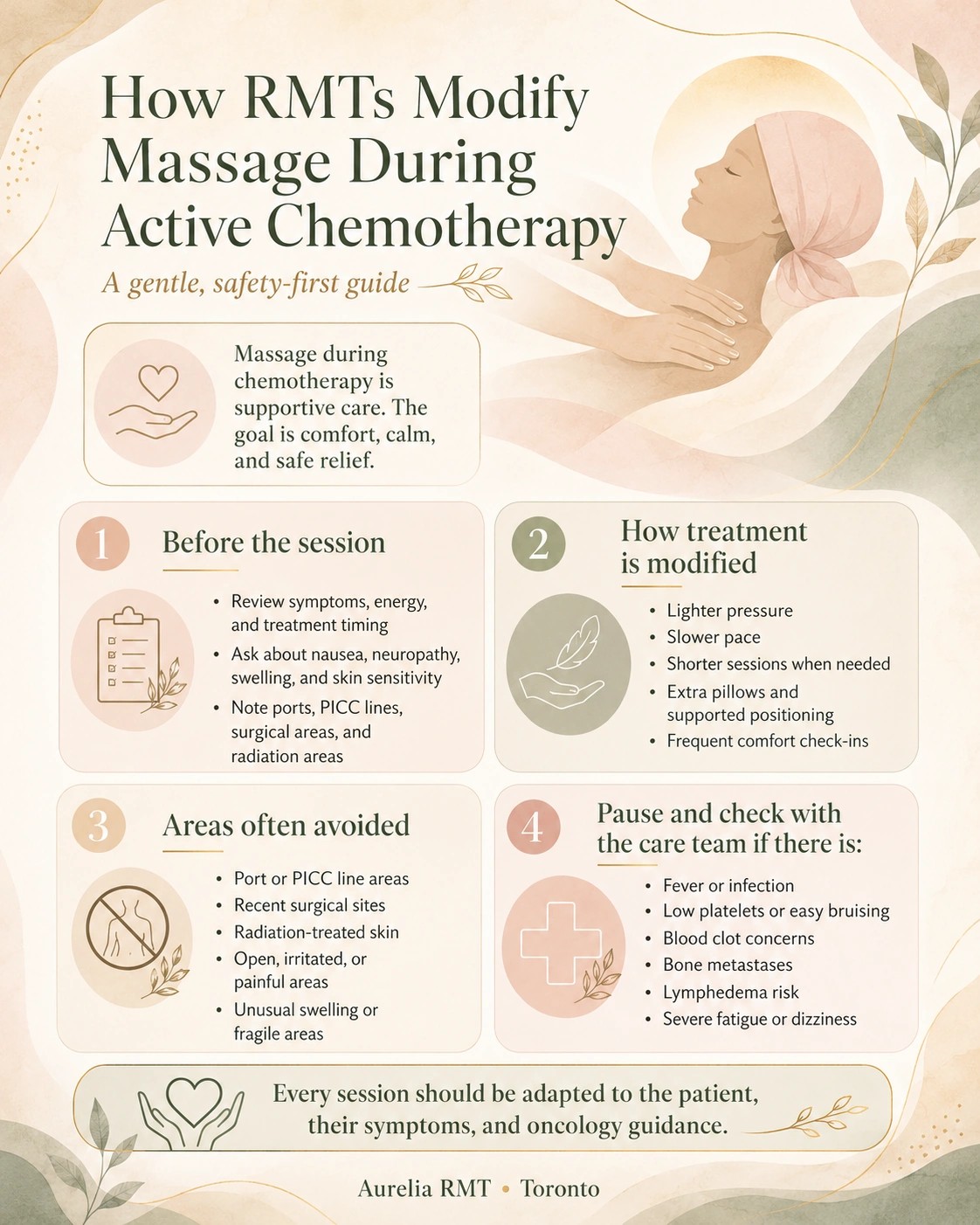
For a patient in active chemotherapy, an RMT modifies massage in thoughtful ways. The session becomes slower, lighter, shorter when needed, and guided by your comfort, your treatment plan, and any precautions from your oncology team.
Massage During Chemotherapy Is Not a Standard Massage
When someone is in active chemotherapy, the body may be more vulnerable than usual. This does not always mean massage must be avoided, but it does mean the treatment needs to be adapted.
An RMT may ask about:
- Where you are in your chemotherapy cycle
- Any recent bloodwork concerns
- Fatigue, nausea, dizziness, pain, or neuropathy
- Port sites, PICC lines, surgical areas, radiation areas, or tender skin
- Swelling or lymphedema risk
- Bone involvement or areas your oncology team has asked you to protect
The goal is not to treat cancer. Massage therapy is used as supportive care, helping create a sense of calm, comfort, and relief where appropriate.
Pressure Is Usually Much Lighter
During active chemotherapy, deep pressure is usually avoided.
The RMT may use light, soothing contact instead of deep tissue techniques. This helps reduce the risk of bruising, soreness, or overwhelming the body when it is already working hard.
The massage may feel slower, softer, and more spacious than a typical treatment. For many patients, this gentler approach can still feel deeply supportive. Sometimes the nervous system needs safety more than intensity.
Sessions May Be Shorter and More Flexible
A full-length massage may not always be the right fit during chemotherapy.
Some patients feel best with a shorter session, especially if they are dealing with fatigue, nausea, low appetite, dizziness, or disrupted sleep. The RMT may suggest a more flexible treatment plan, such as:
- A shorter appointment
- More time for positioning and rest
- Fewer areas treated in one session
- A slower pace with more check-ins
- Ending early if the body feels tired
The session should never feel like something you have to endure. It should feel like a place where your body is allowed to soften.
Positioning Becomes More Supportive
Comfort matters deeply during chemotherapy.
An RMT may use extra pillows, bolsters, side-lying positions, or semi-reclined positioning instead of having you lie flat. This can be helpful if you feel nauseous, tender, breathless, fatigued, or uncomfortable lying on your stomach.
Areas with medical devices, surgical sites, or sensitive skin are carefully avoided. If you have a port, PICC line, or healing incision, the RMT will work around it with care and avoid direct pressure.
Certain Areas May Be Avoided
During active chemotherapy, massage is often modified by avoiding specific areas rather than avoiding the whole body.
An RMT may avoid:
- Tumour sites
- Areas with open wounds, infection, rash, or skin irritation
- Recent surgical areas
- Port or PICC line areas
- Areas affected by radiation
- Areas with unusual swelling
- Regions with known bone metastases or high fracture risk
- Any area that feels painful, fragile, or “not right” to the patient
This is why communication is so important. Your RMT does not need every medical detail, but they do need enough information to keep the session safe and appropriate.
Timing Around Chemotherapy Can Matter
Some patients feel more sensitive in the first few days after chemotherapy. Others may feel better later in the treatment cycle. There is no single perfect timing for everyone.
Your RMT may ask when your last infusion was and how your body usually responds afterward. If you are feeling unwell, feverish, extremely fatigued, dizzy, or at risk of infection, it may be better to postpone massage and check with your healthcare team.
Massage should work with your treatment rhythm, not against it.
When Medical Clearance Is Important
It is always wise to let your oncology team know if you are considering massage therapy during chemotherapy.
Medical guidance is especially important if you have:
- Low platelets or easy bruising
- Low white blood cell counts or infection risk
- Fever or active infection
- Blood clots or clotting concerns
- Bone metastases
- Lymphedema or lymphedema risk
- Recent surgery
- Severe fatigue, dizziness, or unexplained symptoms
A careful RMT will not take this personally. Safety comes first.
A Gentle Note From Aurelia
If you are going through chemotherapy, your body may feel unfamiliar at times. Massage therapy, when appropriate and carefully modified, can offer a quiet space to feel supported without pressure.
At Aurelia RMT in Toronto, treatment is always adapted to the person in front of us. That means we move slowly, listen closely, and respect your body’s limits.
If you are in active chemotherapy and wondering whether massage is right for you, you are welcome to book a session or reach out first. Together, we can discuss what feels safe, supportive, and appropriate for where you are right now.
References & Citations
Explore Our Complete Toronto RMT Guide
Looking for more information about massage therapy in Toronto? Our comprehensive guide covers everything from common conditions to treatment options.
View the Complete Guide