
Grounding Stretch Routine (Before Bed)
Share with a friend

Wind down with this gentle 8–12 minute grounding stretch routine before bed—designed by a Aurelia RMT.
Some nights, your mind is tired but your body still feels “on.” Shoulders hovering. Jaw a little tight. Low back grippy. If you’re looking for a grounding stretch routine (before bed), think of this as a soft landing, not a workout.
I’m Aurelia, an RMT in Toronto, and this is the kind of calm, cozy routine I often suggest when you want to feel more settled in your body before sleep. No pushing. No counting reps. Just a few shapes that help you exhale your way into the pillow.
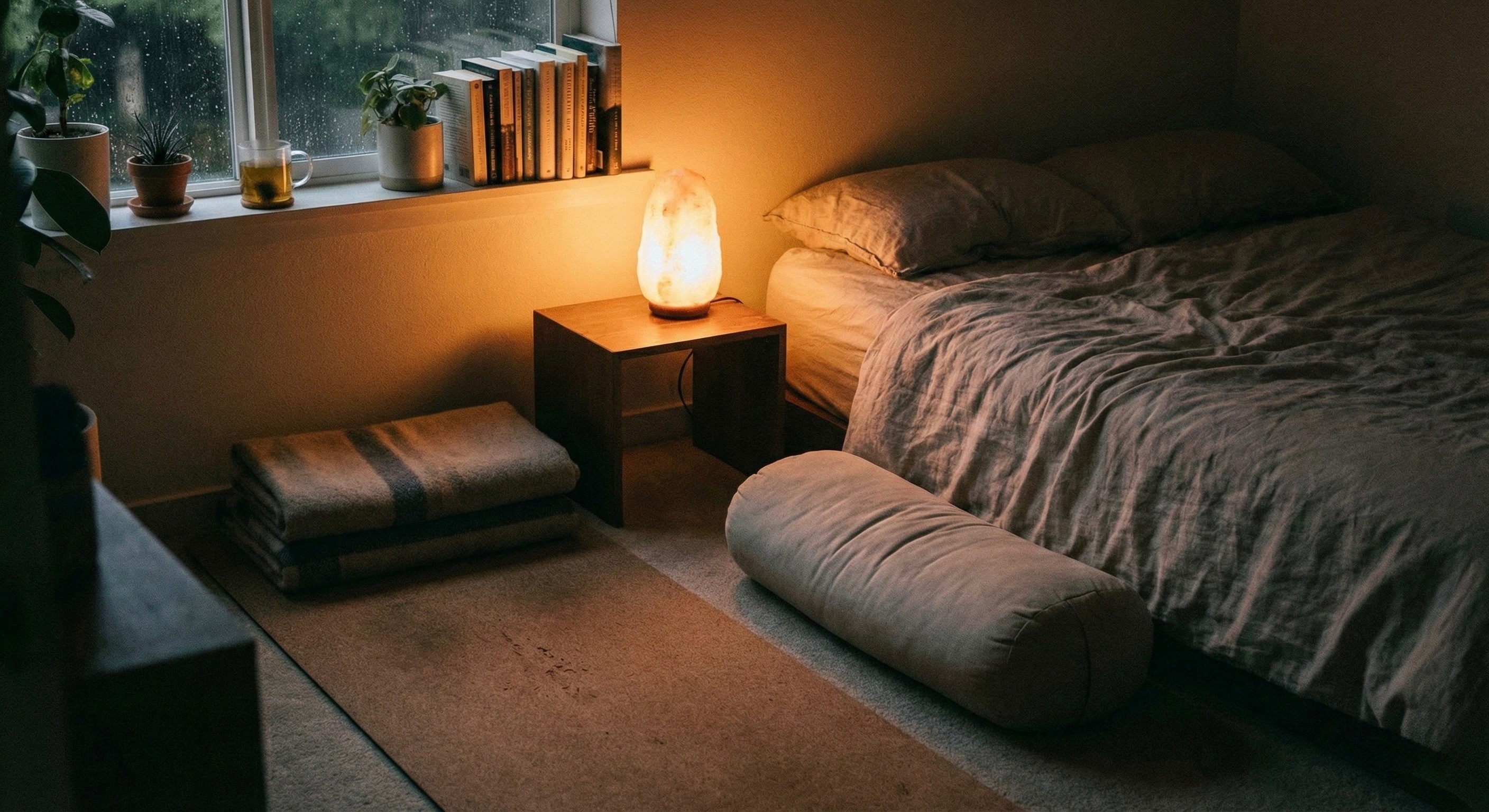
A calm bedroom setup with a mat, pillow, and blanket for a gentle bedtime stretch routine.
Before You Start (A Quick Safety Note)
- Everything here should feel mild to moderate at most. No sharp pain, no numbness, no tingling.
- If you’re dealing with a new injury, dizziness, severe pain, or you’re unsure what’s safe for your body, pause and get guidance.
- The goal is quieting, not “getting deeper.”
If you can breathe slowly and your face can stay soft, you’re doing it right.
The 8–12 Minute Grounding Stretch Routine (Before Bed)
Move through these in order, or just choose 3 that feel good tonight.
1) Feet Up the Wall (2–4 minutes)
How: Sit sideways next to a wall, then gently swing your legs up and lie back.
Make it cozier: Put a pillow under your head. Slight bend in knees is totally fine.
Focus: Feel the weight of your thighs, the support under your back, the steadiness of the wall.
If this position doesn’t feel good, skip it. You can do the rest of the routine on the bed.
2) Child’s Pose With a Pillow (1–2 minutes)
How: Kneel, bring your big toes together, knees apart, and fold forward over a pillow or folded blanket.
Option: Arms forward or arms resting by your sides.
Focus: Let your ribs melt down with each exhale.
3) Supine Knee Hugs (45–60 seconds)
How: Lie on your back, bring one knee in at a time, then both if it’s comfortable.
Keep it gentle: You’re not yanking your legs. You’re just holding yourself.
4) Figure-4 Hip Stretch (1 minute each side)
How: On your back, cross one ankle over the opposite thigh. If it feels okay, draw the legs in slightly.
Modify: If your hips feel pinchy, back off and keep your foot on the floor instead.
Focus: Slow breath into the back of your pelvis.
5) Open Book Twist (45–60 seconds each side)
How: Lie on your side with knees bent, arms straight out in front. Slowly open your top arm toward the other side, letting your chest gently rotate.
Support: Put a pillow between knees if your low back is sensitive.
Focus: Let your shoulder blade feel heavy.
6) Supported Chest Opener (1–2 minutes)
How: Lie on a folded towel or small pillow placed lengthwise along your upper back, so your chest can soften open.
Alternative: Do this on the bed with a pillow behind your upper back.
Focus: Relax the front of the shoulders without forcing them “back.”
7) The “Long Exhale” Finish (1–2 minutes)
How: Lie comfortably, one hand on your chest, one on your belly.
Breath rhythm: Inhale gently through the nose, exhale longer through the mouth.
Simple count: In for 3… out for 5.
Focus: Feel your body sink into what’s holding you up.
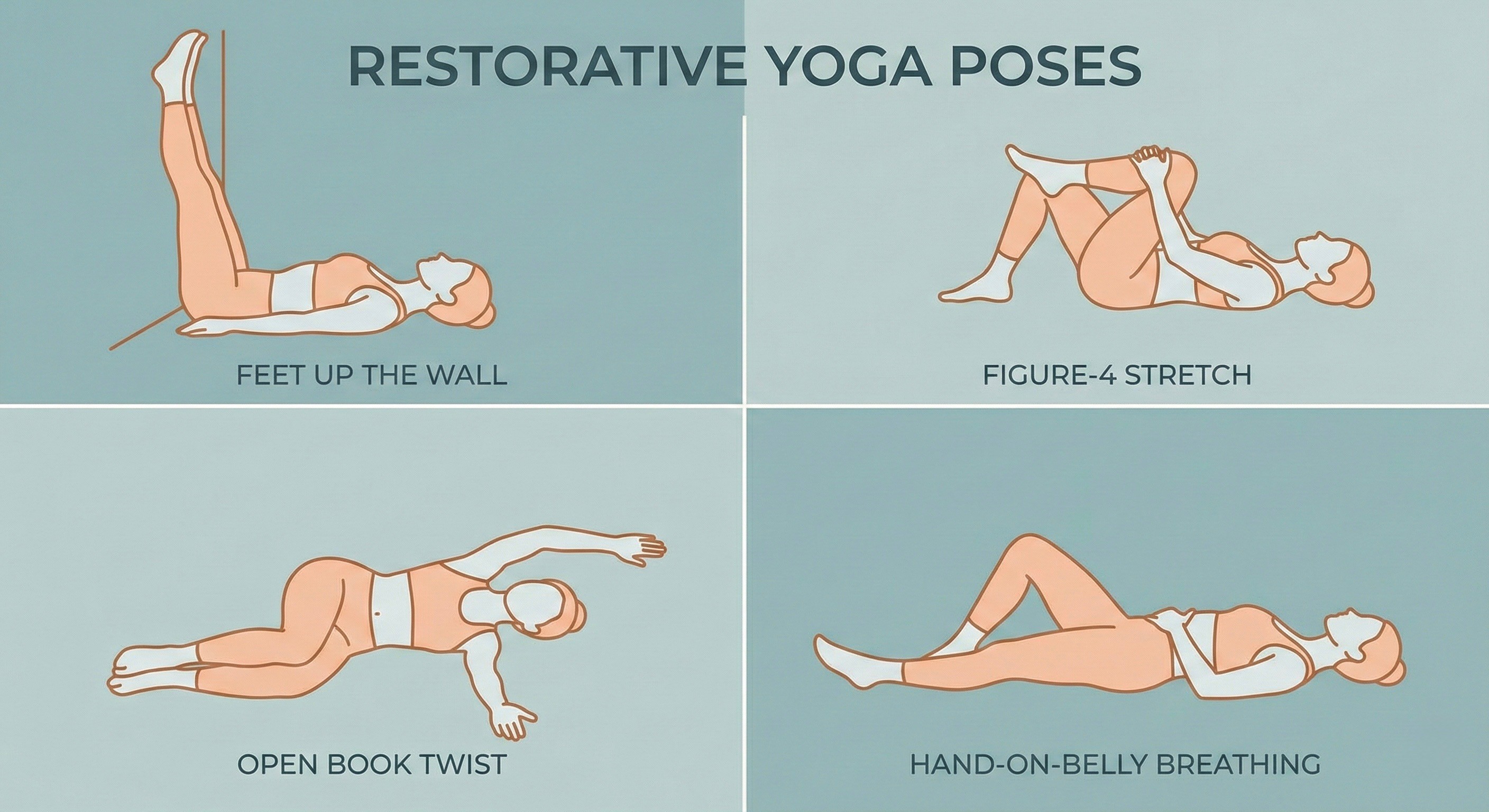
Illustrated guide showing four gentle bedtime stretches and a calming breathing finish.
How to Make This Routine Work for Real Life
- If you’re exhausted: Do just #7 (long exhales) for 2 minutes. That counts.
- If your low back feels tight: Prioritize #3, #5, and the breathing finish.
- If your shoulders feel up by your ears: Add the supported chest opener (#6).
- If your mind is racing: Keep your eyes softly focused on one spot, or close them and feel the bed under you.
Consistency matters more than intensity. A small routine done often can feel more “grounding” than a big routine you never repeat.
When Stretching Before Bed Might Not Feel Good
Sometimes stretching wakes your system up, especially if you push too deep or move too fast. If you notice you feel more alert after, try:
- shorter holds (20–30 seconds)
- gentler ranges
- more time on breathing (#7)
- doing the routine 30–60 minutes before sleep instead of right at bedtime
Want a Routine That Fits Your Body (Not Just a Generic List)?
If you’re not sure what your body needs at night, that’s exactly the kind of question I love helping with in session. Massage can support the areas that keep “holding on” after a long day, and I can also suggest a few specific, safe stretches that match your patterns.
If you’re in Toronto and you’d like support, you’re welcome to book a session with me at Aurelia RMT. We’ll keep it calm, clear, and tailored to you.
Key Takeaways
- ✓This is a gentle 8–12 minute grounding stretch routine designed for before bed, focused on calming the nervous system rather than “getting a deep stretch” or working out.
- ✓All positions should feel mild to moderate with no sharp pain, numbness, or tingling; breathing should stay slow and easy, and the face relaxed.
- ✓The routine includes: feet up the wall, child’s pose with a pillow, supine knee hugs, figure-4 hip stretch, open book twist, supported chest opener, and a long-exhale breathing finish.
- ✓You can adapt it to how you feel: pick just 3 moves, shorten holds, emphasize breathing, or do only the long-exhale practice if you’re very tired or easily stimulated.
- ✓If stretching feels activating instead of calming, use shorter holds, gentler ranges, focus more on breathing, or try doing the routine 30–60 minutes before bed; in-person, tailored support is available with Aurelia RMT in Toronto.
Frequently Asked Questions
Is it okay to do this whole routine in bed instead of on the floor?
Yes. If feet up the wall doesn’t feel good or isn’t practical, you can skip it and do the rest of the routine on your bed. You can also use pillows and blankets to make every position more supported and cozy—comfort and ease matter more than following the setup perfectly.
How often should I do this bedtime stretch routine to notice a difference in how I sleep?
Aim for a few minutes most nights, rather than a long routine once in a while. Even doing just one or two of the shapes plus the long exhale finish can help your system settle if you repeat it consistently over time.
What if I feel pain, tingling, or dizziness during any of these stretches?
Stop the position right away. This routine should only feel mild to moderate at most—no sharp pain, numbness, tingling, or dizziness. If you’re unsure what’s safe for your body, or you have a new injury or severe pain, pause the routine and get guidance from a healthcare professional before continuing.
Will stretching before bed make me more awake instead of sleepy?
It can, especially if you push too deep, move quickly, or hold stretches for too long. If you notice you feel more alert, try shorter holds (20–30 seconds), gentler ranges, spending more time on the long exhale breathing, or doing the routine 30–60 minutes before bed instead of right before sleep.
How do I know if I’m doing these stretches ‘right’ if I’m not going very deep?
You’re doing them right if you can breathe slowly, keep your face soft, and the sensation stays in a mild-to-moderate range. The goal is to quiet your system, not to get a bigger stretch. If your body feels a bit heavier, your shoulders drop, and your breath feels easier, you’re on the right track.
Explore Our Complete Toronto RMT Guide
Looking for more information about massage therapy in Toronto? Our comprehensive guide covers everything from common conditions to treatment options.
View the Complete Guide