
Glutes That Don’t “Turn On”: How It Can Load the Lower Back
Share with a friend

Underactive glutes can overload your lower back. Learn why your glutes don’t “turn on,” how it shifts strain upward, and gentle ways to restore hip support.
If you’ve ever felt like your lower back is doing everything (standing, walking, lifting, even just sitting), you’re not imagining it. Often, this shows up alongside a familiar complaint: “My glutes don’t fire.” In other words, your glutes that don’t “turn on” can quietly shift work upward into the low back, especially during daily movements like stairs, long walks, or getting up from a chair.
In my Toronto treatment room, I hear it all the time. And the good news is this: it’s rarely a “broken” muscle problem. It’s usually a pattern. A coordination issue. A body doing its best to feel stable, even if that stability comes at the cost of tension.
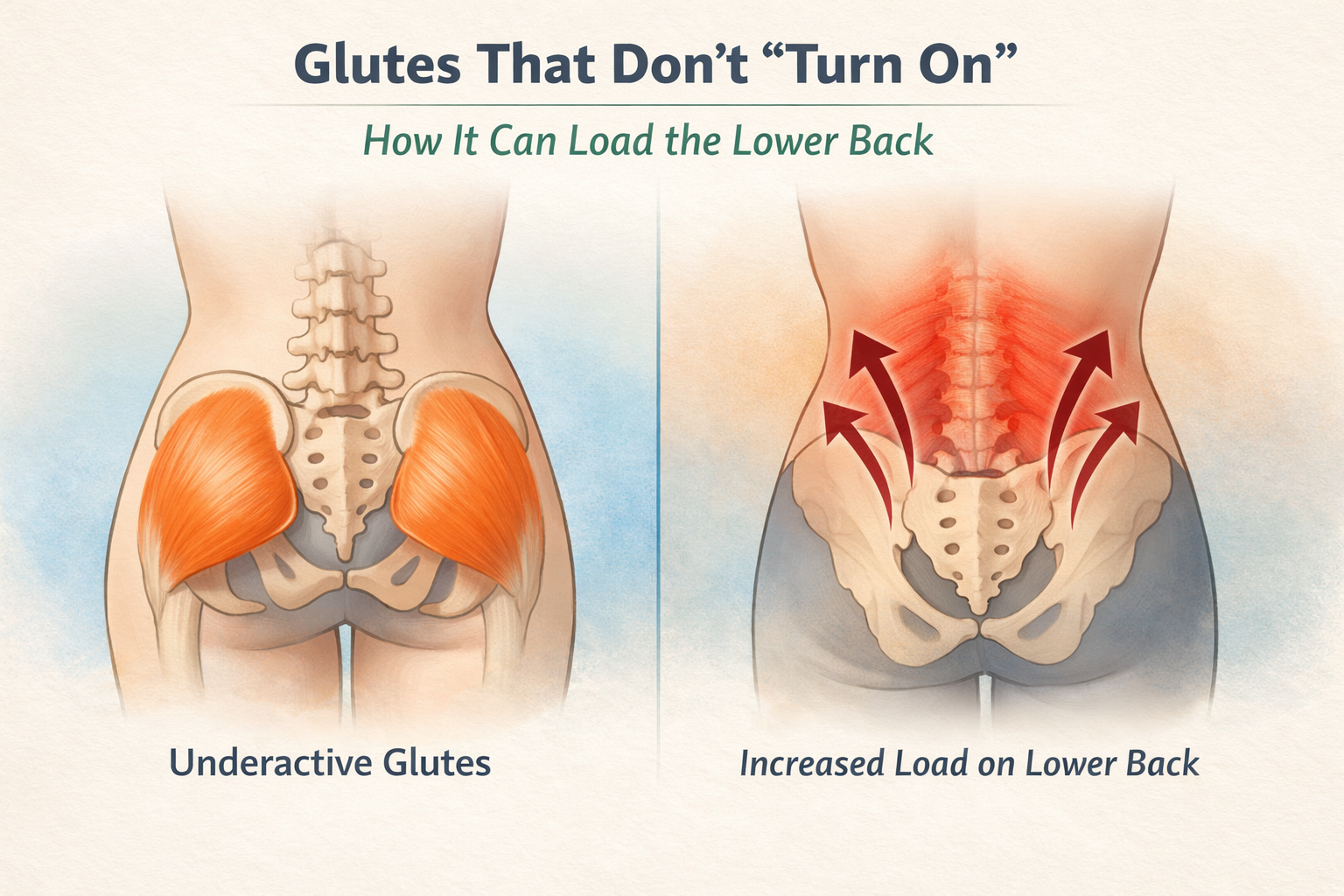
A calm, minimal illustration of a pelvis and lower back with gentle highlight zones over the glutes and low back.
First, what does “glutes not turning on” actually mean?
Most of the time, this phrase doesn’t mean your glutes are asleep forever. It means they’re not contributing when you need them most.
Your glutes are designed to help with:
- hip extension (think standing up, climbing stairs)
- pelvic stability (especially on one leg)
- sharing load so your lower back doesn’t have to grip for safety
When that timing is off, or your body doesn’t trust the hips to do the job, your lower back often steps in as the “reliable helper.”
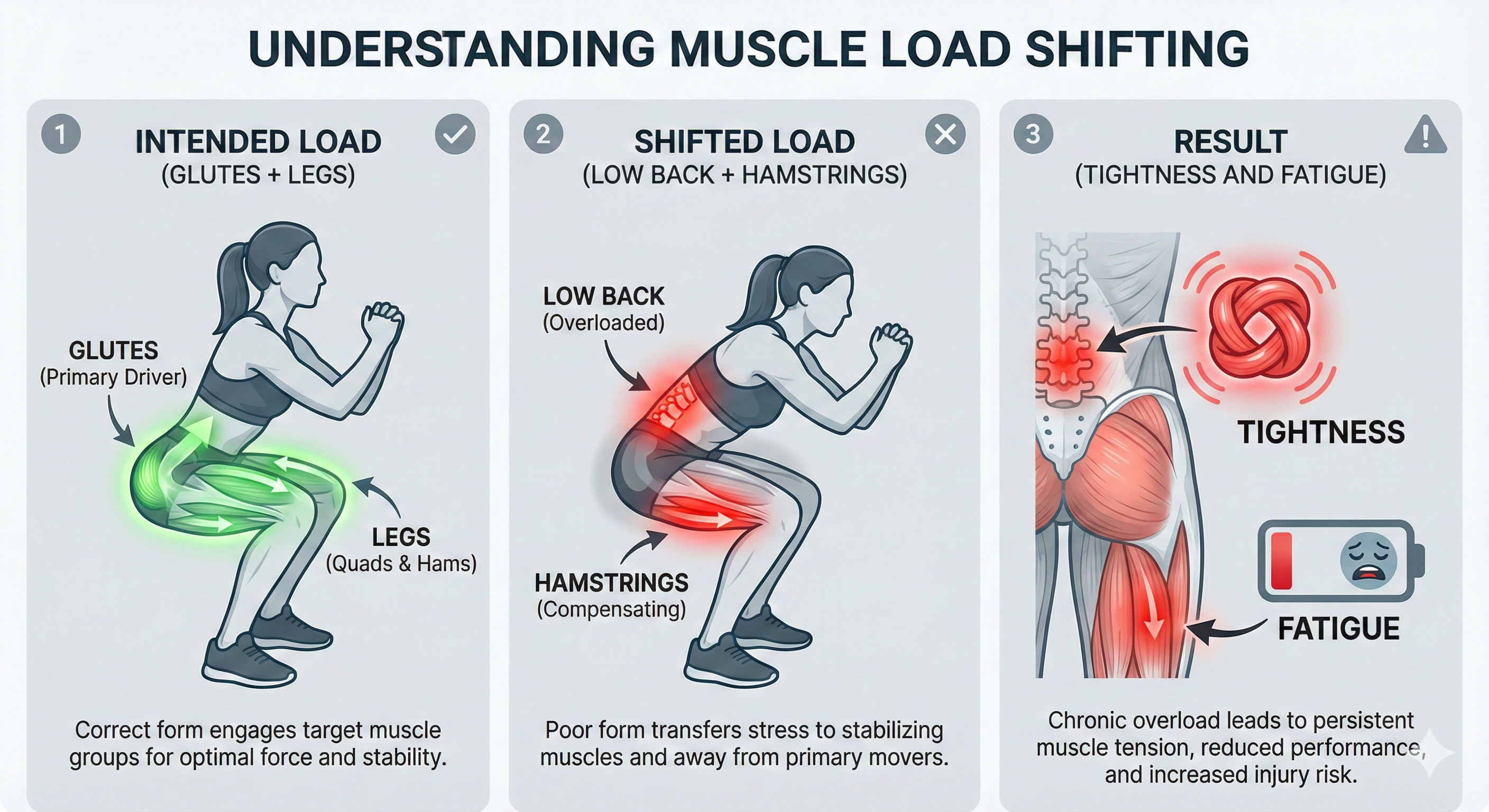
A 3-panel graphic: “Intended load” (glutes + legs), “Shifted load” (low back + hamstrings), “Result” (tightness and fatigue).
How the lower back ends up carrying the extra weight
Think of your movement like a team lift.
When the glutes contribute well, load spreads through the hips, legs, and core. When they don’t, your body still has to get the job done, so it borrows support from nearby areas.
Common compensation patterns include:
- low back gripping during standing or walking
- hamstrings doing most of the “glute job”
- hip flexors staying short and busy
- a feeling of compression at the beltline
Research often finds differences in hip muscle strength and glute function in people with low back pain, especially in hip abductors and extensors (muscles that include the glutes).
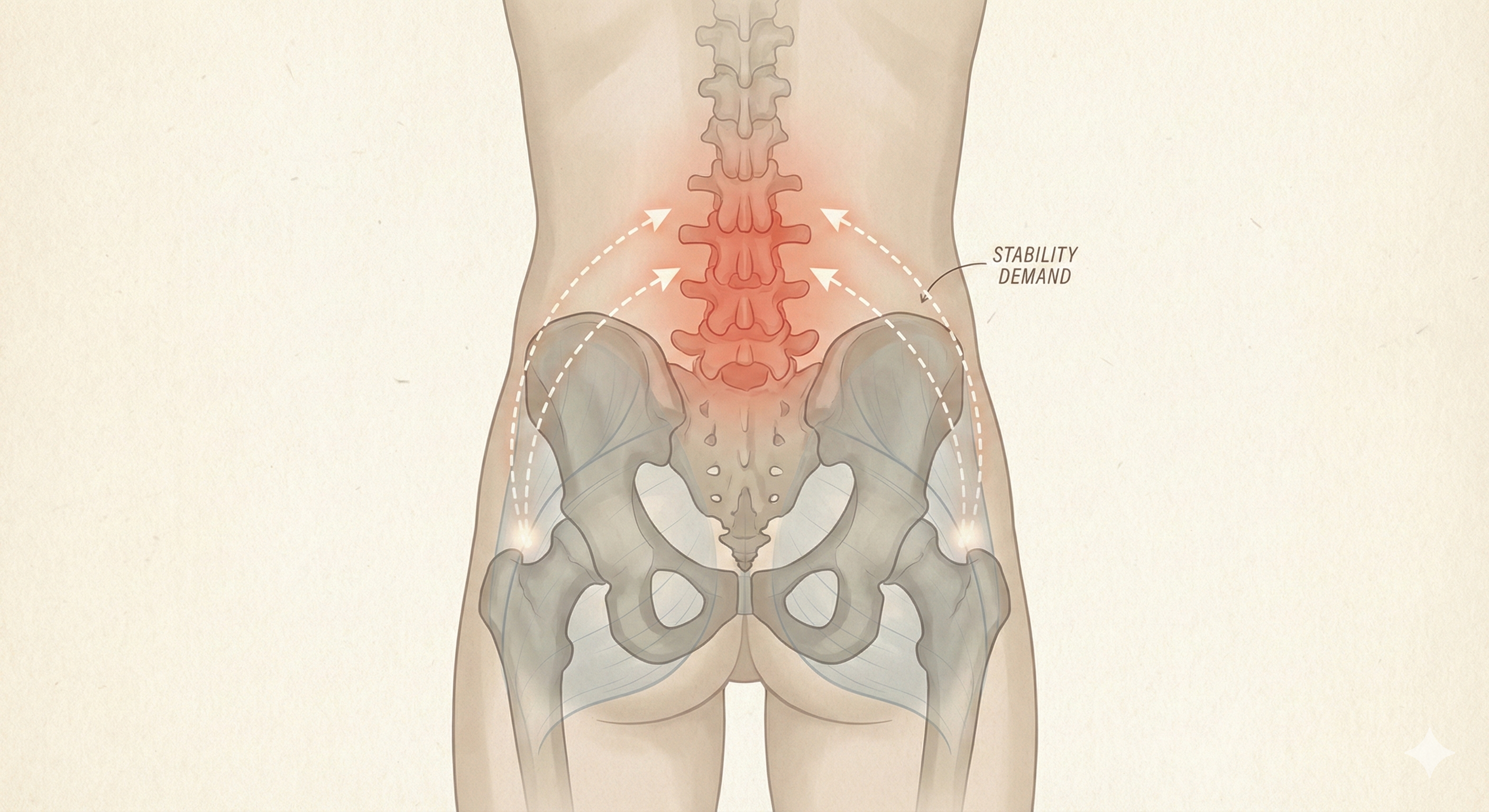
A simple body map with arrows showing “stability demand” pulling toward the low back when glutes are under-recruited.
Signs your glutes might be under-contributing (without you realizing)
You don’t need a perfect test. But these patterns are common:
- your low back feels tight after walking or standing
- stairs hit your quads or back more than your glutes
- you feel lopsided on one leg (especially when stepping)
- bridges or hip work go straight to hamstrings
- you feel “stuck” through the hips, like extension isn’t available
It’s also worth saying gently: sometimes the glutes are working hard, just not efficiently. Some studies show altered glute activation patterns in people with low back pain, which can look like over-activity in the wrong moments rather than true “off-ness.”
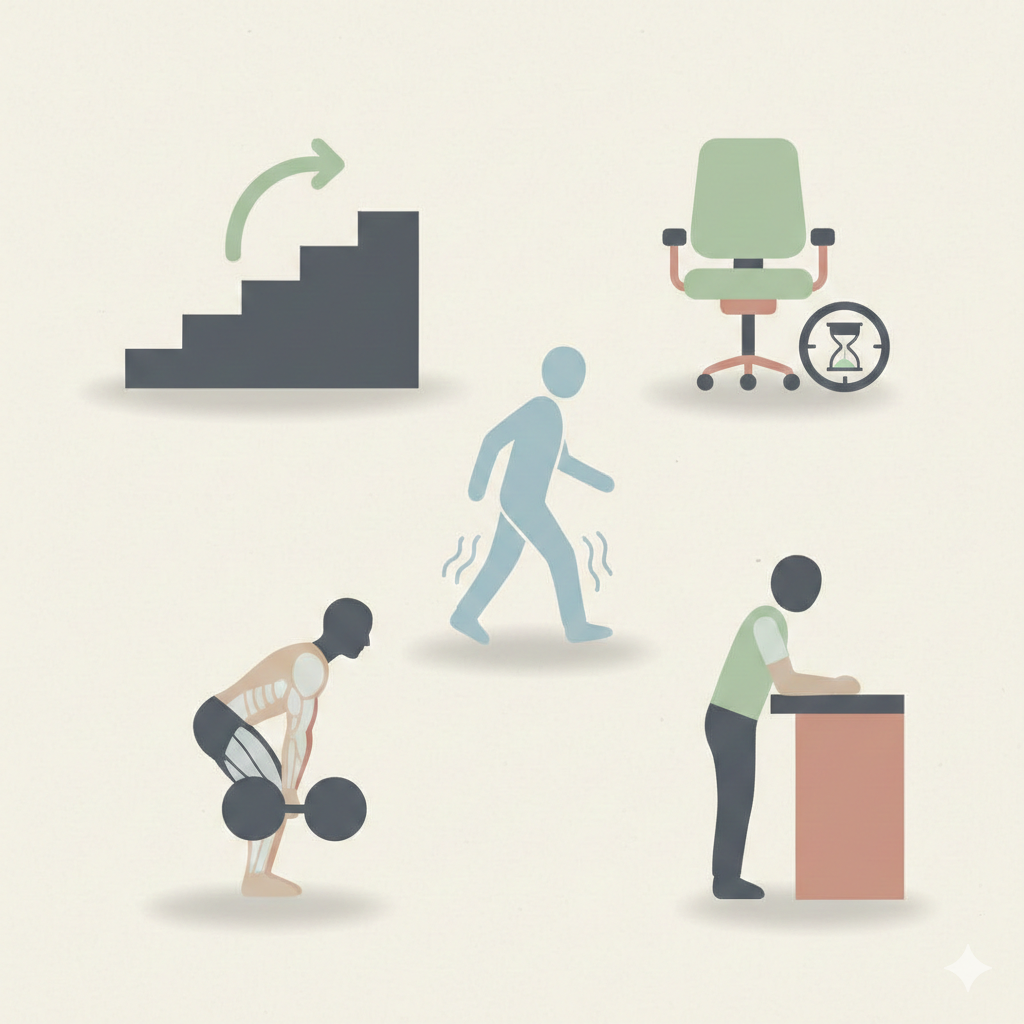
Small icons of common triggers: stairs, long sitting, deadlift shape, walking, standing at a counter.
Why this happens (and why it’s not your fault)
Glute “inhibition” can show up for a few reasons:
- Pain or sensitivity: your nervous system may reduce powerful hip drive as a protective strategy
- Long sitting: hips spend hours in flexion, and your body adapts to what it repeats
- Poor load sharing: if your core, hips, and feet aren’t coordinating well, your back tries to stabilize
- Stress and breathing patterns: when you’re bracing all day, your back muscles can become a constant “guard”
This is why stretching alone often doesn’t change things. If your nervous system doesn’t feel supported, it will keep choosing the same strategy.
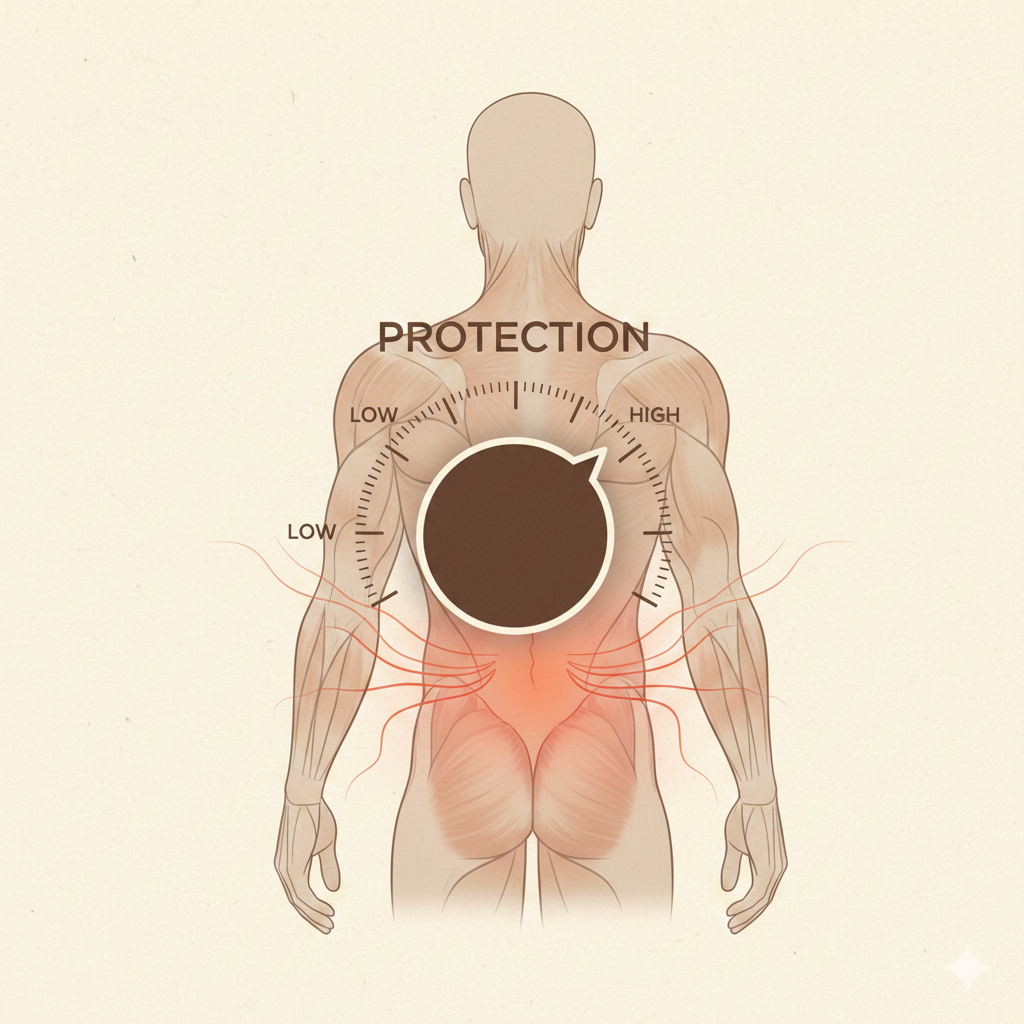
A soft, calming illustration of a “volume knob” labeled “protection” with muscles tightening as the knob turns up.
Gentle ways to invite your glutes back into the conversation
This is not a “push harder” situation. It’s usually a “make it feel safer and clearer” situation.
Here are low-risk options you can try:
- Slow bridges with a pause: think “heels heavy, ribs soft, exhale,” pause at the top and come down slowly
- Supported step-ups: hold a railing, go slow, aim for even pressure through the foot
- Side-lying hip work (easy range): small, controlled movement, no rolling back
- Walk breaks after sitting: even 2–3 minutes can change the pattern
Exercise selection matters, and EMG research shows certain common movements tend to recruit glutes more than others.
If any movement increases sharp pain, numbness, or symptoms down the leg, skip it and get assessed. If discomfort seems to travel from the low back into the glute or down the leg, our sciatic nerve anatomy guide can help you see the bigger picture.
If you're looking for a structured approach to sciatica relief through movement, MoveU's proven approach to sciatica pain breaks down how alignment and core stability can help.
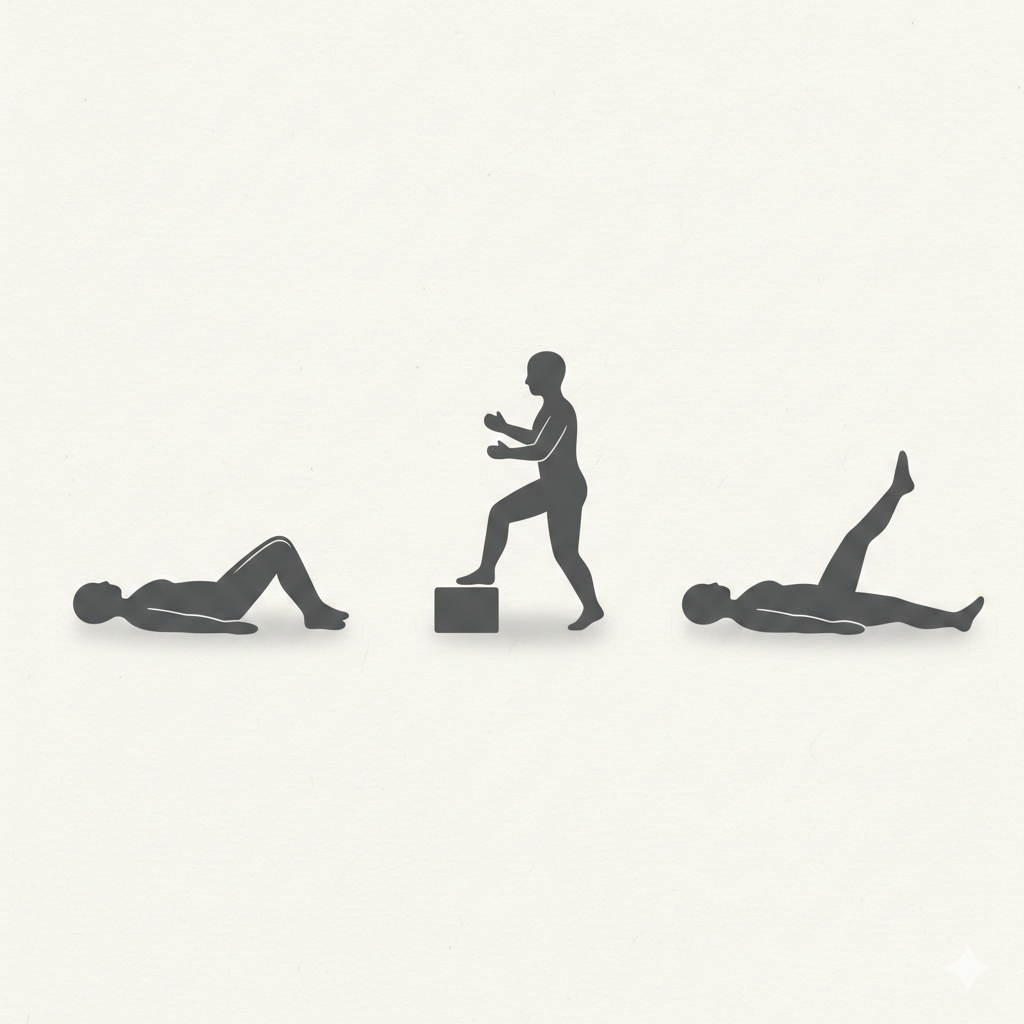
A clean layout showing a bridge, a small step-up, and a side-lying hip lift as simple silhouettes (no text on image).
How massage therapy can help (especially when your low back is tired of compensating)
When your low back has been overworking, it often feels dense, protective, and easily irritated. Massage therapy can help by:
- reducing the “guarding” tone in the low back and hip area
- helping the hips move more freely so glutes can contribute again
- calming the system so your body feels safer changing patterns
- supporting better awareness of where you’re bracing versus where you can soften
If you’re in Toronto and this sounds like your body, we can work with it gently, step by step. You don’t need to force your glutes to “wake up.” We just help your body feel supported enough to share the load again.
If you’d like, book a session and we’ll assess your movement patterns, ease the overworked areas, and build a plan that feels realistic for your day-to-day.
Key Takeaways
- ✓Lower back pain often comes from compensation when glutes aren’t contributing well, not from a “broken” muscle.
- ✓“Glutes not turning on” usually means poor timing and coordination, so the low back and hamstrings take over everyday tasks.
- ✓Common signs include low back tightness after standing or walking, stairs felt in quads/back, bridges in hamstrings, and feeling “stuck” in hip extension.
- ✓Nervous-system protection, long sitting, poor load sharing, and stress/bracing patterns all encourage the back to overwork.
- ✓Gentle, clear movement (bridges, supported step-ups, side-lying hip work, walk breaks) plus massage to reduce guarding can help the body safely share load through the hips again.
Frequently Asked Questions
How do I know if my glutes are actually ‘not firing’ or if it’s just normal muscle soreness or tightness?
Signs that your glutes may be under-contributing include: your low back feeling tight after walking or standing, stairs feeling more in your quads or low back than in your glutes, feeling wobbly or lopsided on one leg, bridges going straight into your hamstrings, or feeling like your hips can’t fully extend. It usually isn’t that the glutes are ‘off’ forever, but that they’re not helping at the right time, so your back and hamstrings take over more of the work.
Can massage therapy really help my glutes ‘turn on,’ or do I just need to do more exercises?
Massage therapy doesn’t directly ‘switch on’ a muscle, but it can make it much easier for your body to use your glutes by reducing guarding and tension in your low back and hips, improving comfort and movement, and calming your nervous system so it feels safer to change patterns. From there, simple exercises like slow bridges, supported step-ups, and gentle side-lying hip work tend to feel clearer and more effective, because your body isn’t stuck in full-time protection mode.
I sit a lot for work—could that be part of why my glutes feel weak and my low back gets tight?
Yes. Long periods of sitting keep your hips in flexion for hours, and your body adapts to what you repeat. Over time, this can contribute to glute ‘inhibition’—your nervous system simply doesn’t rely on powerful hip extension as much, and your low back muscles may step in as the more familiar stabilizers. Adding short walk breaks, gentle hip-focused exercises, and hands-on work to ease back and hip tension can help shift that pattern.
If my lower back is doing too much, is it dangerous to keep walking, climbing stairs, or exercising?
In most cases, it’s not inherently dangerous, but it can be uncomfortable and fatiguing, and it may keep reinforcing the same compensation pattern. The goal isn’t to stop moving, but to change how you share the load. That often means calming the overworked low back, improving hip mobility, and using lower-intensity, well-supported exercises that invite the glutes to help more. If you notice sharp pain, numbness, or symptoms down the leg, that’s a sign to pause and get assessed.
What would a session with you look like if I came in with low back tightness and ‘lazy’ glutes?
We’d start by talking through your symptoms and daily activities, then do a gentle movement assessment—things like how you stand, walk, use stairs, or bridge. Hands-on work would focus on easing guarding in your low back and hips and helping those areas move more freely. From there, we’d layer in a few simple, realistic exercises (such as slow bridges or supported step-ups) that you can actually fit into your day. The aim is not to force your glutes to wake up, but to help your body feel supported enough that it’s willing to share the load differently.
References & Citations
- [1] de Sousa et al., 2019- Objective: To systematically review the published studies that compare lower limb muscle strength in patients with low back pain to matched healthy controls.
- [2] Sadler et al., 2019- Introduction: Globally, low back pain (LBP) is one of the greatest causes of disability. In people with LBP, dysfunction of muscles such as the gluteus medius have been demonstrated to increase spinal loading and reduce spinal stability. Differences in gluteus medius function have been reported in those with LBP compared to those without, although this has only been reported in individual studies.
- [3] Penney et al., 2014- Objectives: To determine the activation of the gluteus medius in persons with chronic, nonspecific low back pain compared with that in control subjects, and to determine the association of the clinical rating of the single leg stance (SLS) with chronic low back pain (CLBP) and gluteus medius weakness.
- [4] Nelson-Wong et al., 2008- Gluteus medius muscle activation patterns as a predictor of low back pain during standing
- [5] Buckthorpe et al., 2019- ASSESSING AND TREATING GLUTEUS MAXIMUS WEAKNESS – A CLINICAL COMMENTARY
- [6] Bishop et al., 2018- Electromyographic Analysis of Gluteus Maximus, Gluteus Medius, and Tensor Fascia Latae During Therapeutic Exercises With and Without Elastic Resistance
- [7] Huang et al., 2024- Effectiveness of gluteal control training in chronic low back pain patients with functional leg length inequality
Explore Our Complete Toronto RMT Guide
Looking for more information about massage therapy in Toronto? Our comprehensive guide covers everything from common conditions to treatment options.
View the Complete Guide