
Cellulitis and Massage: When Touch Can Make Things Worse
Share with a friend

Learn why massage can worsen cellulitis, when to avoid hands-on treatment, and how to safely return to massage after infection for pain relief and recovery support.
There are moments when your body is asking for support, and massage feels like the obvious answer. You’re sore. You’re swollen. You just want relief.
And then there are moments when cellulitis and massage should not meet.
Cellulitis is one of those times where the kindest choice is to pause touch, even if you were counting down the days to your appointment. This isn’t about being overly cautious. It’s about respecting what’s happening under your skin, and giving your body the safest path back to steady ground.
Content tier: Discover (educational, safety-first)
What Cellulitis Really Is
Cellulitis is a bacterial infection in the deeper layers of the skin, not just a surface irritation. It often shows up as an area that feels hot, tender, swollen, and painful, and it can spread quickly if it isn’t treated. Antibiotics are the usual treatment.
A few details that matter (especially if you’re deciding whether massage is safe):
- It often starts after bacteria enter through a break in the skin, like a cut, blister, shaving nick, insect bite, cracked heels, or a flare of eczema or athlete’s foot.
- You might also feel flu-like symptoms, like fever, chills, fatigue, or swollen glands, depending on how your body is responding.
- It most commonly shows up on the feet and legs, but it can happen anywhere.
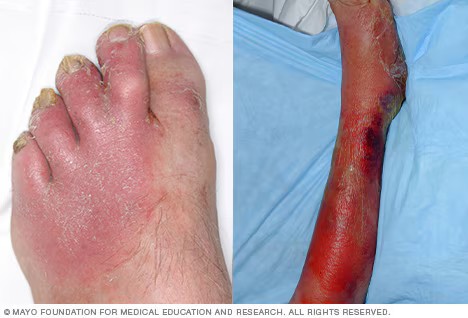
A quick but important note: cellulitis vs cellulite
These two words get mixed up all the time, and it makes “should I still come in for massage?” feel confusing.
- Cellulitis = infection, heat, swelling, pain, medical care needed.
- Cellulite = the common dimpling/texture some bodies have (not an infection).
If you meant cellulite, that’s a completely different conversation. If you meant cellulitis, this article is for you.
Is cellulitis contagious?
In general, people don’t usually “catch” cellulitis from other people through normal contact. But the bacteria involved can still be spread in certain situations, especially if there are open wounds and direct contact. That’s one reason clinics take infection screening and hygiene so seriously.
Why Massage Can Make Cellulitis Worse
When you have cellulitis, your tissues are already in a state of active inflammation and immune response. Massage and other hands-on treatments can become a problem for a few reasons:
1) Cellulitis can spread, and massage is designed to move things
Massage is often chosen because it improves comfort, circulation, and fluid movement. In most cases, that’s helpful.
With cellulitis, the concern is the opposite: cellulitis can spread and become more serious if not treated quickly, and many professional guidelines treat it as a clear reason to avoid manual therapies until the infection has resolved.
2) Even gentle lymphatic work is not appropriate during an active infection
People often hear “swelling” and think “lymphatic drainage,” which makes sense.
But here’s the key: manual lymphatic drainage (MLD) and self-lymphatic drainage are commonly listed as contraindicated in acute cellulitis/infection.
This is one of those times where “gentle” doesn’t automatically mean “safe.”
3) Pressure can increase pain and irritate already stressed skin
Cellulitis often comes with tenderness, warmth, and sometimes blistering. Friction or deeper pressure can simply hurt more, and it can aggravate fragile skin.
4) Related therapies are often paused too
If you’ve ever been in lymphedema or swelling care, you may have heard that certain treatments are paused during cellulitis. For example, some sources note that compression therapy is contraindicated during acute inflammation such as cellulitis.
That doesn’t mean you should start or stop anything on your own. It’s just another signal that acute cellulitis is not the moment for “moving fluid” strategies without medical guidance.
5) There’s also the clinic safety piece
As an RMT in Toronto, part of my job is to keep you safe, and also to protect other clients and the clinic environment. Ontario’s regulator expects RMTs to follow infection prevention and control standards, and to postpone or modify care when needed.
So if you come in with signs of an active infection, a careful therapist will usually pause the treatment and encourage you to seek medical care first.
Signs It’s Time to Pause Bodywork and Get Medical Care
If you’re reading this and wondering, “Is this what I have?”, I can’t diagnose you here. But I can share the signs that warrant medical attention so you can make a safer choice.
Seek medical attention promptly if you notice:
- A patch of skin that’s warm, swollen, painful, and spreading
- Fever or chills
- Blistering or a rapidly changing rash
The CDC specifically notes getting medical care right away if the red area spreads quickly or you develop fever/chills.
Red flags that deserve urgent care
Some guidance flags these as warning signs for more serious soft-tissue infections:
- Severe pain that feels “out of proportion” to what you can see
- Rapid progression
- Marked systemic symptoms like high fever, confusion, vomiting, or low blood pressure symptoms
If anything feels scary, fast, or “not right,” it’s okay to treat that feeling as data and get urgent medical support.
“Could it be something else?”
Sometimes redness and swelling in the leg isn’t cellulitis. It can be mimicked by other skin and vein conditions.
And importantly: blood clots (DVT) can also cause pain, swelling, warmth, and skin color changes. If you have symptoms of DVT along with chest pain or breathlessness, that’s an emergency situation.
This is why, in a clinic setting, we don’t try to “massage it and see.” We pause and help you get assessed.
When Massage Can Help Again and How to Return Safely
If you’ve had cellulitis, you might be left with a mix of things afterward:
- Tenderness in the area
- A feeling of “my body isn’t fully settled yet”
- Tightness from guarding and stress
- Worry it will come back
That’s real. And once the infection has clearly resolved, massage can absolutely be part of your support system again.
A gentle guideline I use as an RMT
Massage is usually more appropriate when:
- You’ve been assessed and treated by a healthcare provider (often with antibiotics).
- The area is no longer actively hot, intensely tender, and spreading.
- Systemic symptoms like fever/chills have resolved.
- You feel stable enough that touch is soothing again, not alarming.
If you’re unsure, that uncertainty is reason enough to wait and get guidance.
What I focus on post-cellulitis
When it’s safe to return, the work is usually not about “going after” the area. It’s about helping your nervous system exhale and supporting the parts of you that have been compensating.
Depending on what you need, that may look like:
- Gentle relaxation work for stress and sleep
- Reducing protective tension around hips, low back, shoulders, or neck
- Carefully avoiding any area that still feels inflamed or fragile
Reducing recurrence risk, softly
Recurrence is more likely when the skin barrier keeps getting compromised. Some prevention advice includes caring for the skin, addressing cracks or fungal foot issues, and managing contributing swelling or skin conditions.
This can be especially relevant if you live with chronic swelling, eczema, or athlete’s foot, all of which can create “entry points” for bacteria.
A supportive note if you’re in Toronto
If you’re in Toronto and you’re not sure whether what you’re dealing with is safe for massage, you don’t have to figure it out alone.
You’re welcome to reach out before you book. If it sounds like infection, I’ll gently point you toward medical care first. And if you’re post-recovery and ready for touch again, we’ll build your return in a way that feels calm, respectful, and safe.
When you’re ready, you can book a session and we’ll take it one step at a time.
Key Takeaways
- ✓Cellulitis is a serious bacterial infection in the deeper layers of the skin (often hot, swollen, painful, and spreading) and is very different from harmless cellulite.
- ✓Massage, including gentle lymphatic work, is contraindicated during active cellulitis because it can potentially help the infection spread, increase pain, irritate fragile skin, and conflict with other paused therapies like compression.
- ✓You should seek prompt medical care (and avoid massage) if you notice warm, swollen, painful, spreading skin; fever or chills; blistering; or rapidly changing redness—especially if pain is severe, symptoms progress quickly, or you feel very unwell.
- ✓Massage can usually be reconsidered after medical assessment and treatment, once the area is no longer hot, intensely tender, or spreading and systemic symptoms (like fever/chills) have resolved; early sessions should focus on relaxation and supporting compensating areas, not directly working the previously infected site.
- ✓Reducing recurrence involves caring for skin integrity (treating cracks, fungal issues, chronic swelling, eczema, athlete’s foot) and, if you’re unsure whether your current symptoms are safe for massage, consulting a healthcare provider or your RMT before booking.
Frequently Asked Questions
Is it safe to get a massage if I think I might have cellulitis?
No. If you suspect cellulitis—especially if you have an area of skin that’s hot, swollen, painful, and possibly spreading—it’s safest to pause massage and seek medical care first. Massage and lymphatic work are generally contraindicated during an active infection because they can potentially help the infection spread and will likely increase pain and irritation.
What are the signs that I should cancel my massage and see a doctor instead?
Cancel your massage and seek medical attention promptly if you notice: a patch of skin that’s warm, swollen, painful, and spreading; fever or chills; blistering or a rapidly changing rash. Urgent care is needed if you have severe pain that feels out of proportion to what you see, rapid progression, high fever, confusion, vomiting, or symptoms of low blood pressure, or if you’re worried about a possible blood clot (DVT), especially with chest pain or breathlessness.
What’s the difference between cellulitis and cellulite when it comes to massage?
Cellulitis is a bacterial infection in the deeper layers of the skin. It usually feels hot, swollen, tender, and painful, and needs medical treatment—massage should be avoided until it has resolved. Cellulite is the common dimpling or texture of the skin that many people have; it’s not an infection and doesn’t by itself prevent you from getting massage. If you’re dealing with cellulite (not cellulitis), we can safely discuss massage options.
When can I safely return to massage after having cellulitis?
Massage is usually more appropriate once you’ve been assessed and treated by a healthcare provider, the infection has clearly resolved, the area is no longer actively hot, intensely tender, or spreading, and systemic symptoms like fever or chills are gone. When you feel stable enough that touch would feel soothing rather than alarming, we can reintroduce massage gently, often focusing on relaxation, stress relief, and areas that have been compensating, while avoiding any skin that still feels fragile.
Can you still work on other parts of my body if I recently had cellulitis in one area?
Once the cellulitis has been medically treated and is no longer active—no heat, spreading redness, or systemic symptoms—we can usually work on other areas of your body, with care. The focus is often on gentle relaxation, easing protective tension in places like the hips, low back, shoulders, or neck, and respecting any area that still feels tender or vulnerable. If there’s any doubt about whether the infection has fully resolved, it’s best to wait and get guidance from your healthcare provider before booking.
References & Citations
- [1] CDC, 2025- About Cellulitis What it is Different bacteria can cause cellulitis, which is an infection of the deeper layers of the skin. This page focuses on one of the most common causes of cellulitis: group A Streptococcus (group A strep bacteria).
- [2] NHS, n.d.- Cellulitis Cellulitis is a skin infection that's treated with antibiotics. It can be serious if it's not treated quickly.
- [3] MedlinePlus, 2025- Cellulitis Cellulitis is a common skin infection caused by bacteria. It affects the middle layer of the skin (dermis) and the tissues below. Sometimes, muscle below the skin can be affected.
- [4] Mayo Clinic, 2025- Overview Cellulitis (sel-u-LIE-tis) is a spreading skin infection, most commonly of the lower leg. It's caused by bacteria entering through a break in the skin. The affected skin is swollen, painful and warm to the touch. The infection can cause a fever and become very serious, involving deeper tissues.
- [5] British Lymphology Society, 2022- Lymphatic Drainage remains one of the key elements to managing lymphoedema. This may be in the form of Manual Lymph Drainage (MLD), which is an intensive form of treatment by a trained therapist, or Self Lymphatic Drainage (SLD) which is a simplified version of MLD that is encouraged as a self-management treatment by the patient and/or carer.
- [6] Physiopedia, n.d.- Manual Lymph drainage (MLD), is a technique developed by the Vodders (Dr. Emil Vodder and his wife, Estrid) in 1936 in Paris for treatment of swollen lymph nodes.
- [7] Ogawa et al., 2012- Abstract As medical treatment for lymphedema, combined physical therapy with guidance regarding daily living is recommended. Recently, training has been conducted on a nationwide scale, and this therapy has gradually and commonly been employed. This therapy consists of daily living guidance to prevent edema deterioration, skin care, manual lymph drainage, compression therapy, and exercise therapy. The number of hospitals in which all procedures can be adequately performed is limited. There is no treatment to completely cure lymphedema. Patients’ self-care based on the contents of treatment is essential for relieving symptoms. (*English Translation of J Jpn Col Angiol 2008; 48: 167-172.)
- [8] CMTO, 2021- Standard of Practice: Infection Prevention and Control (see also Safety and Risk Management)
- [9] NHS, 2023- DVT (deep vein thrombosis) is a blood clot in a vein, usually in the leg. DVT can be dangerous. Get medical help as soon as possible if you think you have DVT.
Explore Our Complete Toronto RMT Guide
Looking for more information about massage therapy in Toronto? Our comprehensive guide covers everything from common conditions to treatment options.
View the Complete Guide