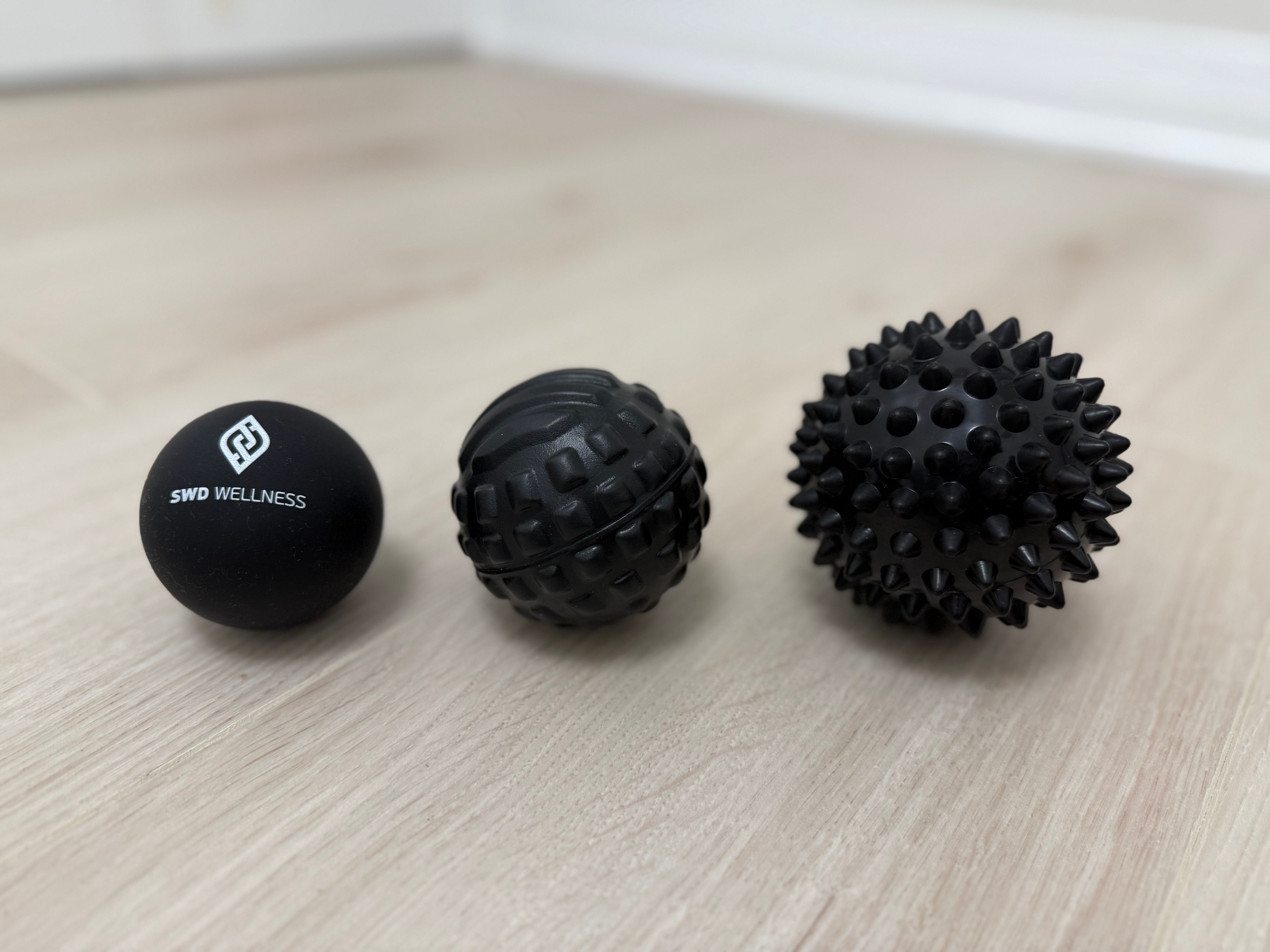
SWD Wellness Massage Ball Set Review: Smooth vs Ridged vs Spiky
A clinic-style review of the SWD Wellness massage ball set (smooth, ridged, spiky): who it’s for, how to start gently, and how Aurelia uses it for pec/pec minor tightness, upper shoulder blade tension, and outer hip/IT-band discomfort, without overdoing pressure.
Intensity guideline: Aim for 3–5/10 intensity: strong pressure you can breathe through. If you brace, hold your breath, or feel sharp/shooting symptoms, reduce pressure (wall first) or stop.
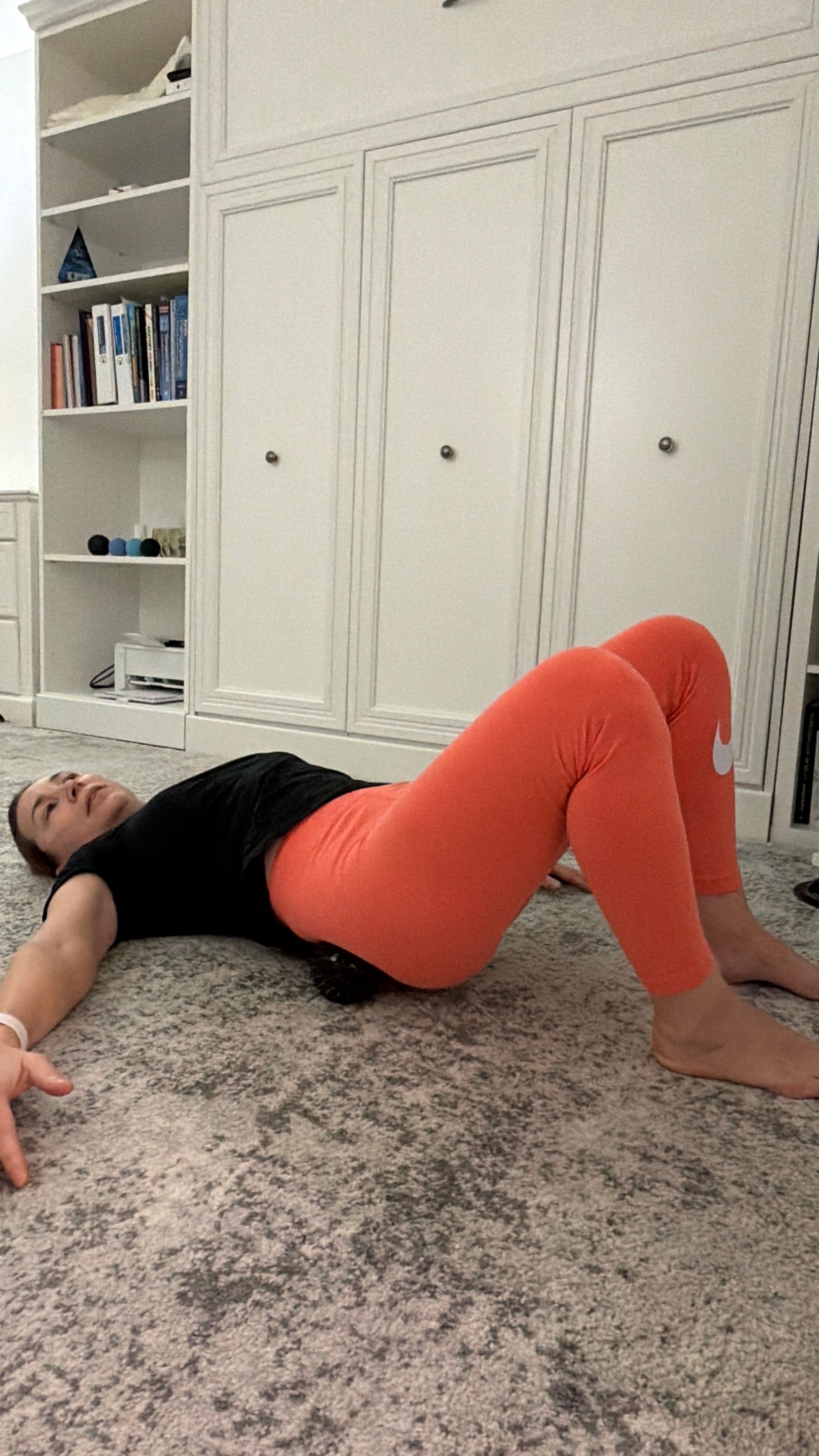
Massage Ball Release for Outer Hip + Glutes (1–2 Minutes Per Side)
Best For
- Desk workers with chest/pec tightness and upper back/shoulder blade tension
- Active clients / athletes who want a simple “between sessions” tool
- People who prefer short, targeted holds (15–30 seconds) instead of long foam rolling sessions
- Clients who benefit from pressure control (wall first; partial bodyweight on the floor)
- Outer hip / glute-side tightness when used carefully (especially with the spiky ball)
Not For
- Acute injury flare-ups or highly irritable pain days
- Anyone who bruises easily or feels worse after self-treatment
- Numbness/tingling, shooting pain, or symptoms that travel (pause and get guidance)
- Reduced foot sensation (e.g., diabetic neuropathy) if using on feet
- High-sensitivity clients who brace easily (start with softer options first)
How We Tested It
Duration
Ongoing (tested across multiple self-care sessions; refined techniques over time)
Tested By
Aurelia Grigore
Environments
At home clinic
Standard Protocol
15–20 second holds per tender spot; wait for a softening/release, then increase pressure slightly. 2–3 spots per area. Intensity stays 3–5/10. Start at the wall for control; use partial bodyweight for spiky ball.
What this review covers
This is an Aurelia-tested review of the SWD Wellness massage ball set (smooth, ridged, spiky). The goal is simple: help you choose the right ball for your tolerance and use it safely between appointments.
Massage balls can be extremely helpful — but only when they’re used in a way your nervous system can tolerate. We prioritize control, breath, and short repeatable sessions over “maximum pressure.”
As an Amazon Associate I earn from qualifying purchases.
This content is for informational purposes only and is not a substitute for professional medical advice.
Start here (the Aurelia method)
Start with the smooth ball and use the wall first. If you can’t keep your breath soft and steady, the pressure is too high.
A useful session is one you can repeat — not one that leaves you sore and braced for days.
Who this set is for (and who should skip it)
This set is best for people who want a simple tool for:
- chest/pec tightness from desk work or training
- upper shoulder blade tension
- outer hip/glute-side tension (with careful setup)
Skip or pause if you have acute flare-ups, bruise easily, or feel nerve-type symptoms like tingling, numbness, or sharp shooting pain.
How to use the smooth ball (left): beginner-friendly techniques
Intro:
Use the smooth ball first. The goal is a steady, tolerable pressure (3–5/10) and a softening response over 15–30 seconds — not “chasing pain.”
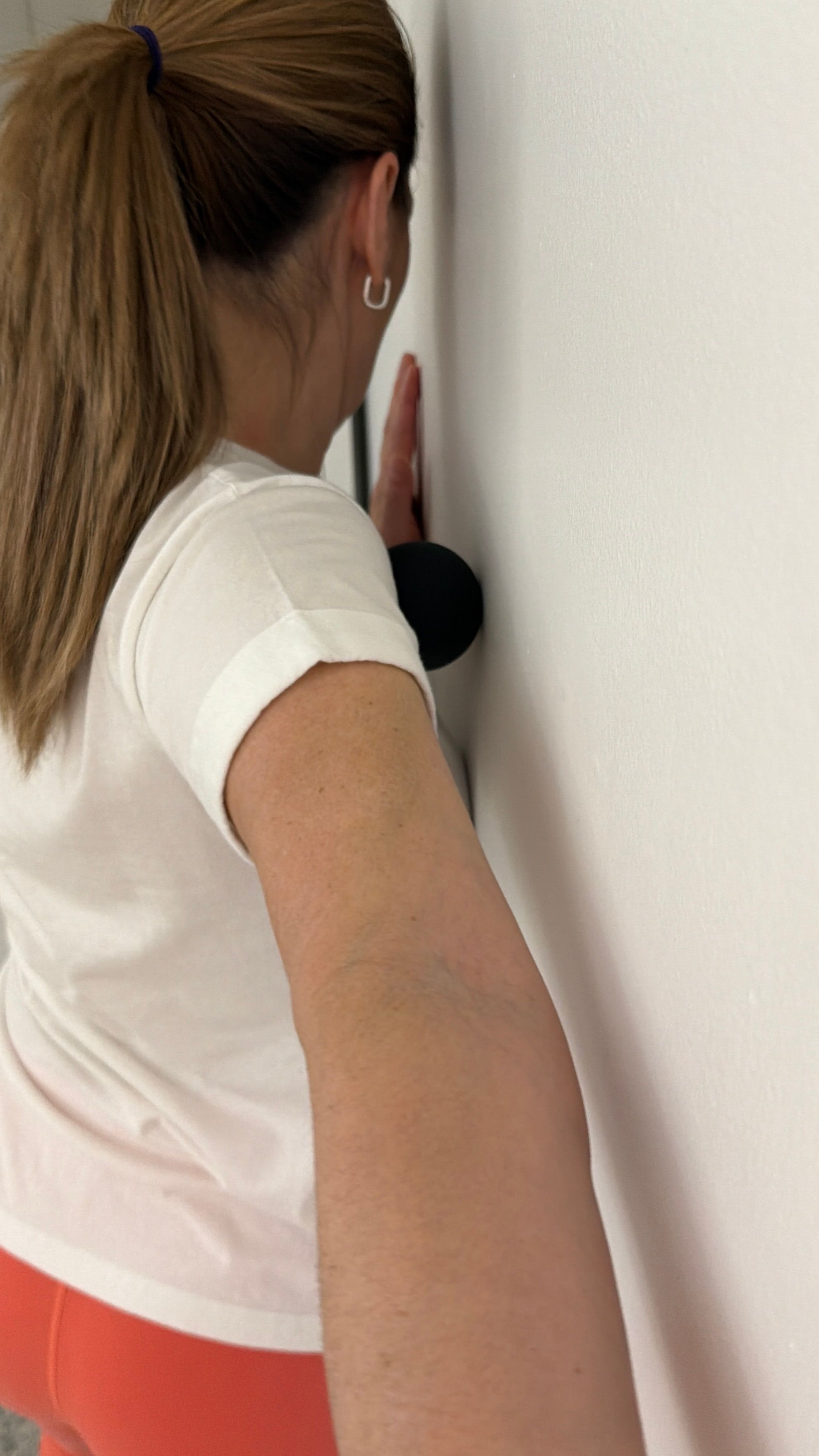
Pec / pec minor release (wall setup)
- Stand at a wall and place the ball on the front of the chest/pec area (avoid bony points).
- Hold on a tender spot until it starts to soften (about 15–20 seconds).
- Add gentle arm movement: raise/lower the arm, and slowly rotate.
- When you feel release, you can gradually lean in slightly more — without bracing.
Dose: 2–3 spots per side, 1–3 minutes total.
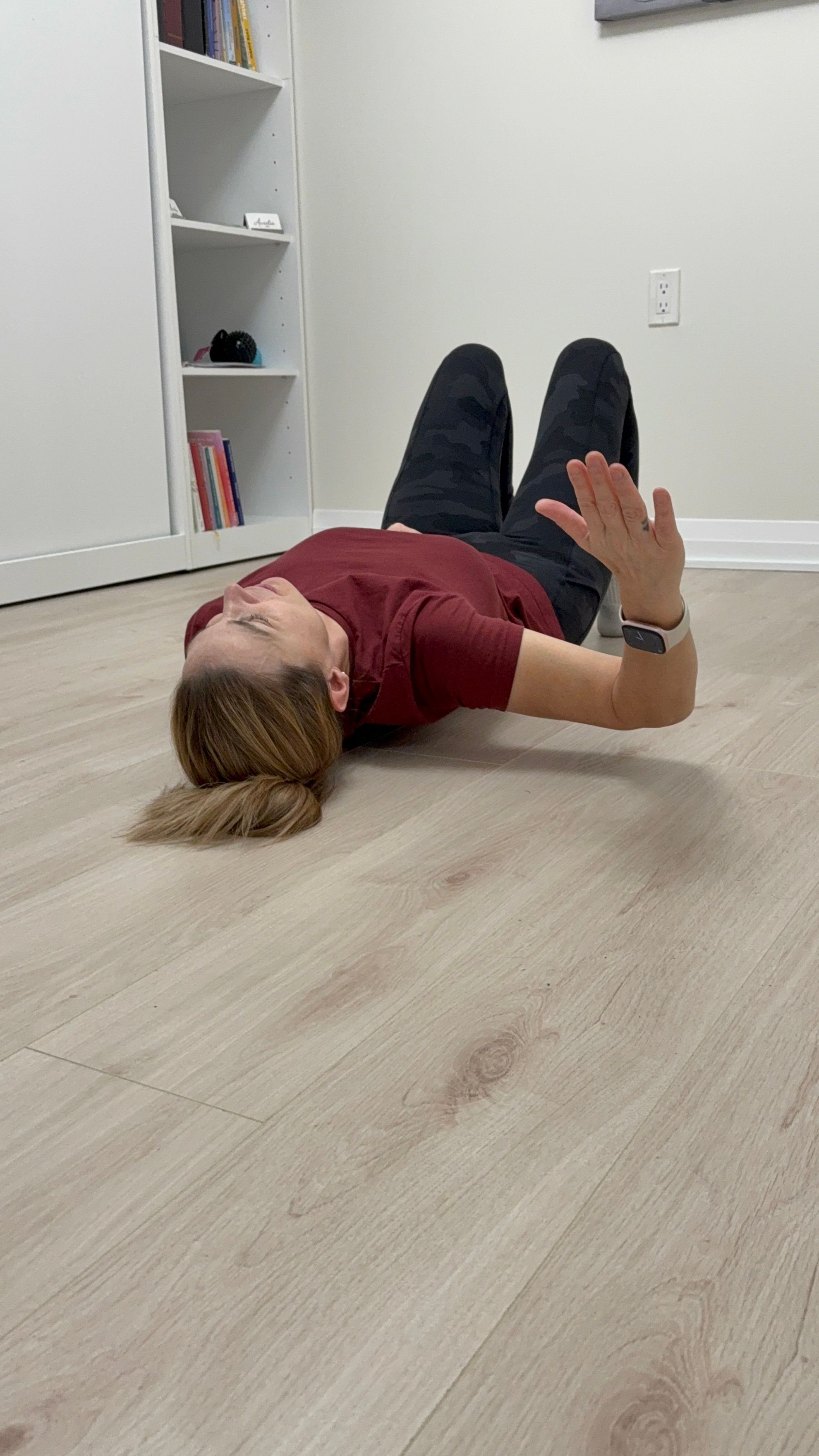
Upper shoulder blade / levator area (floor setup)
- Lie on your back with knees bent ~90° so your low back stays comfortable.
- Place the ball near the upper inner shoulder blade area (avoid direct pressure on the spine).
- Hold and breathe until the area softens, then add small shoulder movements (gentle internal/external rotation).
Dose: 15–30 seconds per spot, 1–2 rounds.
How to use the spiky ball (right): outer hip / IT band region (advanced)
The spiky ball is the most intense option. Use it only if you can stay under 5/10 intensity and avoid bracing.
Supported side‑lying outer hip release (pressure dial setup)
- Place the spiky ball on the floor and position it under the muscular area on the outer/front hip (avoid direct pressure on a bony point).
- Support your upper body on your forearm.
- Keep your top leg bent with the foot on the floor to control pressure (do not drop full bodyweight onto the ball).
- Hold 15–25 seconds, breathe slowly, then reposition slightly.
Best timing: after a workout or hot shower, or after heat if that feels good for you.
Dose: 2–3 holds total, 1–2 minutes per side.
Pros & Cons
Pros
- Multiple intensity options in one set (smooth → ridged → spiky progression)
- Smooth ball is highly controllable (especially at the wall)
- Useful for short “between appointments” resets (15–30 seconds per spot)
- Portable and easy to store
Cons
- Spiky ball can feel too intense quickly if you don’t control bodyweight
- Not ideal for very sensitive clients unless they start with softer options
- Texture may feel overly stimulating during high-stress periods
Our Scorecard
Wall setups make it easy to dial intensity.
Smooth is comfortable; spiky can feel sharp fast.
Simple cues: wall first, 15–30s holds, breathe.
Useful for chest, upper back/shoulder blade, outer hip.
Great if used gently; spikes can be overstimulating.
Firm balls feel long-lasting.
Small and travel-friendly.
One set covers multiple preferences/intensities.
Smooth vs Ridged vs Spiky
FAQ
How hard should I press?
Use 2-4/10 intensity — strong pressure you can breathe through. If you brace or hold your breath, reduce pressure. Depending on each individual pain tolerance. For Spike Ball
How long should I hold a spot?
Start with 15–20 seconds. If it softens, you can stay a little longer or gently increase pressure.
Can I use the spiky ball on the IT band?
Use it for the outer hip/glute-side region with a supported setup. Avoid dropping full bodyweight. If it feels sharp or you tense up, switch to smooth or use the wall.
Should I do this after heat?
Many people tolerate this better after a hot shower or after training. Heat can help you avoid overdoing pressure.
When should I stop and ask for help?
If you have numbness, tingling, shooting pain, pain that travels, or you feel worse after self-treatment.
How hard should I press with the smooth ball?
A good starting range is 3–5/10 intensity (strong pressure you can breathe through).
If you’re more experienced and your body responds well to pressure, the smooth ball can be used a bit stronger—around 6–8/10 because it spreads pressure out and usually feels less sharp than textured balls.
How hard should I press with the medium (ridged) ball?
Because the ridges increase sensation, it often feels more intense than the smooth ball at the same bodyweight.
Start at 3–5/10, then increase only if you stay relaxed. Most people do best in the 5–7/10 range on the medium ball.
Best way to control intensity:
- Start at the wall (more control)
- Use short holds (15–30 seconds) and move the ball slightly rather than pushing harder
- Treat it like “dose control,” not “pain chasing”
Back off if: you tense up, the sensation is sharp, or you feel worse afterward.
Want a plan that matches your body?
If you’re not sure which ball (or which setup) fits your body and tolerance, we can tailor a simple between-appointments routine during your session.
Ready to Feel Better?
Self-care tools are great between sessions. For deeper, lasting relief, let's work together.
Book a Session