
Shingles: Understanding Nerve Pathways, Dermatomes, and What Happens in the Body
Share with a friend

Learn how shingles affects nerve pathways and dermatomes, causes pain and rash along specific spinal nerves, and why early recognition supports better recovery.
Shingles is more than just a skin condition—it is a neurological condition that affects the nerves and presents visibly on the skin. As a Registered Massage Therapist, understanding how shingles follows specific nerve pathways can help both practitioners and clients better recognize and respond to its symptoms.
⸻
What Is Shingles?
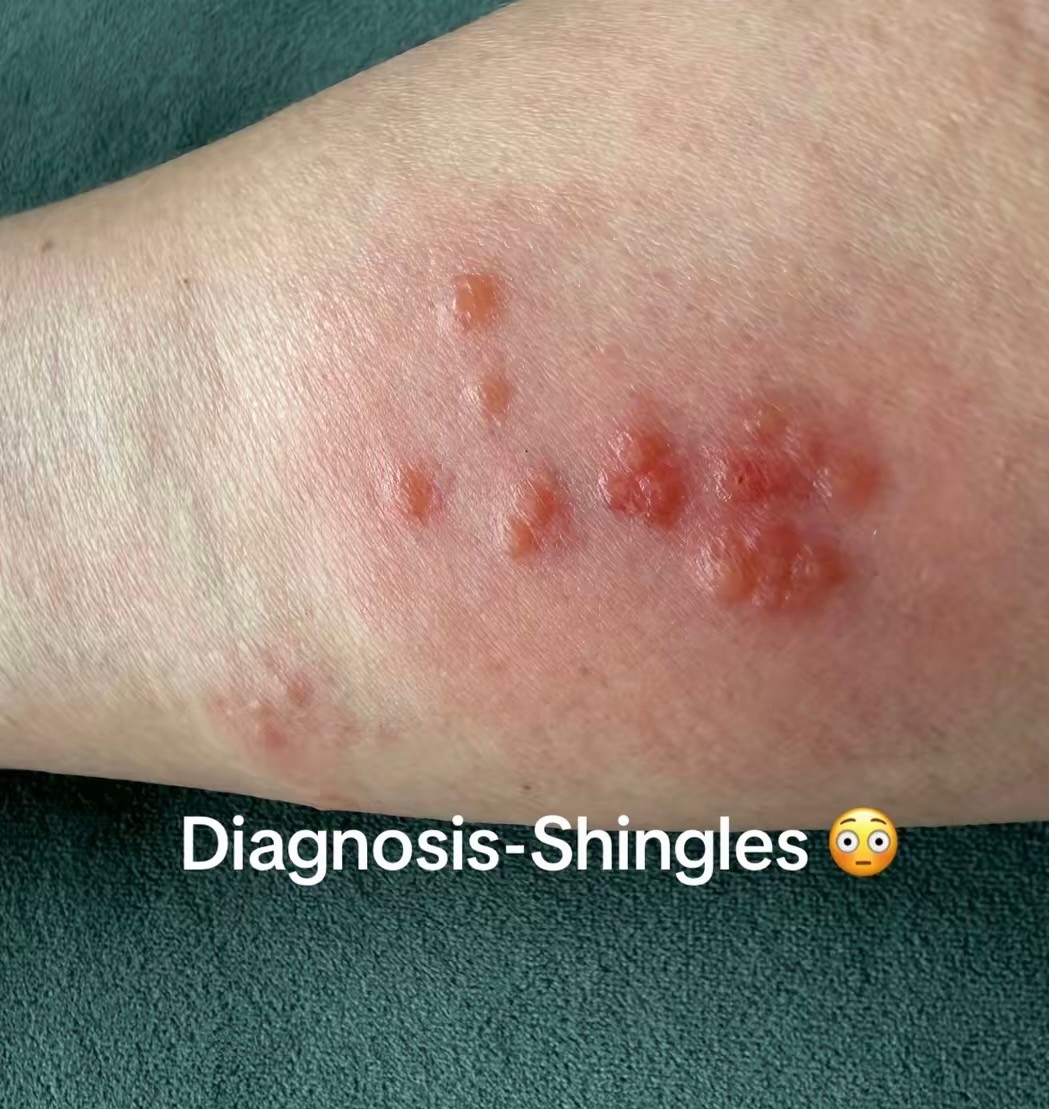
Shingles (herpes zoster) is caused by the same virus responsible for chickenpox. After recovery, the virus does not leave the body. Instead, it becomes dormant in the nervous system, specifically within the sensory nerve roots near the spinal cord.
Years, or even decades later, the virus can reactivate, often when the immune system is weakened due to stress, illness, fatigue, or aging.
⸻
Why Shingles Follows a Nerve Pathway
One of the most distinctive features of shingles is that it does not appear randomly.
It follows a specific pattern called a dermatome, an area of skin supplied by a single spinal nerve.
When the virus reactivates, it travels along that nerve, leading to:
Burning or sharp pain
Tingling or hypersensitivity
A rash or fluid-filled blisters
Because of this, shingles typically:
Appears on one side of the body only
Forms a band-like or linear pattern
Does not cross the midline
⸻
Dermatomes and Nerve Pathways: A Closer Look
Each spinal nerve corresponds to a specific region of the body. The location of shingles depends entirely on which nerve is affected.
⸻
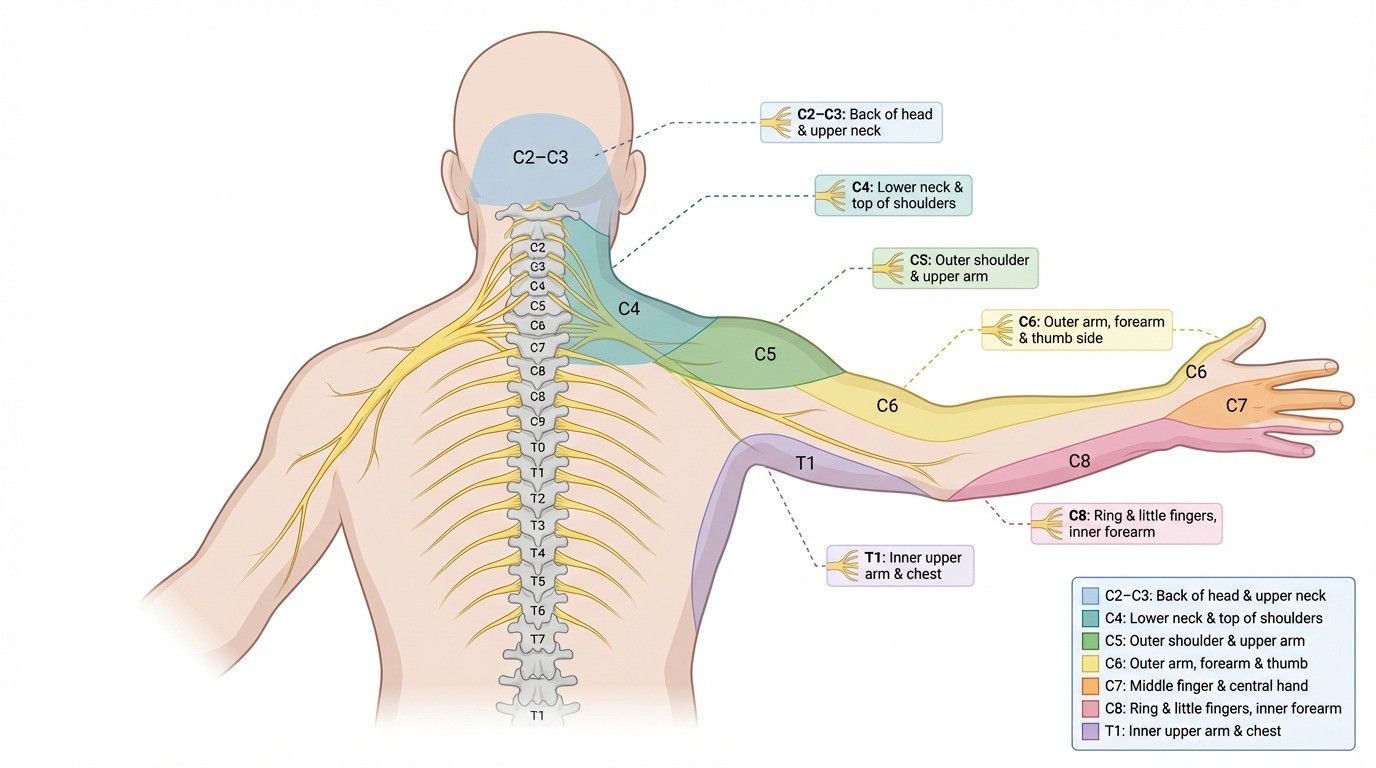
Cervical Dermatomes (Neck, Shoulders, Arms, Hands)
The cervical nerves originate in the neck and extend into the upper body:
C2–C3 → Back of the head, upper neck
C4 → Lower neck, top of shoulders
C5 → Outer shoulder and upper arm
C6 → Outer arm, thumb side of the hand
C7 → Middle finger and central hand
C8 → Ring and little finger, inner forearm
T1 → Inner arm near the elbow
Clinical insight:
Shingles in this region may present as pain or rash in the shoulder, arm, or hand, often mistaken for muscular or nerve compression issues.
⸻
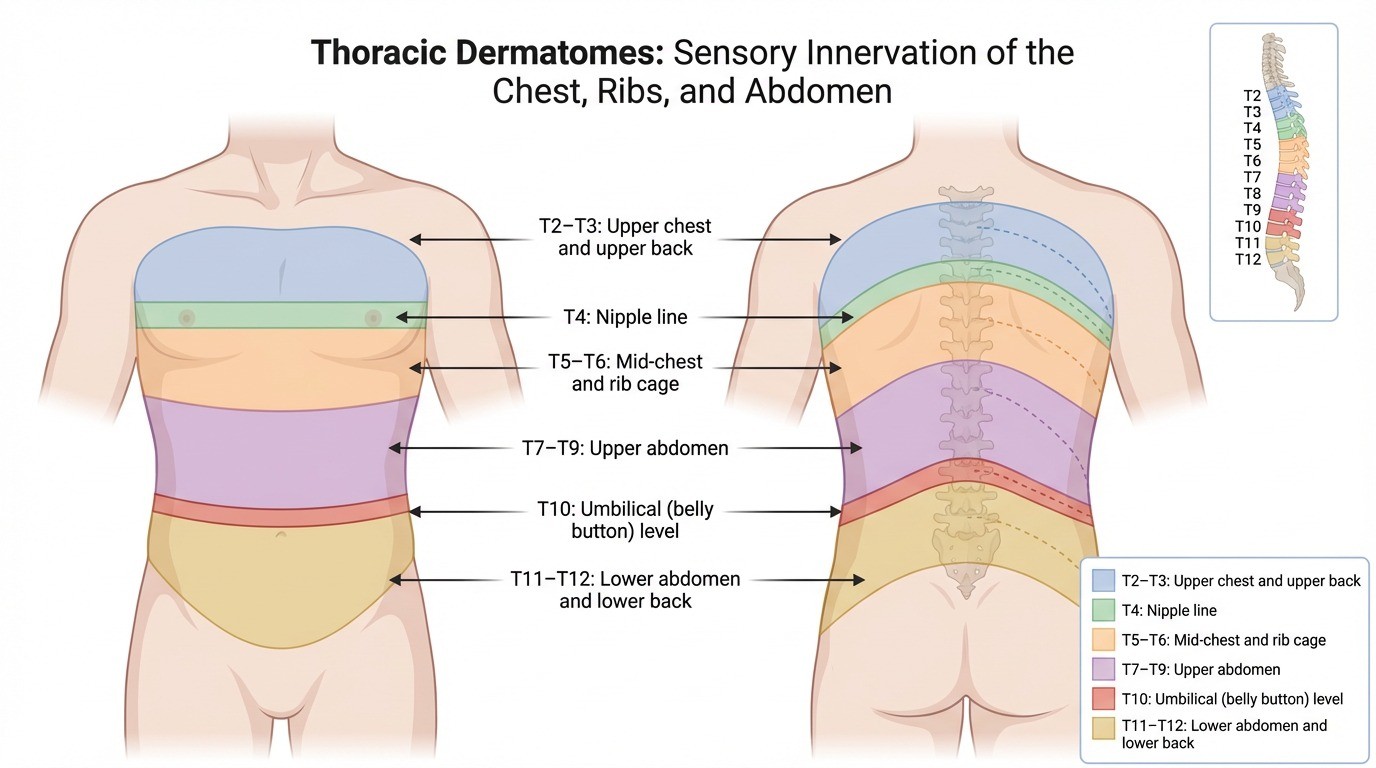
Thoracic Dermatomes (Chest, Ribs, Abdomen)
Thoracic nerves run from the mid-back and wrap around the torso:
T2–T3 → Upper chest and upper back
T4 → Nipple line
T5–T6 → Mid-chest and rib cage
T7–T9 → Upper abdomen
T10 → Umbilical (belly button) level
T11–T12 → Lower abdomen and lower back
Clinical insight:
This is the most common presentation of shingles.
The rash often appears as a band wrapping around one side of the torso, clearly following the nerve pathway.
⸻
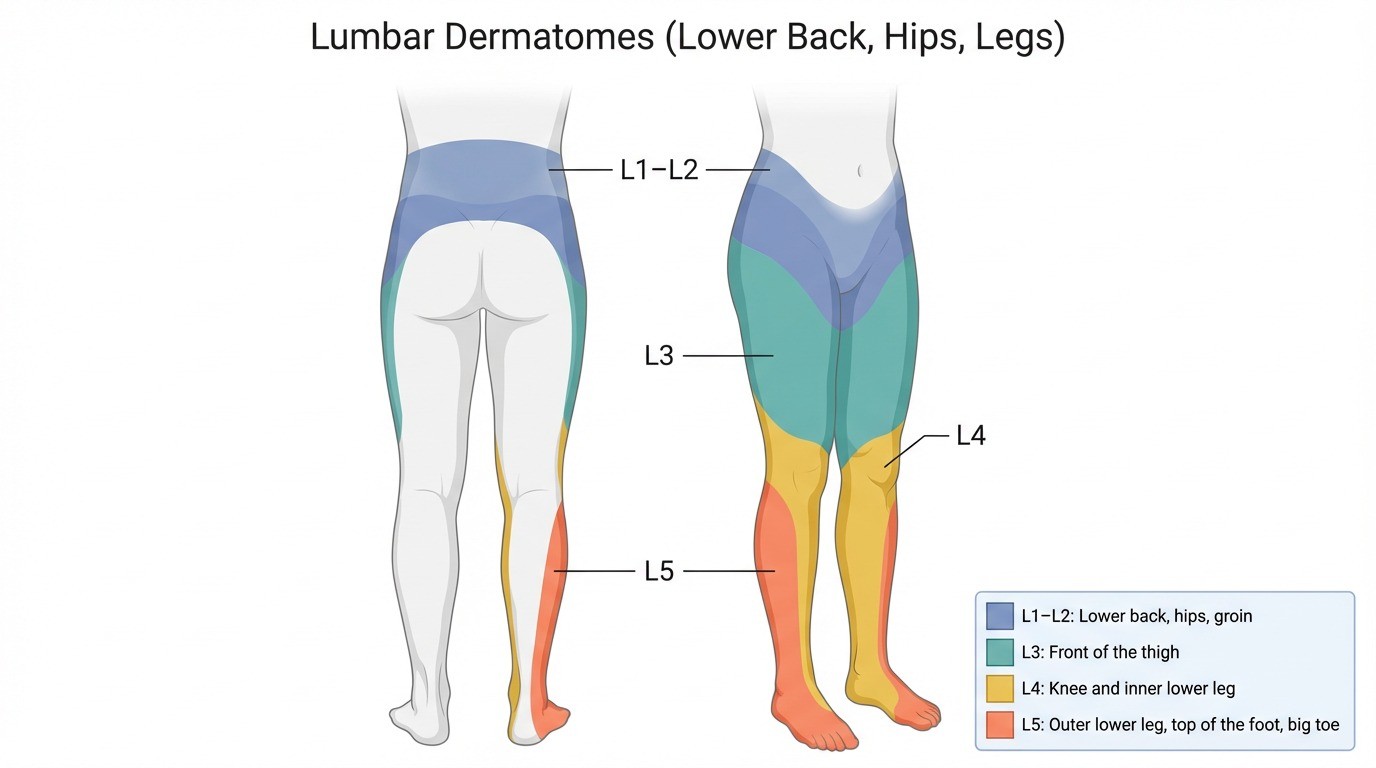
Lumbar Dermatomes (Lower Back, Hips, Legs)
Lumbar nerves extend into the lower body:
L1–L2 → Lower back, hips, groin
L3 → Front of the thigh
L4 → Knee and inner lower leg
L5 → Outer lower leg, top of the foot, big toe
Clinical insight:
Symptoms may radiate into the hip, thigh, or leg, sometimes mimicking conditions like sciatica.
⸻
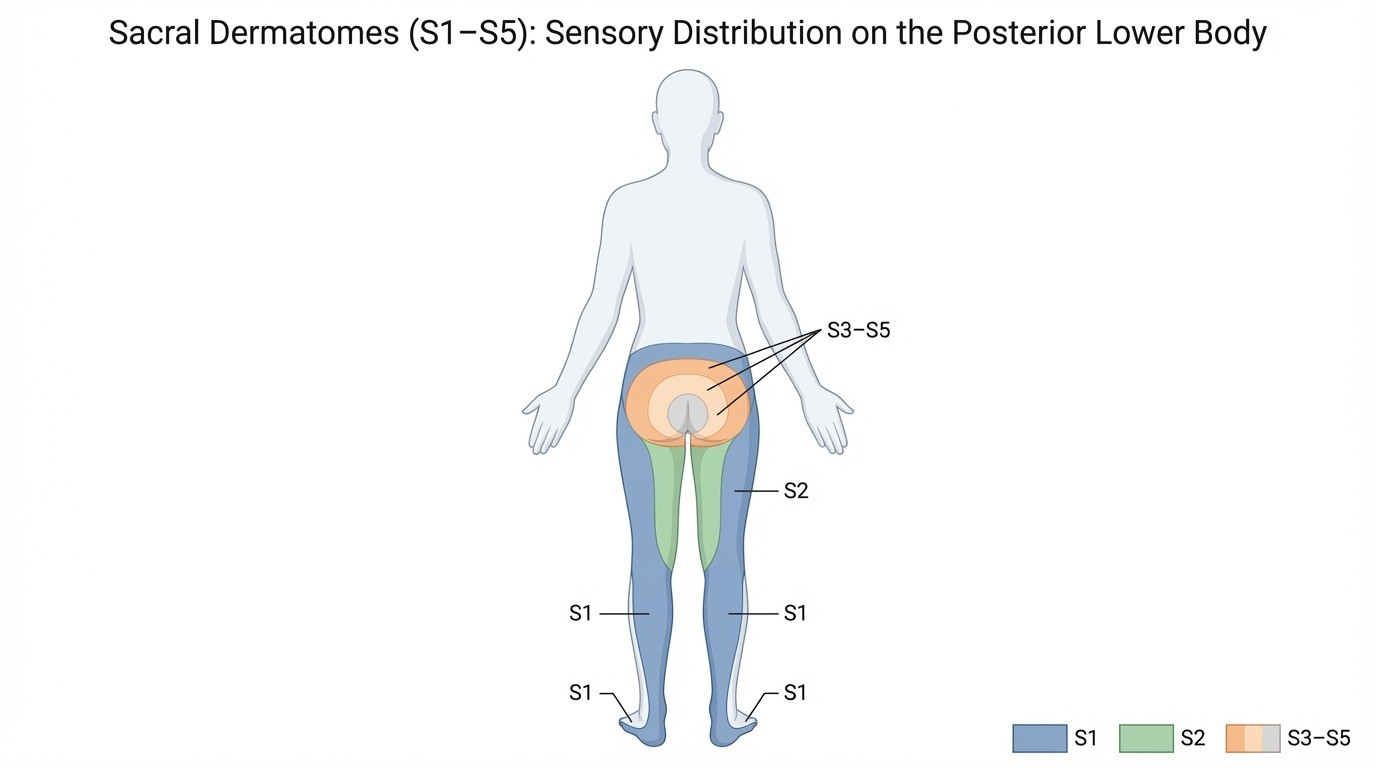
Sacral Dermatomes (Buttocks, Back of Legs, Feet)
S1 → Back of the leg, outer foot
S2 → Back of thighs
S3–S5 → Buttocks and pelvic region
Clinical insight:
Though less common, shingles in this region can affect the posterior leg or pelvic area.
⸻
Visualizing Dermatomes (Simple Guide)
Imagine the body divided into horizontal bands:
Cervical nerves → head, neck, arms
Thoracic nerves → wrap around the torso
Lumbar and sacral nerves → extend into the legs
Shingles follows one of these bands, which is why the rash appears so structured and localized.
⸻
Early Signs: Before the Rash
Shingles often begins with neurological symptoms before any visible rash appears:
Burning or sharp pain
Tingling or numbness
Sensitivity to touch
This stage can last several days and is often mistaken for muscle strain or irritation.
⸻
What Happens After Shingles?
Even after the skin heals, the nerve may still be affected.
Postherpetic Neuralgia (PHN)
This condition involves persistent nerve pain after the rash has resolved.
Symptoms may include:
Ongoing burning or stabbing pain
Increased sensitivity
Discomfort with light touch
This occurs because the virus causes inflammation and irritation of the nerve, and healing can take time.
⸻
How the Body Responds
During and after shingles, the body is managing:
Nerve inflammation
Immune system activation
Skin repair and healing
Recovery varies, but rest, proper care, and reducing stress are key to supporting the healing process.
⸻
A Professional Perspective (RMT Insight)
From a therapeutic standpoint:
Shingles-related pain is neurological, not muscular
Symptoms follow a dermatomal pattern, not typical muscle referral
Treatment should focus on supporting recovery, not treating it as a standard musculoskeletal condition
Understanding this distinction is essential for both practitioners and clients.
⸻
Final Thoughts
Shingles highlights the deep connection between the nervous system and the skin. What appears on the surface often reflects activity along a specific nerve pathway.
Recognizing early symptoms, understanding dermatomes, and respecting the body’s healing process can make a significant difference in recovery.
⸻
✨ AureliaRMT
Supporting your body through knowledge, care, and awareness.
Key Takeaways
- ✓Shingles is a neurological condition caused by reactivation of the chickenpox (varicella-zoster) virus, which lies dormant in sensory nerve roots near the spinal cord.
- ✓The rash and pain follow dermatomes—specific skin areas supplied by single spinal nerves—so shingles usually appears in a band-like pattern on one side of the body and does not cross the midline.
- ✓Different spinal regions (cervical, thoracic, lumbar, sacral) produce distinct symptom patterns, which can mimic musculoskeletal or nerve compression issues but are actually nerve-related.
- ✓Early symptoms are often neurological (burning, sharp pain, tingling, hypersensitivity) before any rash appears, and lingering nerve pain afterward is known as postherpetic neuralgia.
- ✓For RMTs and other practitioners, shingles pain should be understood and approached as a neurological, dermatomal condition rather than a typical muscular problem, with emphasis on supporting overall recovery and healing.
Explore Our Complete Toronto RMT Guide
Looking for more information about massage therapy in Toronto? Our comprehensive guide covers everything from common conditions to treatment options.
View the Complete Guide