
Recognizing Pre-Treatment Anxiety in Massage Therapy: A Gentle RMT Approach
Share with a friend

Recognizing pre-treatment anxiety in massage therapy: a gentle RMT approach in Toronto focused on consent, comfort, and safe, supportive massage care.
Before a massage begins, some patients arrive carrying more than muscle tension. There may be a quiet nervousness in the room, a tightness in the shoulders, a hesitant smile, or a need to ask a few extra questions before feeling safe.
Recognizing pre-treatment anxiety in massage therapy is not about diagnosing a patient. As an RMT, it is about noticing when someone may need more time, clearer communication, and a softer pace before treatment begins.
In a Toronto massage therapy setting, where many people come in after long workdays, stressful commutes, chronic pain, or difficult seasons in life, this gentle awareness can make the session feel safer and more supportive.
What Pre-Treatment Anxiety Can Look Like
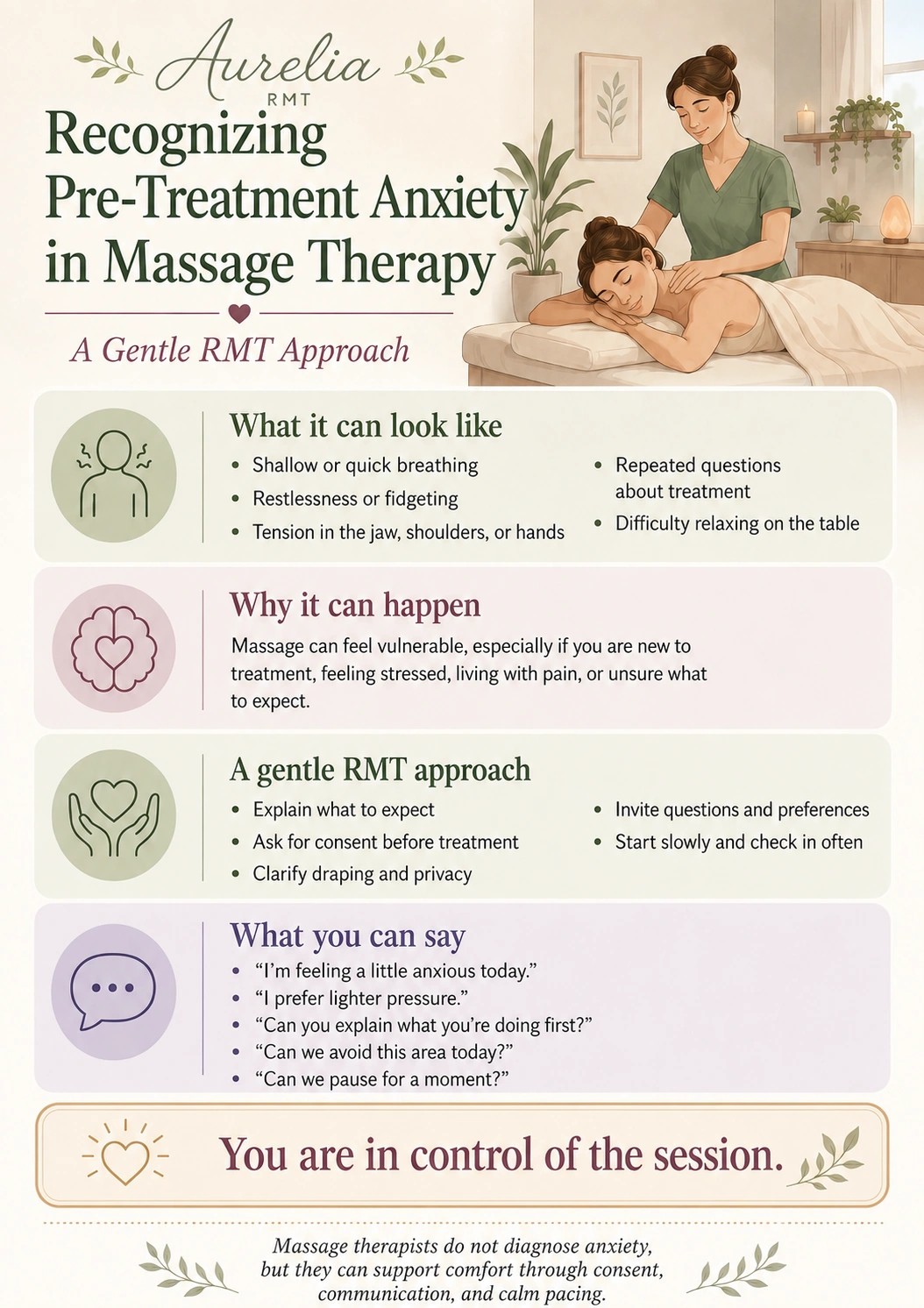
Pre-treatment anxiety does not always look obvious. Some patients may say directly, “I’m nervous.” Others may not have the words for it yet.
You may notice:
- Shallow or quick breathing
- Restlessness or fidgeting
- Tension in the jaw, shoulders, or hands
- A quiet or withdrawn mood
- Nervous laughter
- Repeated questions about pressure, draping, or what will happen next
- Difficulty relaxing on the table
- Apologizing often or seeming worried about “doing something wrong”
These signs do not always mean anxiety is present, but they can be gentle cues to slow down and check in.
Why Massage Can Feel Vulnerable for Some Patients
Massage therapy asks a patient to enter a quiet room, lie still, receive touch, and trust another person with their body. For many people, this feels calming. For others, especially those who are new to massage, dealing with stress, or feeling protective of their body, it can feel vulnerable at first.
A patient may feel unsure about:
- How much clothing to remove
- Whether they can ask for changes
- What areas will be treated
- How to speak up if something feels uncomfortable
- Whether their body will be judged
A gentle RMT approach helps remind the patient that they are not passive in the session. They have choices. They can ask questions. They can pause or stop treatment at any time.
A Gentle RMT Approach Before Treatment Begins
The first few minutes matter. Before the patient gets on the table, the RMT can help create a calmer experience by explaining the treatment clearly and simply.
This may include:
- Asking what brought them in today
- Explaining which areas may be treated
- Asking for consent before assessment or treatment
- Clarifying draping and privacy
- Letting the patient know they can remain clothed if preferred
- Asking what pressure usually feels best
- Giving them permission to speak up at any time
Small phrases can make a big difference:
“You are in control of the session.”
“We can adjust anything as we go.”
“If anything feels uncomfortable, we can pause.”
“There is no pressure to push through.”
This type of communication can help the patient feel more grounded before the hands-on work begins.
When to Slow the Session Down
Sometimes the best treatment choice is not deeper pressure or more technique. Sometimes it is a slower start.
If a patient seems anxious, the RMT may choose to begin with lighter contact, slower transitions, and more frequent check-ins. The goal is not to force relaxation. The goal is to help the patient feel safe enough for their body to soften naturally.
A slower approach may be helpful when the patient:
- Seems unsure about touch
- Tenses up when treatment begins
- Has difficulty settling on the table
- Appears overwhelmed by too many instructions
- Needs repeated reassurance
- Is experiencing stress, grief, burnout, or nervous-system sensitivity
This does not mean the session has failed. It means the treatment is being shaped around the patient in front of you.
What Patients Should Know Before Their Appointment
If you feel nervous before a massage, you are not doing anything wrong.
You can tell your RMT:
- “I’m a little anxious today.”
- “I prefer lighter pressure.”
- “Can you explain what you’re doing before you begin?”
- “I’d like to avoid this area today.”
- “Can we pause for a moment?”
A good therapeutic space should never make you feel rushed, judged, or trapped. Your comfort matters. Your consent matters. Your pace matters.
A Supportive Invitation to Book
If you have been feeling tense, overwhelmed, or unsure about massage therapy, you are welcome to start gently.
At Aurelia RMT in Toronto, treatment is guided by communication, consent, and respect for your comfort. You do not need to arrive perfectly relaxed. You only need to arrive as you are.
Book a massage therapy session when you feel ready, and we will move at a pace that feels safe for you.
Frequently Asked Questions
I feel really anxious about getting a massage. Is that normal, and should I tell my RMT?
Yes, it is completely normal to feel anxious before a massage, especially if you are new to it, going through a stressful time, or feeling protective of your body. You are encouraged to tell your RMT things like, “I’m a little anxious today,” so they can slow the pace, explain each step, and check in with you more often. Your comfort and consent are central to the treatment.
Do I have to undress for my massage, or can I keep my clothes on?
You never have to remove more clothing than you are comfortable with. Your RMT can clarify draping and privacy, and you are welcome to remain clothed if you prefer. The treatment can be adjusted around what feels safe for you, and you can change your mind at any time during the session.
What if I don’t like the pressure or feel uncomfortable during the massage?
You are in control of the session and can ask for changes at any time. You can say things like, “I prefer lighter pressure,” “Can you explain what you’re doing before you begin?” or “Can we pause for a moment?” A supportive RMT will adjust pressure, technique, or positioning, and will never expect you to push through discomfort.
How will I know what areas you’re going to treat and what will happen next?
Before you get on the table, your RMT should explain clearly which areas may be treated, ask for your consent, and let you know what to expect. They can walk you through draping, how you’ll be positioned, and how to speak up if you want to avoid a certain area. You can also ask repeated questions about what will happen next—this is welcome and part of informed consent.
What if I can’t relax or feel restless and tense during the session?
You do not have to arrive perfectly relaxed, and it’s okay if your body has trouble settling. Your RMT can slow the session down with lighter contact, slower transitions, and more frequent check-ins. The goal is not to force relaxation but to help you feel safe enough that your body can soften at its own pace. This is still a valid and valuable treatment.
References & Citations
Explore Our Complete Toronto RMT Guide
Looking for more information about massage therapy in Toronto? Our comprehensive guide covers everything from common conditions to treatment options.
View the Complete Guide