Is It a Leg Cramp or Deep Vein Thrombosis? Signs You Shouldn’t Ignore
Share with a friend

Learn the difference between leg cramps and deep vein thrombosis (DVT), key warning signs like swelling or redness, and when to seek urgent medical care.
A tight, painful calf can feel frightening, especially when it comes on suddenly.
Sometimes it is a simple muscle cramp. Your calf grips, tightens, and slowly eases. Other times, leg pain can be a sign of something more serious, such as deep vein thrombosis, also called DVT.
If you are wondering whether it is a leg cramp or deep vein thrombosis, the safest answer is this: look at the whole picture, not just the pain.
As an RMT in Toronto, my role is not to diagnose a blood clot. But it is part of safe care to recognize when massage is not the right next step, and when your body may need medical attention first.
This article will help you understand the difference between ordinary calf cramping and the warning signs of DVT that should not be ignored.
What Is Deep Vein Thrombosis?
Deep vein thrombosis happens when a blood clot forms in a deep vein, most often in the lower leg, thigh, or pelvis.
This is different from a sore muscle.
A sore muscle usually comes from tension, overuse, dehydration, exercise, or holding one position too long. A DVT involves circulation and blood flow. The concern is that a clot can sometimes travel to the lungs, which is called a pulmonary embolism. That can become a medical emergency.
This is why calf pain with swelling, warmth, redness, or sudden breathing symptoms should always be taken seriously.
You do not need to panic. But you do need to pause and listen carefully.
What a Leg Cramp Usually Feels Like
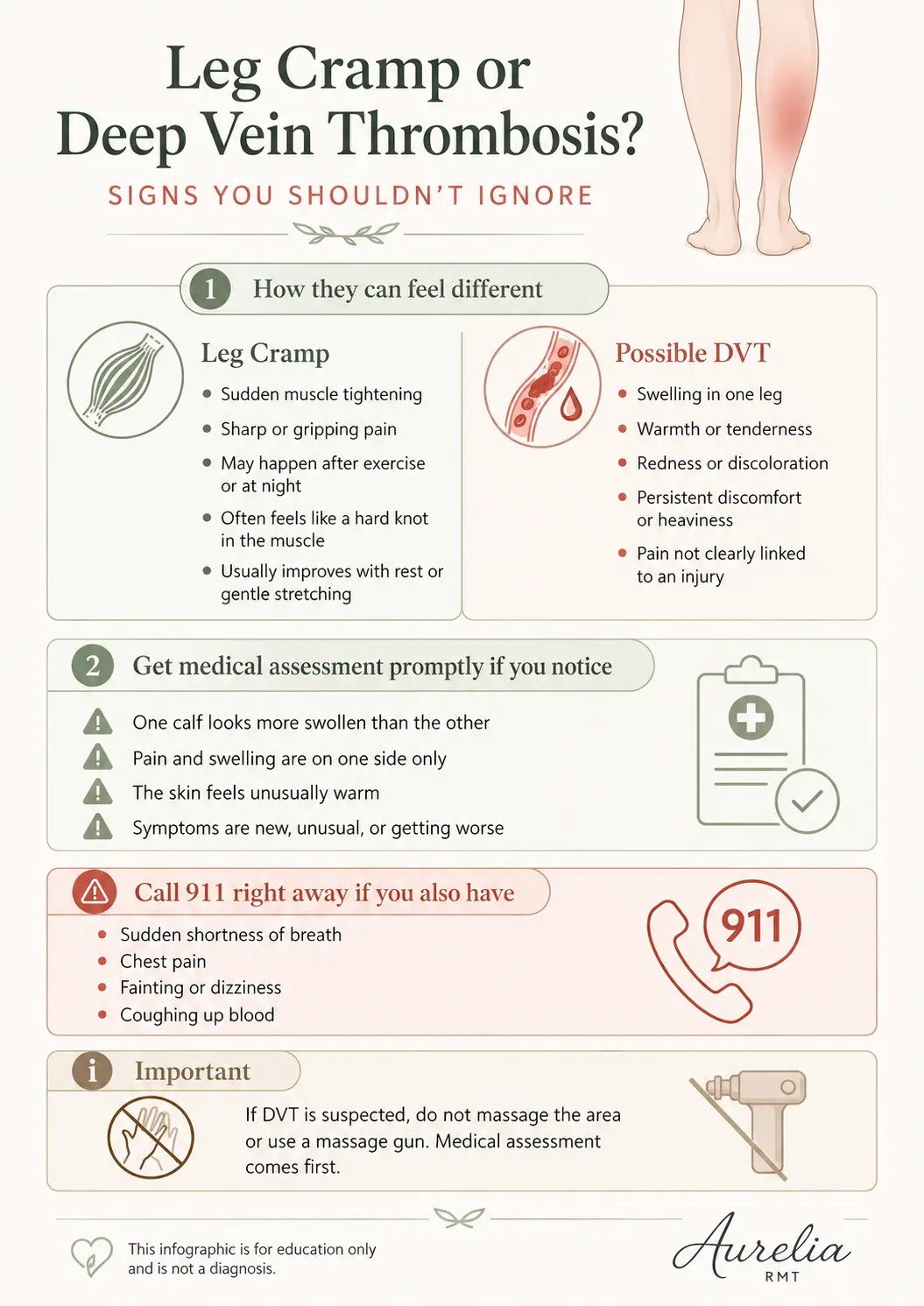
A leg cramp often feels like a sudden tightening or gripping in the muscle.
You may feel:
- A hard knot in the calf
- Sharp muscle tightening
- Pain that comes on quickly
- A muscle that slowly relaxes after a short time
- Soreness afterward, especially if the cramp was strong
Cramps can happen after exercise, during sleep, after long periods of sitting, or when the body is tired or under-hydrated.
Usually, a simple cramp does not cause one whole leg to swell. It does not usually make the skin feel unusually warm, red, or discoloured. It also should not come with chest pain, sudden shortness of breath, fainting, or coughing up blood.
If those symptoms are present, treat it as more than a cramp.
Signs That May Point Toward DVT
DVT symptoms can be subtle. Some people have very few symptoms at all.
When symptoms do appear, they often show up on one side of the body, not both.
Please seek medical advice promptly if you notice:
- Swelling in one leg, ankle, calf, or thigh
- Pain or tenderness that is not clearly linked to an injury
- Calf pain that feels worse when standing or walking
- Skin that feels warm over the painful or swollen area
- Red, purple, or unusual skin colour changes
- A heavy, tight, or full feeling in one leg
- Pain that feels different from your usual muscle soreness
One of the most important signs is asymmetry. If one calf looks or feels noticeably different from the other, that matters.
It may still not be DVT. But it is not something to rub, stretch aggressively, or ignore.
Emergency Signs: When to Call 911
If a clot travels to the lungs, it can cause a pulmonary embolism.
Call 911 or seek emergency care right away if you have leg symptoms along with:
- Sudden shortness of breath
- Chest pain, especially pain that worsens with deep breathing or coughing
- Feeling faint, dizzy, or lightheaded
- Fainting
- Coughing up blood
- A rapid or irregular heartbeat
- Sudden sweating, anxiety, or feeling very unwell
These symptoms need urgent medical attention.
This is not a “wait and see” situation.
Why Massage Should Wait If DVT Is Suspected
If there is any concern about DVT, massage should wait until you have been medically assessed.
Massage therapy is not used to treat a blood clot. Deep pressure, kneading, massage guns, or trying to “work out” the calf could be unsafe if a clot is present.
As an RMT, the safest choice is to stop and refer you for medical care if your symptoms raise concern. That may feel disappointing if you came in hoping for relief, but your safety comes first.
Once a doctor has ruled out DVT, or once you have been treated and cleared for massage, care can be adjusted gently. If you are taking blood thinners or have a history of clotting, your RMT should know before treatment begins so pressure and positioning can be adapted.
When Massage Therapy May Be Appropriate
If your leg pain has been medically checked and DVT has been ruled out, massage therapy may be helpful for muscular tension, exercise-related calf tightness, or general leg discomfort.
A session may focus on:
- Gentle calf and lower leg work
- Hip, glute, and low back tension that may affect leg comfort
- Relaxing the nervous system
- Reducing protective muscle guarding
- Helping you feel more settled in your body
The key is timing.
Massage can be supportive when the concern is muscular. But when DVT is possible, medical assessment comes first.
A Gentle Closing Thought
Your body is always communicating.
Sometimes a calf cramp is just a cramp. Sometimes it is a quiet signal that something needs closer attention.
If your leg pain is one-sided, swollen, warm, red, or unusual, please do not try to massage it away. Pause. Seek medical guidance. Let someone qualified check it properly.
And once you have been cleared for massage therapy, you are always welcome to book a session. We can work gently, thoughtfully, and safely, with your whole health in mind.
Book a Massage Therapy Session in Toronto
If your leg pain has been medically assessed and you have been cleared for massage therapy, AureliaRMT in Toronto can help support muscular tension, recovery, and overall comfort with a calm, careful approach.
Book a session when your body is ready, and we will meet it with care.
Key Takeaways
- ✓1. A sudden tight, painful calf can be a simple muscle cramp or a sign of deep vein thrombosis (DVT); the difference lies in the overall pattern of symptoms, not just the pain itself.
- ✓2. Typical leg cramps come on quickly, feel like a sharp muscle tightening or hard knot, ease within a short time, and may leave mild soreness but do not usually cause one-sided leg swelling, warmth, redness, or breathing problems.
- ✓3. Possible DVT signs include swelling in one leg, unexplained pain or tenderness (often worse with standing or walking), warmth over the area, red or discoloured skin, and a heavy or tight feeling—especially when one leg looks or feels different from the other.
- ✓4. Call 911 or seek emergency care immediately if leg symptoms occur with sudden shortness of breath, chest pain (worse with deep breaths or coughing), fainting or feeling faint, coughing up blood, rapid or irregular heartbeat, or sudden intense unwellness, as these can signal a pulmonary embolism.
- ✓5. Massage should be avoided if DVT is suspected because deep pressure or attempts to “work out” the calf could be unsafe; once DVT is medically ruled out or treated and you are cleared, massage can then be used gently to address muscular tension and support overall comfort.
References & Citations
Explore Our Complete Toronto RMT Guide
Looking for more information about massage therapy in Toronto? Our comprehensive guide covers everything from common conditions to treatment options.
View the Complete Guide