
Gout or Arthritis? Understanding the Differences
Share with a friend

Learn the key differences between gout and arthritis, common symptoms, diagnosis, and when gentle massage therapy can safely support your joint pain relief.
A joint that suddenly becomes painful, warm, or swollen can leave you wondering what is happening. Is it gout? Is it arthritis? Is it something that will pass, or does it need medical attention?
The question of gout or arthritis can be confusing because gout is actually one form of arthritis. Arthritis is not a single condition. It is a broad term that includes many different conditions affecting the joints.
Gout, osteoarthritis, and rheumatoid arthritis can all cause pain and stiffness, but they tend to begin differently and require different forms of care. Understanding those differences can help you describe your symptoms clearly and know when to speak with a healthcare provider.
First, Gout Is a Type of Arthritis
Gout is an inflammatory form of arthritis caused by a buildup of urate crystals in or around a joint. These crystals can form when uric acid remains elevated in the bloodstream over time.
When the immune system reacts to the crystals, the joint can quickly become intensely painful, red, warm, and swollen. This is known as a gout attack or flare.
Although food and alcohol can influence gout for some people, the condition is not simply the result of eating the “wrong” foods. Genetics, kidney function, certain medications, dehydration, and other health conditions may also affect how your body processes uric acid.
Gout is a medical condition, not a personal failing.
What Does a Gout Flare Usually Feel Like?
A gout flare often arrives quickly, sometimes overnight. You may go to bed feeling comfortable and wake up with a joint that feels hot, swollen, and extremely sensitive.
Common signs may include:
- Sudden, intense pain in one joint
- Redness, warmth, or visible swelling
- Strong sensitivity to pressure or touch
- Pain that reaches its peak within several hours
- Flares followed by periods with few or no symptoms
The joint at the base of the big toe is commonly affected, but gout can also appear in the ankle, knee, foot, wrist, hand, or elbow.
Even the light pressure of a sock or bedsheet may feel uncomfortable during a strong flare.
How Is Gout Different From Other Forms of Arthritis?
The word arthritis covers more than 100 conditions. Two of the best-known forms are osteoarthritis and rheumatoid arthritis.
The following patterns can be helpful, but they cannot confirm a diagnosis on their own.
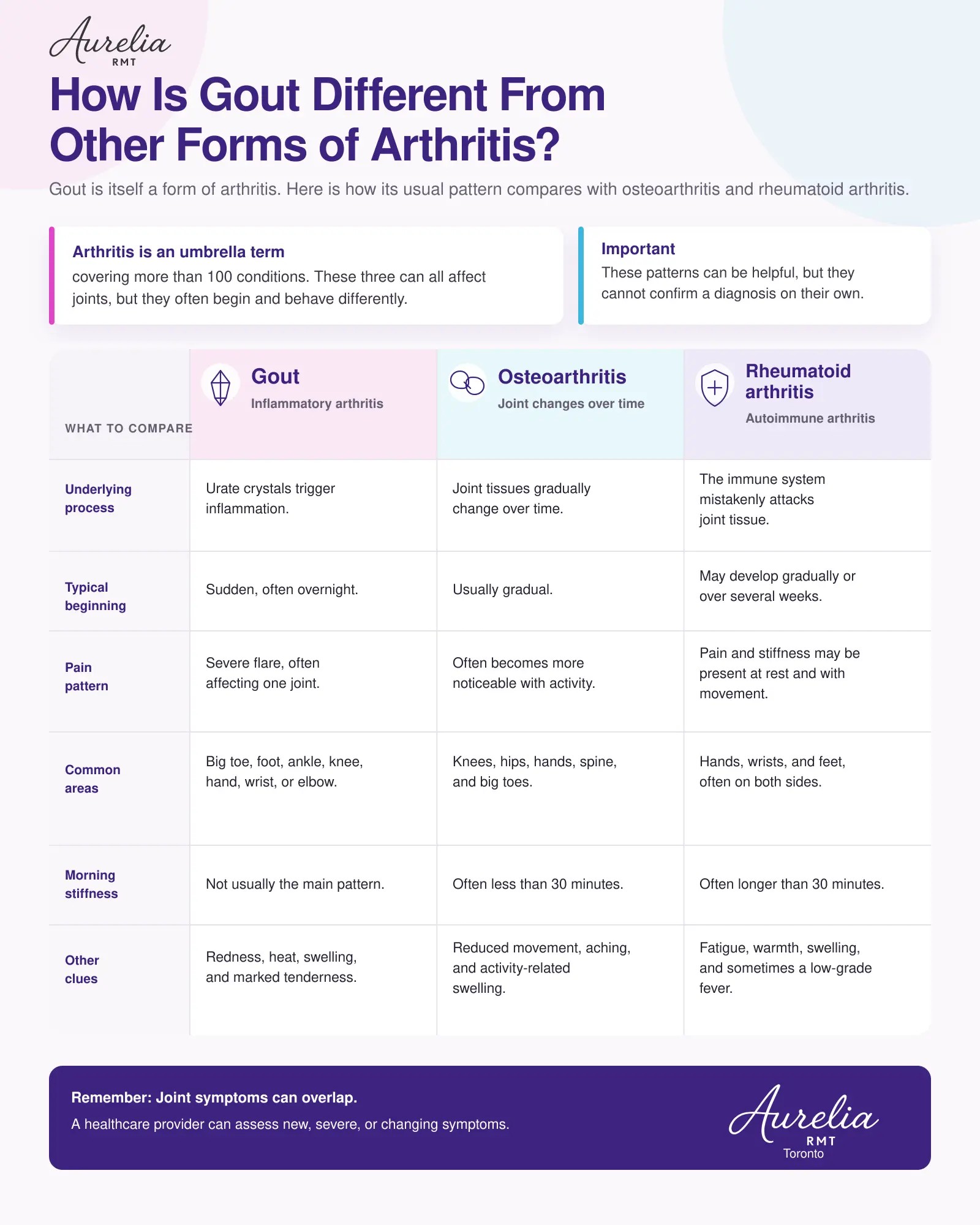
Symptoms do not always follow a perfect pattern. Gout can eventually affect several joints, osteoarthritis can become inflamed, and rheumatoid arthritis may begin in only a few areas.
This overlap is why it is important to have new or changing joint symptoms assessed rather than trying to identify the condition by appearance alone.
How a Healthcare Provider May Identify the Cause
A healthcare provider will usually ask how quickly the pain started, which joints are involved, whether the symptoms have happened before, and what medications or health conditions may be relevant.
Testing may include:
- Bloodwork to measure uric acid or signs of inflammation
- Examination of the affected joint
- Joint fluid testing when the diagnosis remains uncertain
- Ultrasound, X-ray, or other imaging when appropriate
Uric acid levels can sometimes be lower during an active gout flare. If gout is strongly suspected, a healthcare provider may repeat the blood test after the flare has settled.
A new red, hot, swollen joint can sometimes be caused by an infection or another condition that resembles gout. Seek urgent medical care if the pain is new and severe, particularly if you also have a fever, chills, feel unwell, have broken skin near the joint, or cannot comfortably place weight on the area.
Where Massage Therapy May Fit
Massage therapy does not remove urate crystals, lower uric acid, or treat the underlying cause of gout, osteoarthritis, or rheumatoid arthritis. It should be used as complementary care alongside the treatment recommended by your healthcare team.
Massage is generally not appropriate directly over a joint that is hot, red, swollen, or experiencing an active gout attack or inflammatory arthritis flare. Pressure and heat may make an already sensitive area feel worse. Depending on how you are feeling, it may be best to postpone your appointment until the flare has settled.
Between flares, and when your healthcare provider agrees that massage is appropriate, a gentle treatment may help with:
- Tension in muscles surrounding a sensitive joint
- General relaxation and stress relief
- Comfort in areas compensating for changes in movement
- A sense of ease when returning to regular activity
Your treatment should always be adjusted to your current symptoms. Before the session begins, let your RMT know about your diagnosis, recent flares, medications, and any joints that feel tender or vulnerable.
Support That Meets You Where You Are
Living with joint pain can make ordinary things feel unexpectedly difficult. Walking across a room, holding a cup, or settling into bed may require more thought than usual.
You deserve care that respects what your body is experiencing that day.
If your flare has settled and massage has been approved as part of your care plan, you are welcome to book a gentle, individualized massage therapy session with AureliaRMT in Toronto. We can adjust positioning, pressure, and treatment areas so that you feel comfortable, heard, and supported.
Key Takeaways
- ✓Gout is not separate from arthritis; it is one specific type of inflammatory arthritis caused by urate crystal buildup in or around a joint.
- ✓A gout flare usually comes on suddenly (often overnight) with intense pain, heat, redness, swelling, and extreme sensitivity in one joint, commonly the big toe but also ankle, knee, foot, wrist, hand, or elbow.
- ✓Osteoarthritis, rheumatoid arthritis, and gout can overlap in symptoms, so patterns alone cannot confirm a diagnosis; new or changing joint pain should be assessed by a healthcare provider.
- ✓Diagnosis may involve questions about symptom timing and location, blood tests, joint examination, joint fluid testing, and imaging; urgent care is needed if severe joint pain is accompanied by fever, chills, feeling unwell, broken skin, or inability to bear weight.
- ✓Massage therapy does not treat the underlying cause of gout or other arthritis but can support comfort and relaxation between flares when approved by a healthcare provider; it should be avoided directly over hot, red, swollen, or actively flaring joints.
Frequently Asked Questions
How can I tell if my sudden joint pain is gout or another type of arthritis?
Gout is a form of inflammatory arthritis that usually comes on very suddenly, often overnight, with intense pain in one joint that becomes hot, red, swollen, and extremely sensitive to touch. The big toe is commonly affected, but gout can also appear in the ankle, knee, foot, wrist, hand, or elbow. Osteoarthritis and rheumatoid arthritis tend to develop more gradually and often affect multiple joints or both sides of the body. Because symptoms can overlap, the most reliable way to tell is to see a healthcare provider, who can assess how quickly your symptoms started, which joints are involved, and may order bloodwork, imaging, or joint fluid testing to clarify the cause.
When should I seek urgent medical attention for a painful, swollen joint?
You should seek urgent medical care if a joint becomes red, hot, and very painful suddenly, especially if this is new for you and the pain is severe. It is particularly important to get immediate help if you also have a fever, chills, feel generally unwell, have broken or damaged skin near the joint, or cannot comfortably put weight on the area. These signs can indicate an infection or another serious condition that can resemble gout and needs prompt treatment.
Is gout just caused by eating the wrong foods or drinking alcohol?
No. While certain foods and alcohol can influence gout for some people, gout is not simply the result of dietary choices and it is not a personal failing. Gout is an inflammatory form of arthritis caused by a buildup of urate crystals in or around a joint when uric acid stays elevated in the bloodstream over time. Genetics, kidney function, some medications, dehydration, and other health conditions can all affect how your body processes uric acid, which means many factors beyond food and drink contribute to gout.
Can massage therapy help with gout or arthritis pain, and is it safe during a flare?
Massage therapy does not remove urate crystals, lower uric acid, or treat the underlying cause of gout, osteoarthritis, or rheumatoid arthritis. It is best used as complementary care alongside the treatment recommended by your healthcare team. Massage is generally not appropriate directly over a joint that is hot, red, swollen, or in the middle of a gout attack or inflammatory arthritis flare, because pressure and heat can make the area feel worse. Between flares, and with your healthcare provider’s approval, gentle massage can help ease muscle tension around sensitive joints, support general relaxation, and improve comfort in areas that are compensating for changes in movement.
What should I tell my massage therapist if I have gout or another type of arthritis?
Before your session, let your massage therapist know your diagnosis (such as gout, osteoarthritis, or rheumatoid arthritis), when your last flare occurred, which joints feel tender or vulnerable, and what medications or treatments you are currently using. This information helps your therapist adjust positioning, pressure, and treatment areas to match how you are feeling that day. If your flare has settled and your healthcare provider has approved massage as part of your care plan, your therapist can offer a gentle, individualized treatment that respects your current level of comfort and mobility.
References & Citations
- [1] Arthritis Society Canada, n.d. — Gout
- [2] National Institute for Health and Care Excellence, 2022 — Gout: Diagnosis and Management
- [3] FitzGerald et al., 2020 — 2020 American College of Rheumatology Guideline for the Management of Gout
- [4] National Institute of Arthritis and Musculoskeletal and Skin Diseases, 2023 — Osteoarthritis
- [5] National Institute of Arthritis and Musculoskeletal and Skin Diseases, 2022 — Rheumatoid Arthritis
- [6] Arthritis Society Canada, n.d. — Complementary Therapies and Massage Therapy
Explore Our Complete Toronto RMT Guide
Looking for more information about massage therapy in Toronto? Our comprehensive guide covers everything from common conditions to treatment options.
View the Complete Guide